
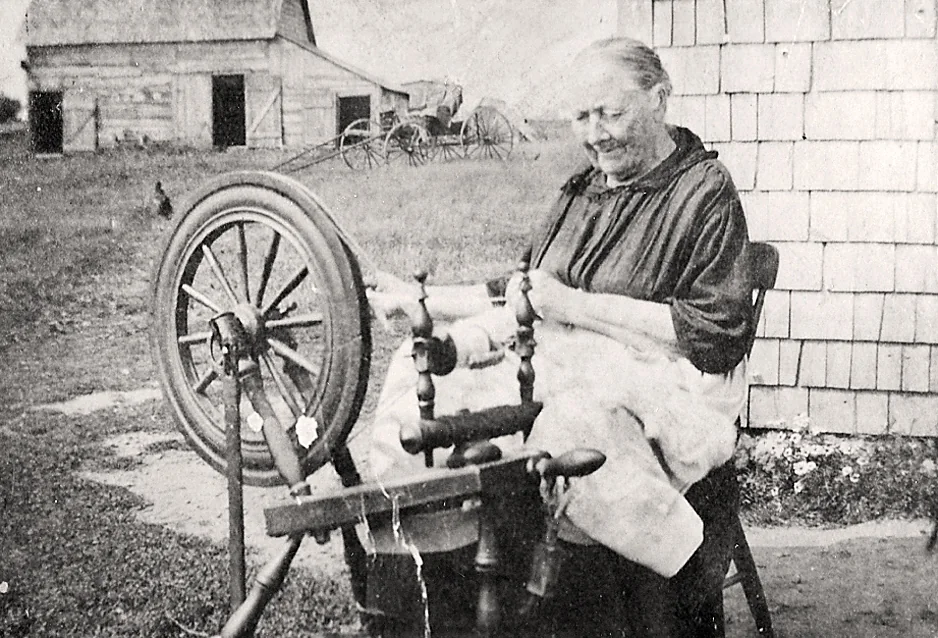
Gaelic on Pictou Island
The surviving evidence does more than associate Gaelic with Scottish ancestry. It documents a Gaelic newspaper connection, a Gaelic book, a census result, and a later Islander’s memory—while leaving fluency, individual identity, and the language’s final years open.
A reader at “Eilean Phictou”
The Gaelic newspaper Mac-Talla printed “Eoghan Mac Gilleain, Eilean Phictou, N.S.” in a subscription list. The entry directly connects a named Gaelic reader with Pictou Island, but does not identify his household or English-language record.
Big Evan Maclean’s Gaelic book
Gaelic scholar Alexander Maclean Sinclair recorded that a Gaelic book had belonged to “Big Evan Maclean in Pictou Island” and that he received it from Evan’s wife. The book establishes Island provenance; it does not prove that Big Evan and the Mac-Talla subscriber were the same man.
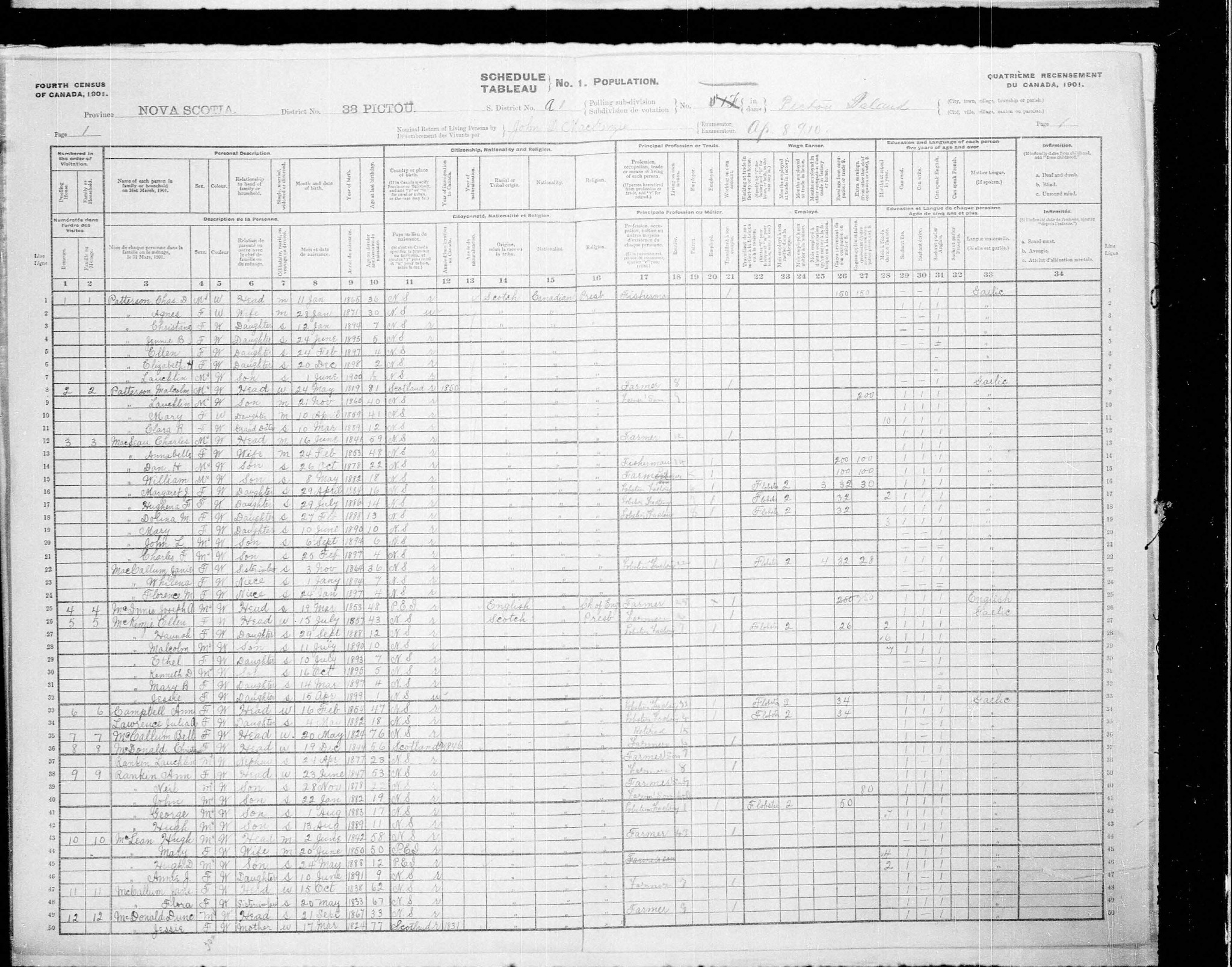
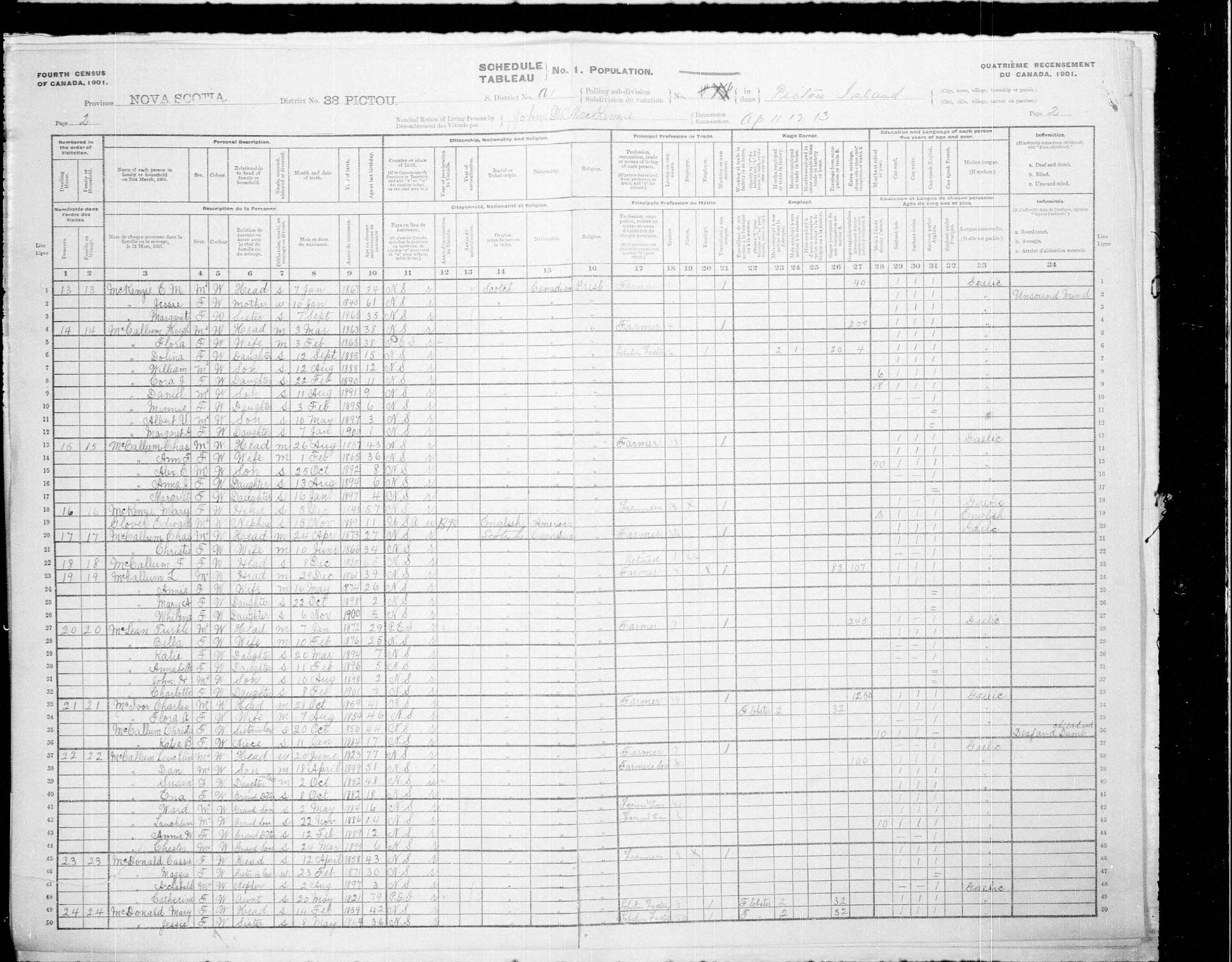
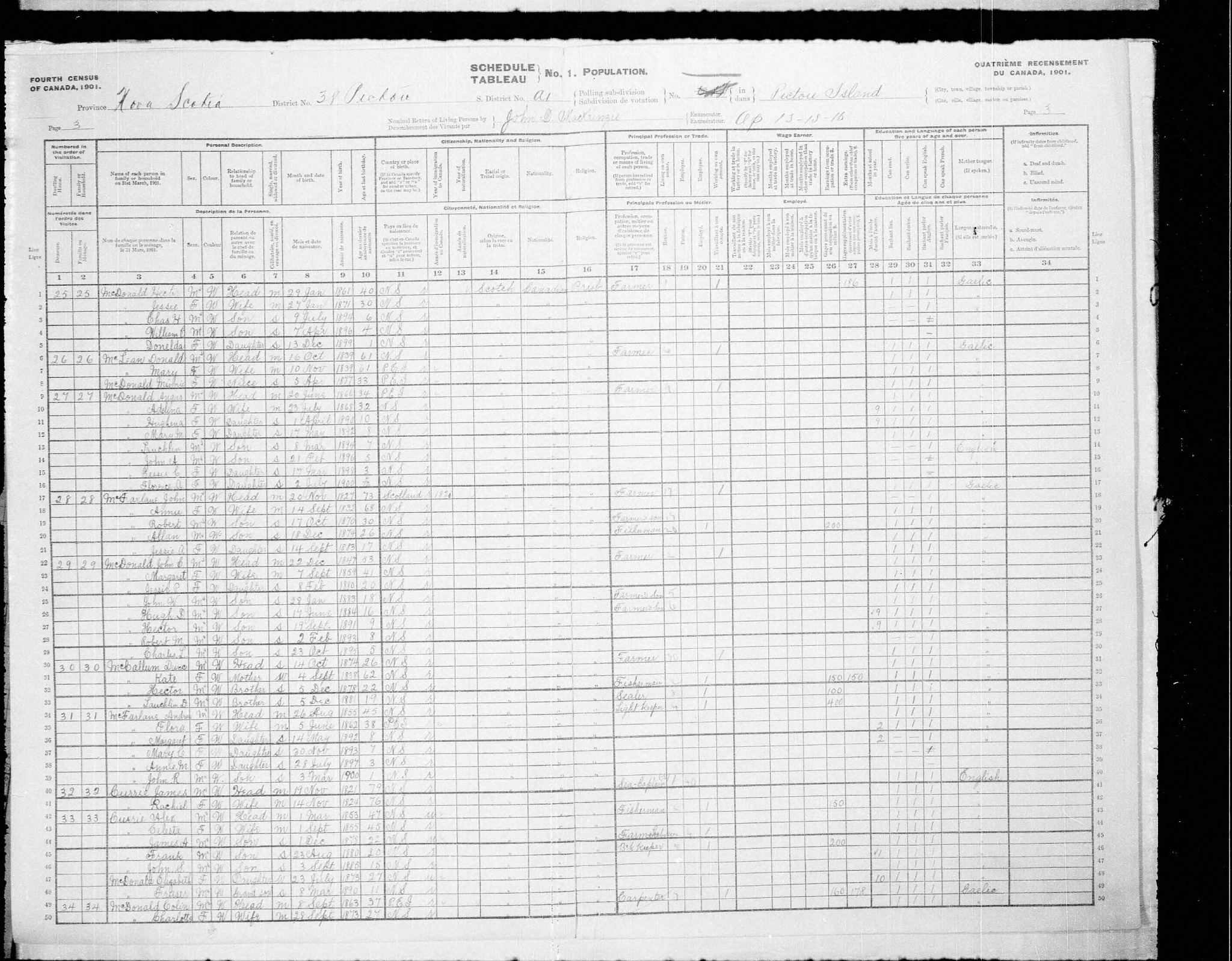
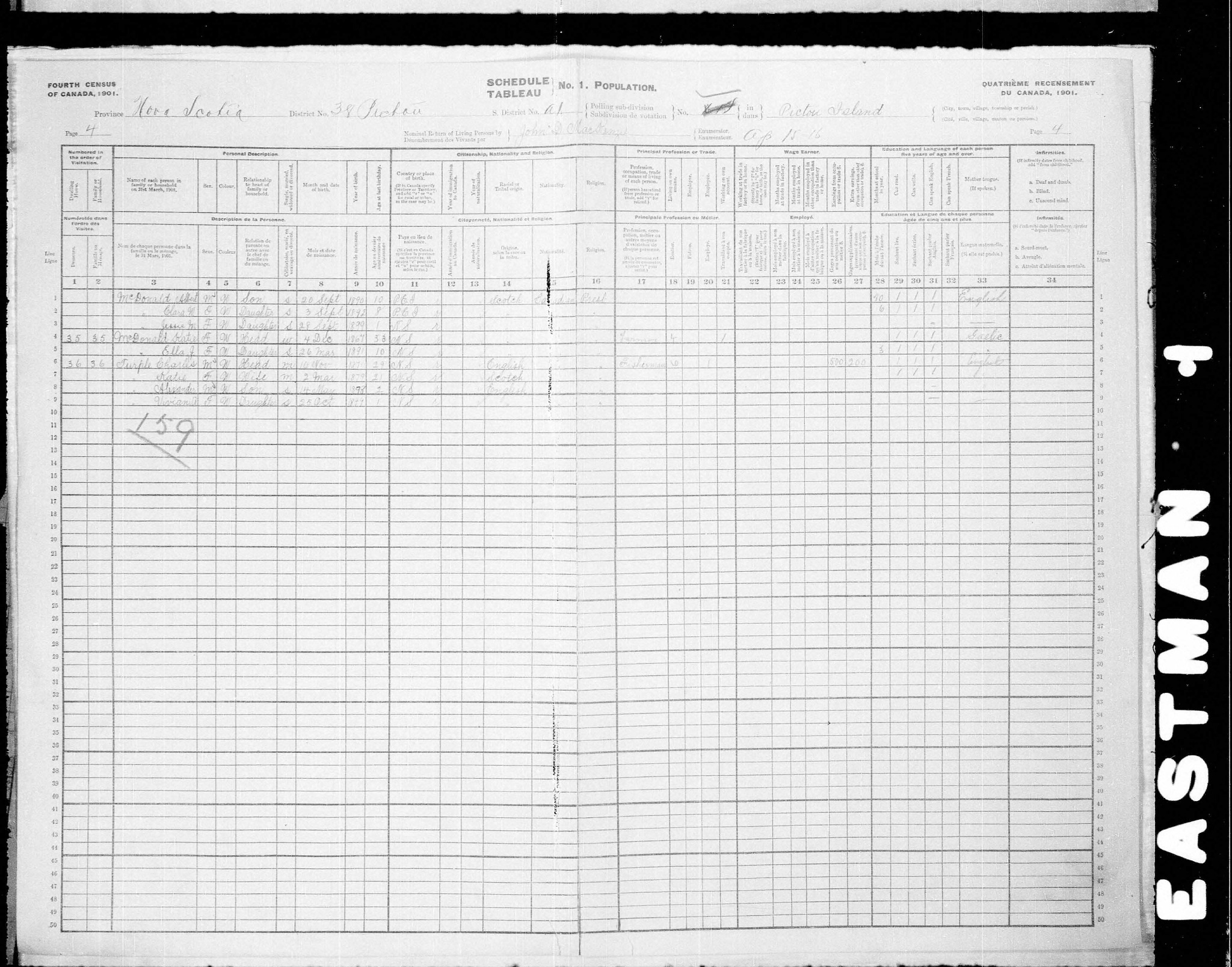
137 of 159 residents were recorded with Gaelic as their mother tongue
The other 22 residents were recorded with English. Column 33 asked for a person’s native language if spoken, whether fluently or not. The entries therefore demonstrate Gaelic’s broad reach across the Island community, but they are not a fluency test and do not tell us which language each resident used most often.
| Page | Lines | Gaelic | English | Entry sequence | Manuscript |
|---|---|---|---|---|---|
| 1 | 1–50 | 49 | 1 | Gaelic 1–24 · English 25 · Gaelic 26–50 | Open page 1 ↗ |
| 2 | 1–50 | 48 | 2 | Gaelic 1–17 · English 18–19 · Gaelic 20–50 | Open page 2 ↗ |
| 3 | 1–50 | 38 | 12 | Gaelic 1–13 · English 14–16 · Gaelic 17–39 · English 40–48 · Gaelic 49–50 | Open page 3 ↗ |
| 4 | 1–9 | 2 | 7 | English 1–3 · Gaelic 4–5 · English 6–9 | Open page 4 ↗ |
| Total | 137 | 22 | 137 + 22 = 159 | ||
Remembering the tail end of a Gaelic community
In a 2018 interview, David Harding recalled older Islanders whom he knew and fished with. His recollection adds later community memory to the documentary record.
“The old people that we knew and fished with had grown up with Gaelic—they understood it and a few could speak a few words of it.”
— David Harding, July 19, 2018
This is Harding’s attributed recollection. It does not identify the speakers, establish fluency or frequency of use, or supply a final date for Gaelic on the Island.