This index separates the five completed PIHS interpretive panels from the three online histories. Every entry now begins with an image that can be enlarged and zoomed: the completed panel where one exists, or a clearly identified related photograph while a panel is being developed.
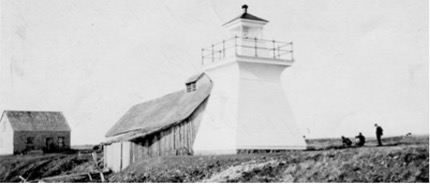
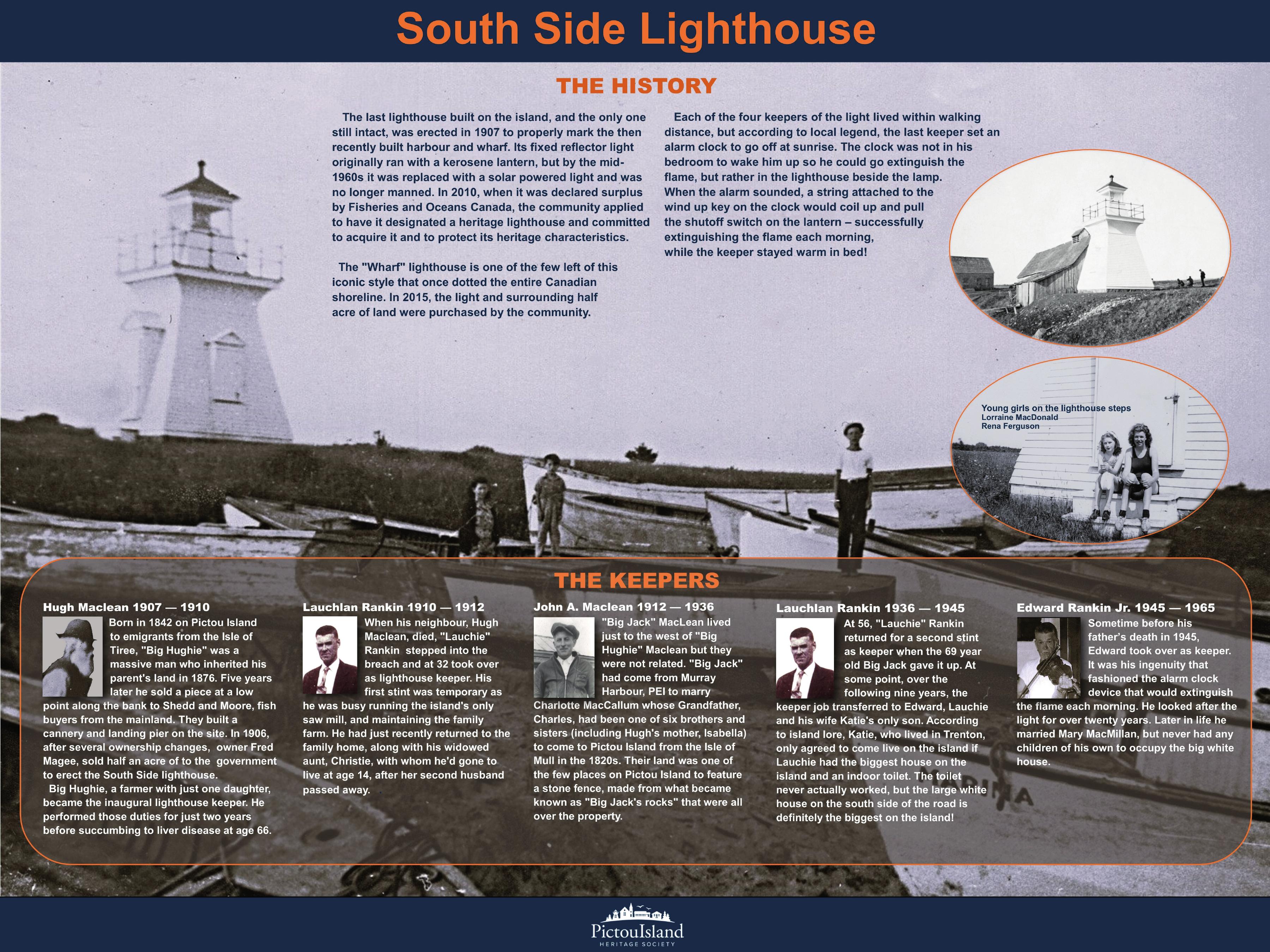
The South, or Wharf, Lighthouse is the square wooden tower beside the Island wharf. Work was underway in 1905, and the light appeared in navigation records as Pictou Island West Wharf in 1907. The tower received federal heritage recognition in 2015; its navigational light was discontinued in July 2026.
Completed PIHS interpretive panel: South Side Lighthouse.
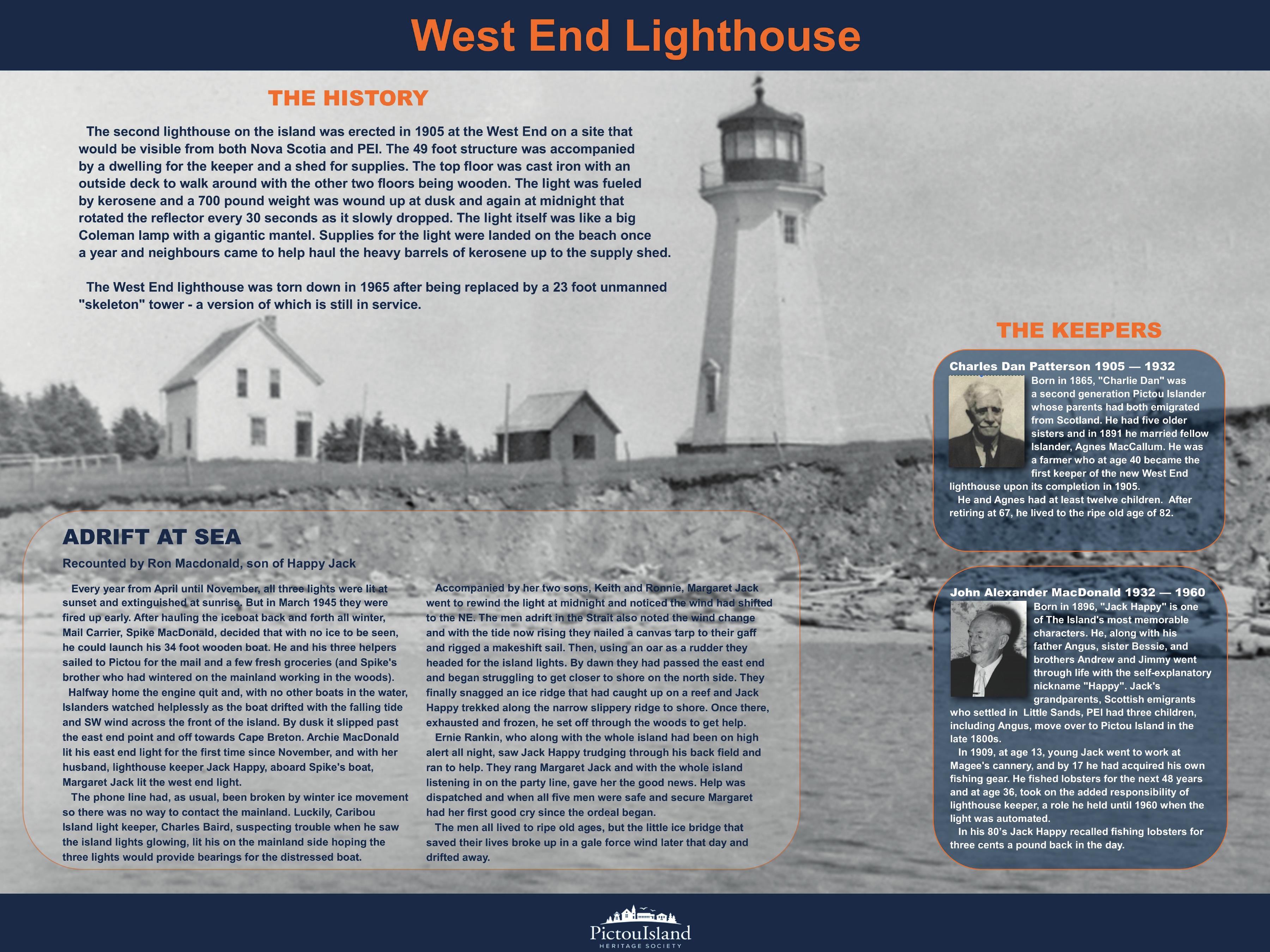
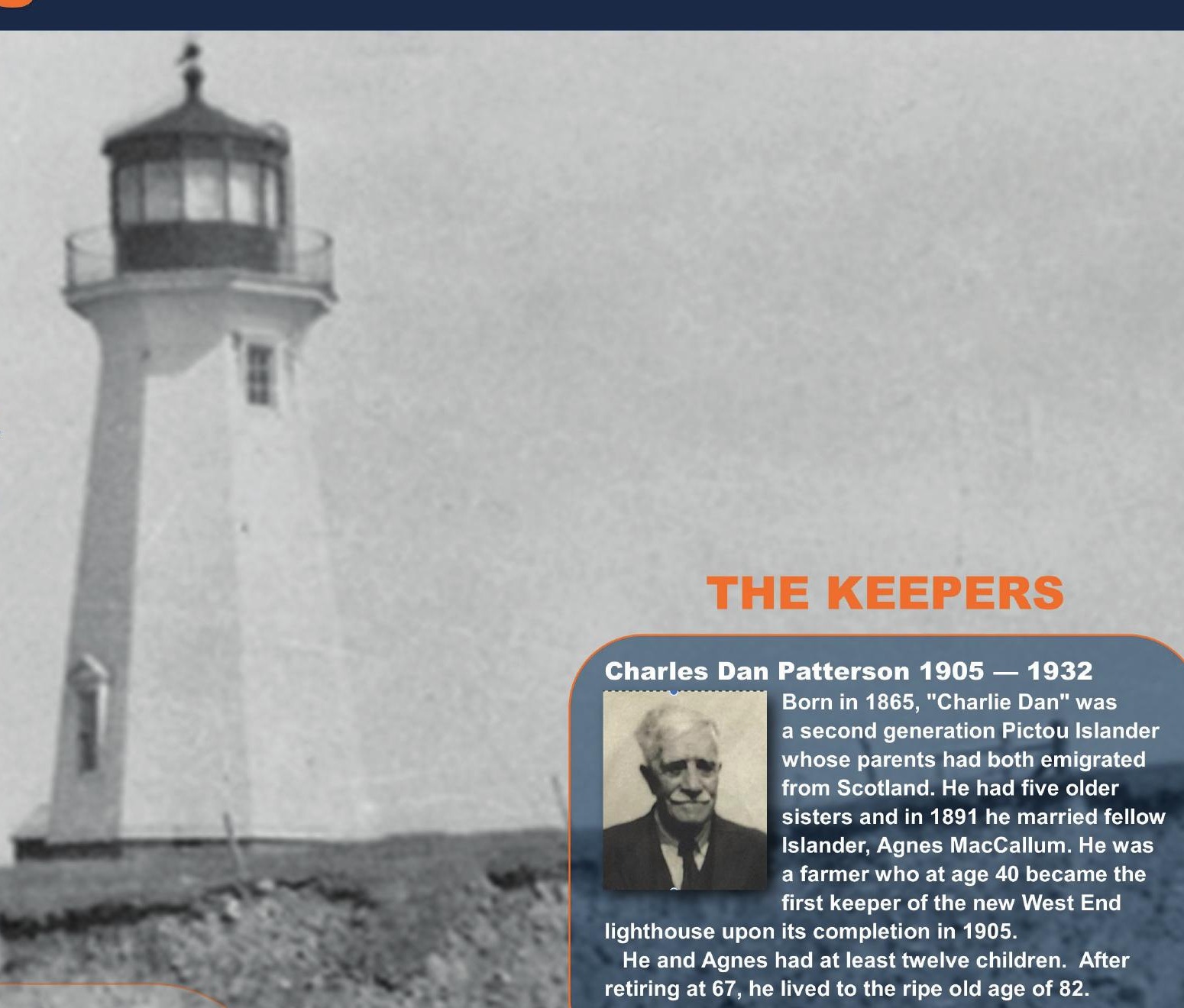
The West End light began operating in 1905. Its original octagonal wooden tower, topped by an iron lantern, was later automated and replaced by a skeletal light. It was a separate station from the light at the wharf.
Completed PIHS interpretive panel: West End Lighthouse.
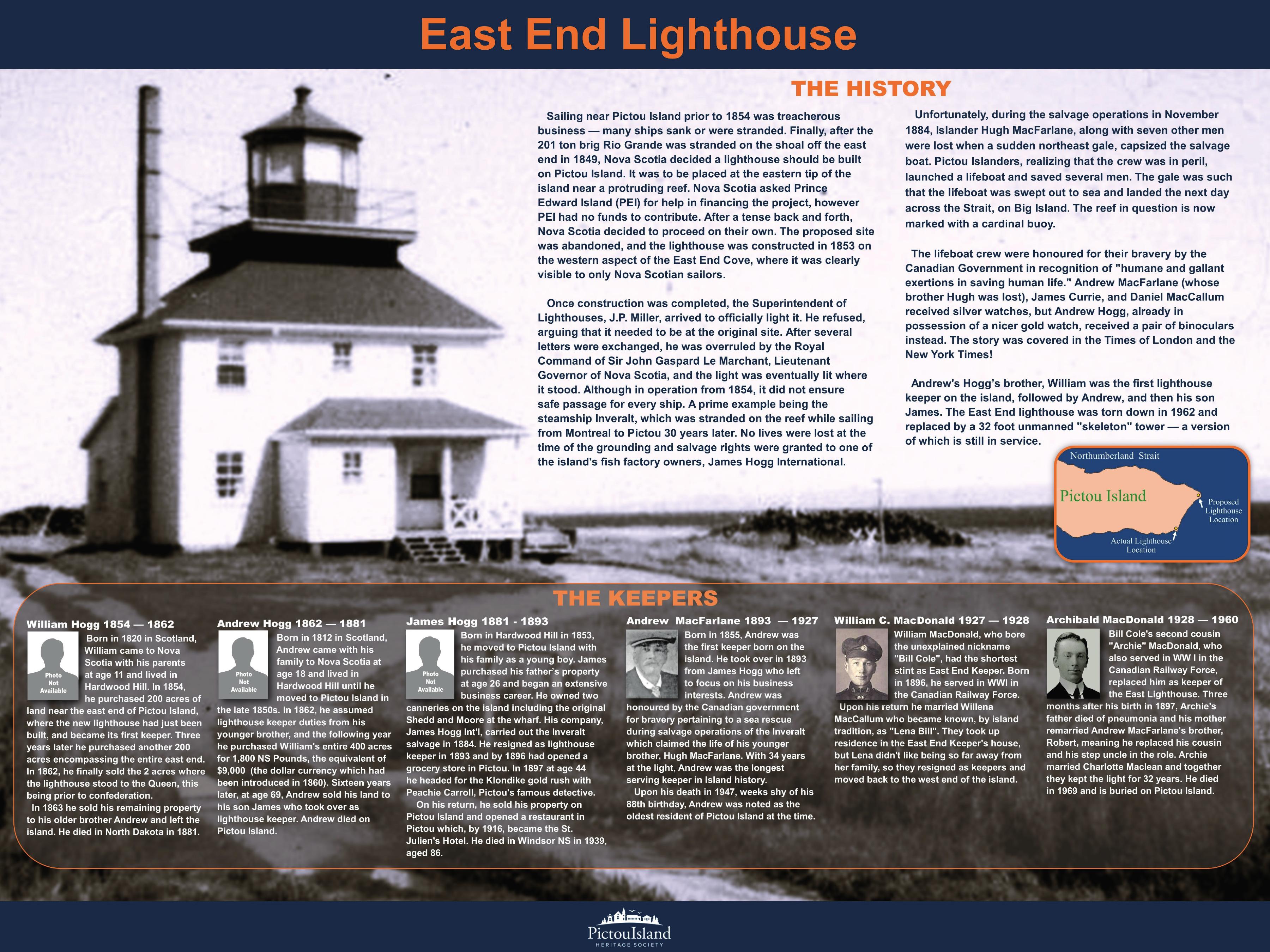
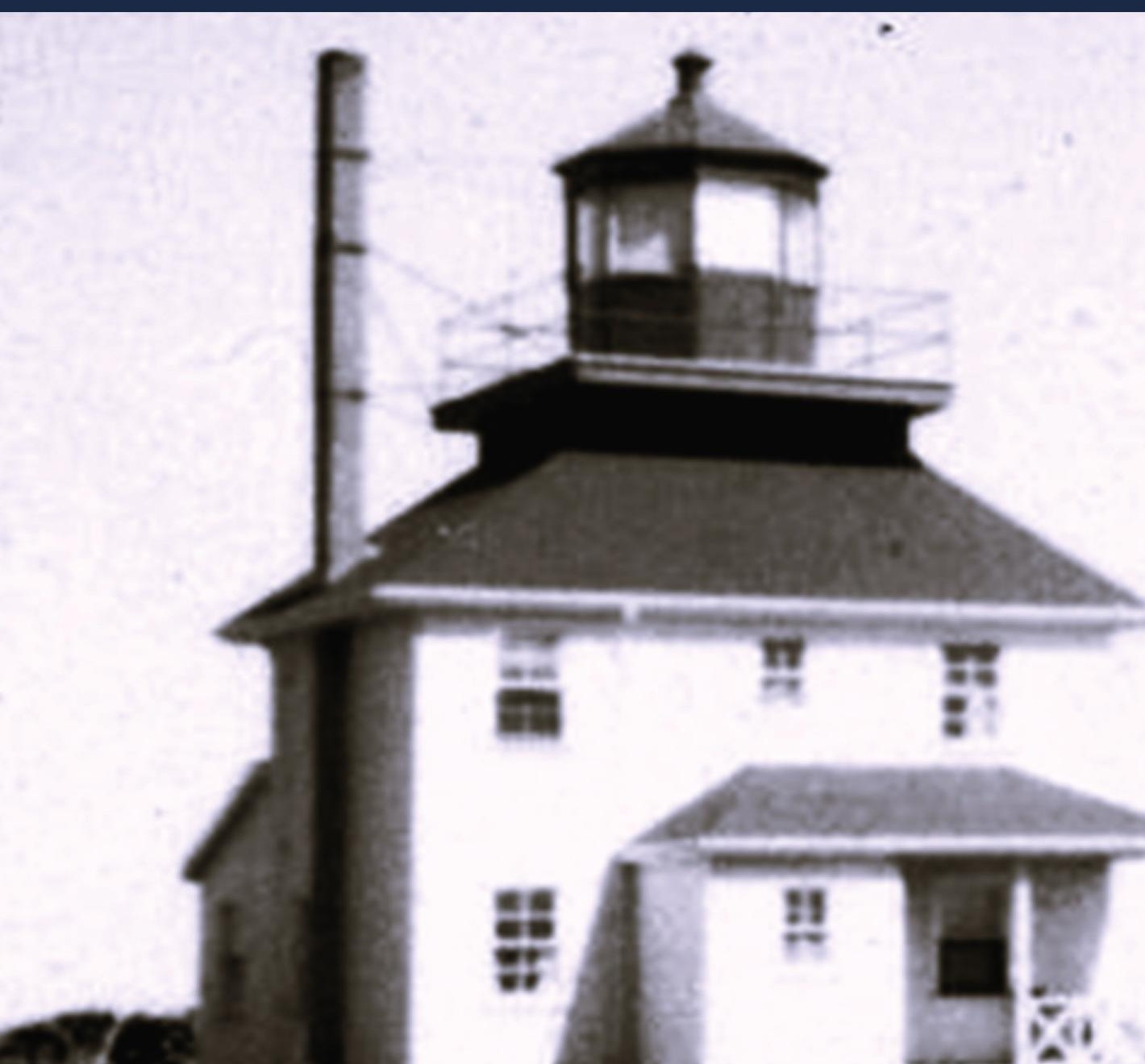
The East End Lighthouse was established in 1853 and is reported to have begun shining in 1854. The original station was replaced in 1930 and later by an unattended skeletal light.
Completed PIHS interpretive panel: East End Lighthouse.
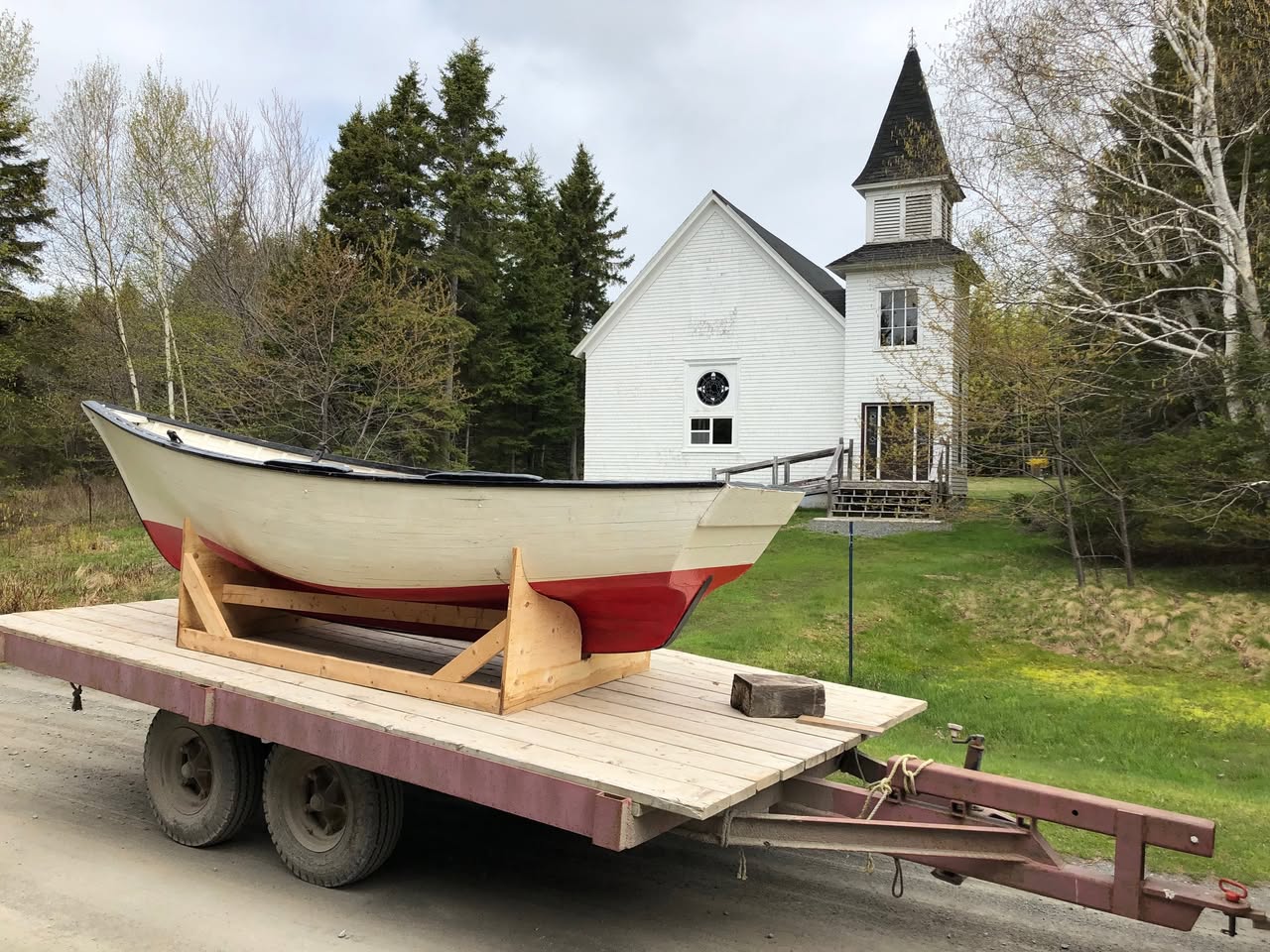
Explore the original PIHS panel and learn more about the church and the community that built it.
Completed PIHS interpretive panel: The Church.
Read the expanded history
THE CHURCH OF SCOTLAND
Scottish Highland settlers arrived on Pictou Island in 1819, including John MacDonald, Donald MacDonald and Charles Campbell; Kenneth McKenzie followed in 1820. MacCallum and named MacLean family lines have documented Tiree connections. The precise Scottish origin of the Pictou Island Patterson line remains unresolved. These Highlanders brought the Church of Scotland with them. The “Kirk” was a Calvinistic Protestant faith with Presbyterian roots in the southwest of Scotland. Its ethos of industry and community was the perfect salve to the hard scrabble existence the first settlers faced.
Island history describes nearly a century of worship before the Island had a church building, with Gaelic central to religious life. Sunday morning services were held in various family homes, with Sunday afternoons reserved for Sunday school. Additional prayer meetings on Sunday and Wednesday evenings meant there was no shortage of opportunity to worship.
Ruth Munro, citing the Truro News, reports visits by Rev. Robert Grant in the summer of 1845. The original newspaper account has not yet been inspected, and the minister’s exact identity and pastoral charge remain unresolved. Local histories place an Island school in the mid-nineteenth century. Official education records directly confirm that a Pictou Island school was operating by 1872, while the exact date of the first school and the succession of early school buildings remain uncertain. Local history says church services and events were held in the school in the summer months.
Over time the influence of the Church of Scotland waned, and parishioners began to identify as members of the Presbyterian Church in Canada. By the 1880’s, with the population hovering at 200, most were Presbyterian save Lewis Lawrence, a Portuguese fisherman and Roman Catholic who had married Ann Patterson. The 1884 Inveralt salvage disaster had direct Island connections: Lawrence, an Island resident, and native Islander Hugh MacFarlane were among the losses, while Island crews also took part in the rescue.
Island history remembers the Presbytery sending student ministers to stay on the Island from June until September. They boarded with various members of the congregation, or stayed in a house that might be vacant. Three of them even found Island brides! Once a year, an ordained minister arrived to hold the Sunday service and offer Holy Communion. On these occasions, children born over the past year, were baptized. The ordained minister would also come across to perform funeral rites if a member died in the summer. In the winter, funerals were conducted by Islanders themselves. Weddings were generally held on the mainland, with everyone returning to the island for a joyous party and celebration.
A HOUSE OF WORSHIP
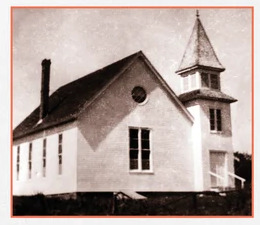
By the turn of the century the congregation was ready for a church of their own. Island history recalls that in 1908 the young student minister Archibald Sutherland of Trenton advocated for the project, while “Deacon” Charles MacCallum is credited with donating a plot of land. It was finally agreed that each member would contribute $50, more than a month’s wages, in cash or labour in kind, and the Islanders set about building their very own church. Two years later, after coordination and encouragement from the congregation and its supporters, construction was completed. The Pictou Advocate announced the formal opening for Friday, 14 October 1910, and its later report describes the church being dedicated for public worship that evening. A preparatory communion service followed on Saturday, 15 October. The first Sunday services, on 16 October, included Gaelic and English worship, communion, an afternoon baptism and an evening closing service. The newspaper’s retrospective reports about thirty communicants and five infants baptized. Hector MacDonald and Charles MacCallum served as the first elders of the church.
The PIHS interpretive account describes the congregation continuing as Presbyterian until 1925, when the national movement to unite the various Protestant denominations, under the Church Union Act, arrived on Pictou Island. A vote left the congregation fairly evenly divided, and it was decided that the Presbyterians would continue to use the church, while the members of the new United Church of Canada moved back to the schoolhouse for their services. Within a few years it became clear to the Presbyterians that maintaining a church required the whole Island and a compromise was reached. Everyone agreed they would all worship together in the church, alternating student ministers, one year Presbyterian, the next year United. Island history associates the Sutherland name with Archibald Sutherland’s support for the church project and places the naming at the 1961 anniversary celebrations. The exact donor and namesake history has not been resolved from the underlying church and land records. Over the years, like churches on the mainland, weekly services continued and groups formed, including Canadian Girls in Training, Crusaders, Lady’s Auxiliary, Sunday School, Bible School, and a Church Choir. Many older members of the community have fond memories of the beloved Sunday School Picnic - especially Jack Rankin‘s magic tricks, and the homemade ice cream. The practice of student ministers continued into the early 1970’s. At that point, the loss of government services on the Island led many longtime residents to leave for the mainland to be closer to schools and hospitals. The dwindling population made sending a student minister impractical.
Stewardship of the Church passed to The Kirk - Saint Andrew’s Presbyterian in Pictou. A group of Islanders, led by Alfred MacLean, Lorraine MacMillan and Janet Rankin struggled to maintain both the building and the congregation. They convinced the Kirk to continue sending an ordained minister once a year to perform Communion. On the allotted Sunday, a minister would arrive, along with a few members of his own congregation, offer Communion, and perform baptisms as required. At one point, Alfred convinced the Presbytery in Ottawa to lend the congregation $10,000 to replace the existing stone foundation with a new cement foundation, no small feat.
A NEW ERA
Despite difficulties, the Church marched on, and money was found to paint the interior and the exterior on more than one occasion. In 1992, a beautiful stained glass window was donated, in memoriam, by a family member of Mr. and Mrs. William MacDonald (Lena Bill and Bill Cole). Also, in the early 1990’s, several new Islanders joined the Sutherland Presbyterian Church, either by confirmation or transfer, but the financial struggles continued. By the late 1990’s, the Pictou Island Community Association (PICA) had assumed responsibility for the church as the money raised at the yearly service barely covered the insurance costs. In 2010 PICA formed the Church Committee and in 2013, the Committee brought forward the suggestion that PICA seek ownership of the church building from the Presbytery. Despite having paid to build and maintain the structure for over 100 years on donated land, Islanders were surprised by the Presbytery’s offer to sell it for the appraised value. After some negotiation, the two parties agreed to transfer ownership of the Church building if PICA assumed all legal fees. The Church was decommissioned and ownership was transferred early the following year.
Since then, the Church has continued as an anchor in the community, hosting concerts and community events and yes, even a religious service at least once a year. The old windows were replaced when the Church Committee initiated a fund raiser encouraging families in the community to donate a window. In spite of everyone’s best efforts, the upkeep of the exterior, especially the bell tower, exceeded the means of a small community. Then, in 2024, the Church/Cemetery Committee applied for a grant from the Provincial Department of Communities, Cultures, Tourism and Heritage and, to the delight of the community, was awarded enough to cover most of the costs. Combined with funds already on hand, we have been able to restore the Church structure and its exterior.
The Church’s 115th anniversary in 2025 was an occasion to express hope for a new beginning for a building that had brought the community together for more than a century.
Images connected with this history
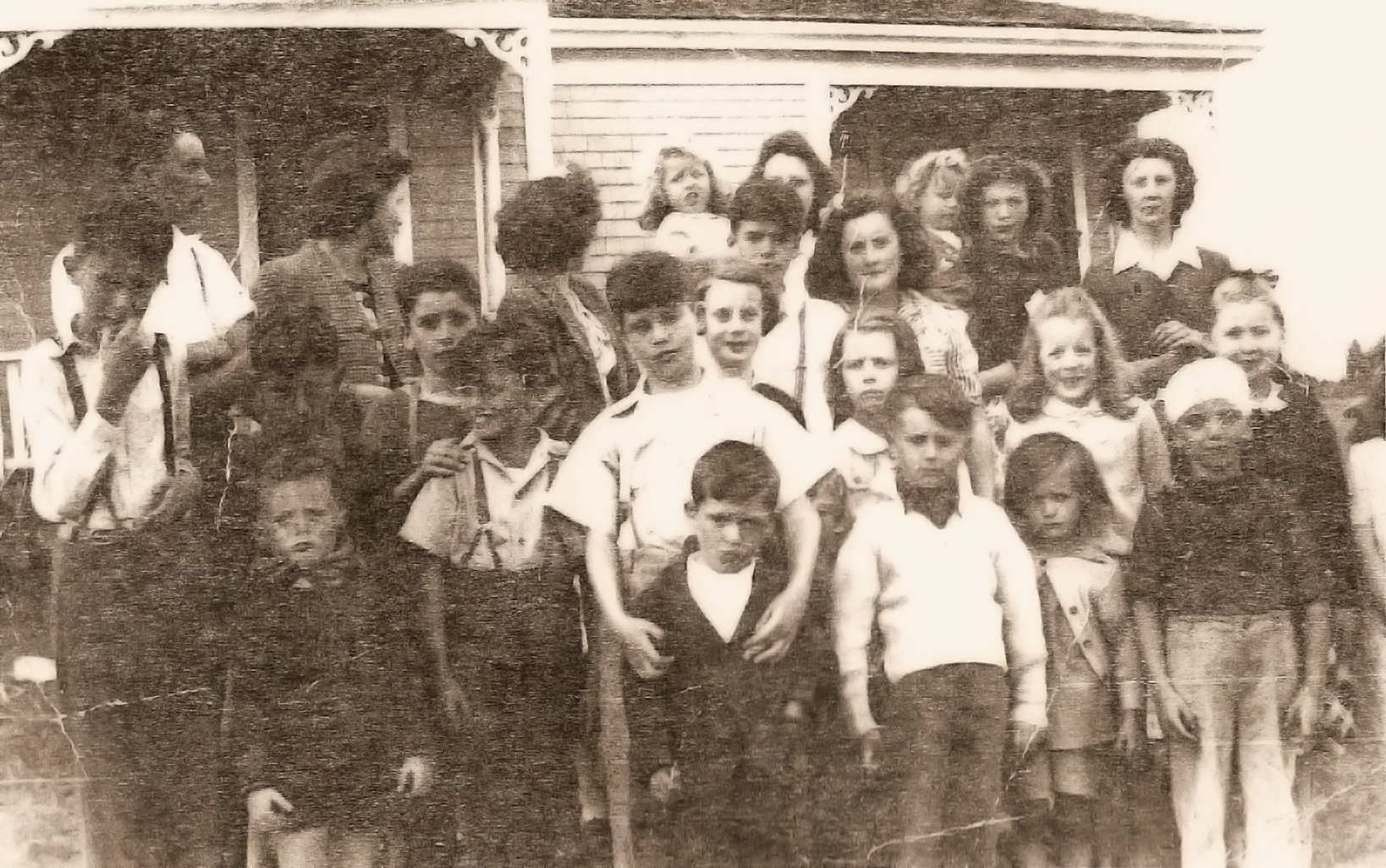
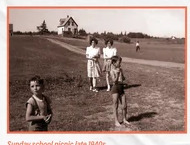
Enlarge & zoomEarly photograph preserved with the completed Church panel.Enlarge & zoomSunday school picnic photograph from the Andrea Rankin Sibley collection.
Related PIHS History
People & Families
Archibald Sutherland
Related place
Church Cemetery
Related place
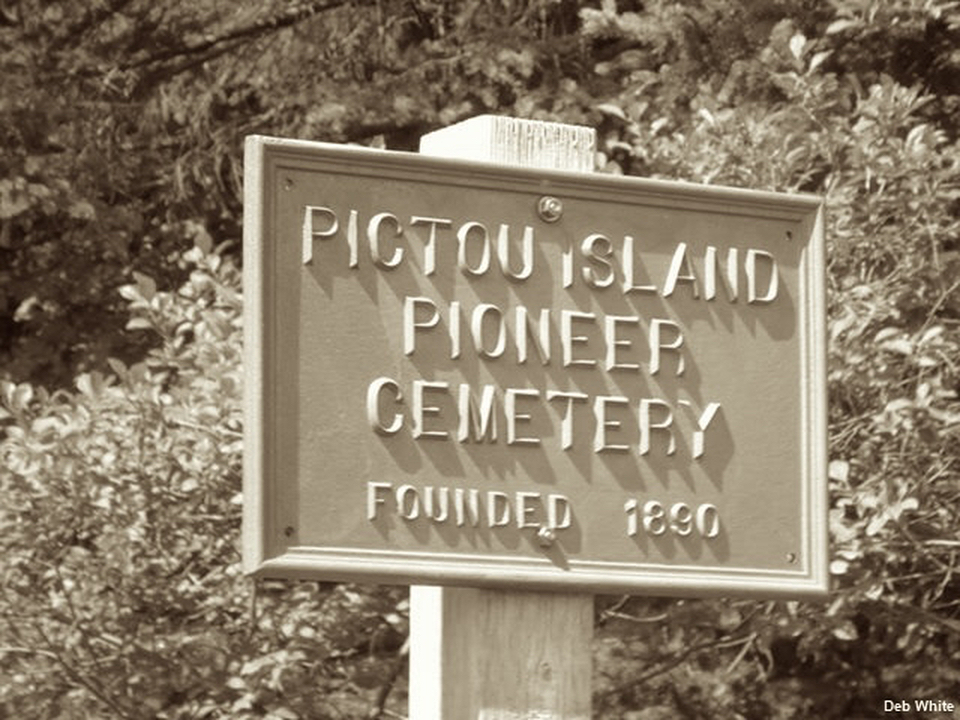
Pioneer Cemetery
Related object
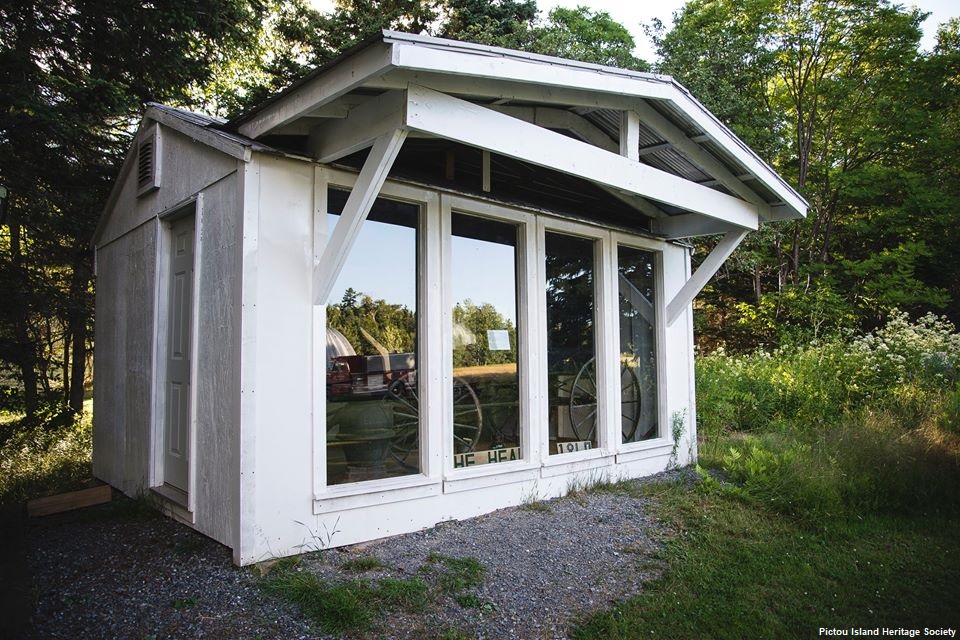
Hearse / Funeral Practice
This expanded history connects the Church with the people, places, photographs, and community traditions preserved throughout the PIHS collection.
Explore the original PIHS panel and the story of the cemetery and its restoration.
Completed PIHS interpretive panel: The Cemetery.
Read the expanded history
An earlier burial ground
Island history places an earlier burial ground on a knoll overlooking the south shore. Community tradition remembers two young boys who drowned off the west end as the first people buried there. That account has not yet been independently verified.
A surviving Pioneer Cemetery memorial records the death of Donald McCallum on 9 May 1830 at the age of three. His is the earliest death date identified in the current NovaStory/PARL memorial collection. The inscription establishes his name, age and death date; by itself it does not establish how he died, where his remains are located, or whether the present stone is the original marker.
From the shoreline burial ground to Pioneer Cemetery
The registered deed is dated 13 September 1890 and records Joseph A. McInnes transferring land to Alex J. Campbell, James Currie and John C. McDonald, trustees of the Pictou Island cemetery, for $40. It was registered on 3 November 1890. The deed describes part of Lot 11, including a public road twenty feet wide from the main road, and states that the road and cemetery together contain about one and one-half acres, more or less. That is a combined area, not a measurement of the cemetery alone. The deed does not establish the first burial date, which stones were moved, or whether remains were reinterred. County Council independently granted a cemetery public-road petition in January 1892; that later decision is distinct from the 1890 deed. The January 1893 Pictou County Council proceedings record the later cemetery-road confirmation as disallowed, following the granted petition of January 1892. These are distinct municipal stages. The records do not demonstrate road construction, establish the same surveyed alignment, explain the disallowance, or revoke the access described in the separate 1890 deed. Source: Pictou County Registry of Deeds, Book 98, pages 245–246, FamilySearch DGS 008627798, image 127.
Island history records that headstones were moved from the earlier shoreline burial ground as erosion threatened it. No complete list of moved stones or reinterments has been found. A stone’s present location does not necessarily tell us where a person was first buried or whether remains were moved.
Memorials older than the present site
A 2013 Pictou-Antigonish Regional Library survey includes 79 public-domain photographs of the cemetery associated with 75 positions in the source records. Eighteen photographs show at least one death before 1890, the year of the land transaction for the present site.
A date of death does not tell us when a gravestone was made or placed. Some early memorials may have been moved from the shoreline burial ground; others may have been replaced or erected later. No individual pre-1890 stone is identified as a confirmed transfer without separate evidence.
Erosion, memory and uncertainty
Islanders remember erosion exposing human remains at the earlier shoreline cemetery. These recollections convey the loss of the old burial ground, though the fate of every burial is not known.
The precise location and condition of the earlier cemetery, the number of burials affected, and the extent of any recovery or reinterment remain uncertain.
Restoration and stewardship
Island history records a major restoration at Pioneer Cemetery in 1991, when volunteers cleared heavy growth and worked to restore the grounds. Community care continues today, including maintenance and headstone cleaning.
In August 2013, the Pictou-Antigonish Regional Library recorded the cemetery in a plot plan and photographic survey. Those records, along with older transcriptions, photographs and family histories, help visitors explore the cemetery today.
Reading the cemetery record
The surviving stones are an important historical record, but they are not a complete list of everyone buried on Pictou Island. Unmarked burials, lost stones, replacement memorials and the eroded shoreline cemetery all complicate the record.
The Cemetery Explorer brings together inscriptions, photographs, family histories and other records. It notes where a burial place or the movement of a stone remains uncertain.
THE PIONEER CEMETERY RESTORATION
Outmigration accelerated during the late twentieth century as schooling, employment, fisheries, services and other pressures changed. Regular public-school classes ended in 1971, while some later PIHS accounts use 1972 for the broader closure transition. Many Islanders chose Seaview Cemetery on the mainland; cemetery changes formed part of a wider demographic history rather than resulting from school closure alone.
Island history recalls the cemetery becoming overgrown with trees and bushes, particularly black locust. One story says Maggie Jane McCallum bought a plant sold as a rosebush by a travelling peddler and placed it on a family grave.
Island history records that Ron MacDonald, a son of former lighthouse keeper Jack “Happy” MacDonald, returned to live on Pictou Island in 1989 and organized fundraising to restore the overgrown cemetery. The account credits donations from descendants and a $3,000 provincial grant with helping to bring machinery across to clear stumps and lift fallen headstones.
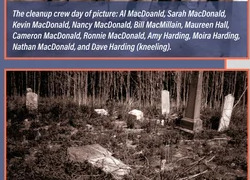
The restoration account describes Ron and fellow volunteers reclaiming the cemetery in the summer of 1991. Volunteers remembered repeatedly sharpening saws while clearing dense black locust, spruce and bushes. Their recollections preserve the work involved in recovering the landscape.
Community care continues through maintenance and headstone cleaning. Island history reports some burials after the restoration, though the people buried and the date of any formal closure decision remain unconfirmed.
In August 2013, the Pictou-Antigonish Regional Library documented the cemetery with a plot plan and photographs. These and other records help visitors explore the memorials, though they do not form a complete burial register.
The cemetery remains a place of remembrance and community care. Reading its memorials connects visitors with Island families, their Scottish places of origin where inscribed, and the generations who maintained those connections.
Images connected with this history
Enlarge & zoomRestoration photograph preserved with the completed Cemetery panel.Enlarge & zoomHeadstone photograph preserved with the completed Cemetery panel.
Related PIHS History
Related place
Church Cemetery
Related object
Hearse / Funeral Practice
Community tradition
Cemetery folklore story
This expanded history connects the cemetery with its restoration, the Church Cemetery, the Hearse, and island community tradition.
Successive Island schools served generations of children close to home. The present building is locally associated with a 1958 replacement; it later became the community centre and returned to documented later classroom uses.
PIHS online history, with a related community-history source linked below.
Read the schoolhouse history and timeline
Children attended school on Pictou Island by 1872. Island histories tell of an earlier school burning and a one-room replacement built around 1874; an 1879 atlas shows a schoolhouse on the Island. Education reports describe the building as unsuitable for winter use in 1878 and record no school in 1882 and 1883. Construction took place in 1884, and school operated that winter. The dates and sequence of the earliest buildings remain uncertain. Ruth Munro recalled a 1937 register of 60 pupils and additional teaching help.
Local history says the present building replaced the older school in 1958 and was designed by William West of Hopewell.
Munro remembered 1970–71 as the last year of regular public-school classes, with William MacMillan as the last regular teacher. Some later accounts date the wider closure transition to 1972. Island children continued their education through mainland schools, home schooling, correspondence and later part-time arrangements, including a SchoolNet-connected school in 1999.
The building served as a school during fall and winter and as a community centre during summer. When children no longer lived year-round on the island, it returned to full-time community use. Today it supports meetings and events and provides a small library, public Wi-Fi, computer and printing access, children's activities, and heritage facilities.
Images connected with this history
Reference image for the schoolhouse history; it is not evidence that the present building dates from 1874.
Education timeline
Mid-1800s
Island history places an early schoolhouse near the middle of the Island.
1874 tradition
Island histories tell of a one-room school built around 1874 after an earlier school burned. The dates remain uncertain.
1879
A county atlas confirms a building labelled ‘School House’ standing on Pictou Island by then.
16 April 1907
A newspaper account by Heartz describes a school on the Island.
1937
Ruth Munro recalls a register of 60 pupils and additional teaching help.
Claimed 1958
Local history says the present building replaced the older school and was designed by William West of Hopewell.
1971
Regular public-school classes end; later education continues.
Reported 1985
Later local history places part-time classroom use in the community centre.
1991
A teacher spends half of the school term teaching primary to Grade 6 on the island.
March 30, 1999
Contemporary material describes three pupils and one teacher at the last Canadian public school connected under SchoolNet.
Today
The present building serves the Island as a community centre and physical anchor for education history.
PIHS welcomes class photographs, teacher names, school records, and memories from former students.
Lobster canneries operated from at least the early 1870s, but the surviving sources do not establish one uncontested first factory. Roy MacCallum’s undated factory map and Munro’s separate five-factories recollection do not establish an operating count for 1908. Deeds, maps, census records, photographs, and community memory preserve a more complex shoreline history.
PIHS online history based on Brenda Spence MacLeod, MacCallum, Ruth Munro, A. H. MacKay, registry records, and community recollections.
Read the complete history of Pictou Island's lobster canneries
Lobster canneries operated on Pictou Island from at least the early 1870s, but the surviving sources do not establish one uncontested first factory, owner, or opening year. A local-history recollection places an early factory on the south shore and associates it with the MacDonald family. The exact first factory, its identification with Bob's Hollow, its ownership and its opening year remain unresolved. Land and court records separately document Shedd & Knox at the East End during the 1870s. Contemporary reporting identifies William McLure/McClure as a Pictou County cannery operator who disposed of his business to Fred Magee of Port Elgin before August 1919, without identifying the exact transfer date or Pictou Island site. Fred McClure remains a separate identity.
A. H. MacKay’s August 1890 fieldwork, published in 1891, describes a factory and wharf at a south-shore sandy cove and a north-shore factory near Hugh McLean’s. These source-specific locations should not be collapsed into a modern East End pinpoint. MacCallum's study adds deeds, leases, court records, maps, and family recollections. James William Hogg acquired or recorded factory rights around much of the shoreline. At the East End, the former Shedd & Knox site and the neighbouring Magee Factory Lot were separate properties. Fred Magee later operated at the East End. MacCallum reports a 1917 Lots 9–10 transaction from Fred McClure to Fred Magee Ltd.; the original deed and parcel identification remain unreviewed, so this does not establish a modern cove or join Fred McClure to William McLure/McClure.
Roy MacCallum’s undated map, reproduced by Ruth Munro, marks several historic factory sites and operator names. Munro separately wrote that five factories operated at the same time, but the map itself should not be read as a count of five geographic sites or a 1908 operating census. Ownership and activity changed, and some factories were dismantled, moved, or rebuilt.
The factories supported much more than the sale of lobster. Workers cooked and picked lobster meat, soldered and vented cans, supplied firewood, hauled water, removed shells for fertilizer, maintained gear, cooked meals, and housed seasonal crews. The 1891 aggregate for the combined Pictou Island and Fisher’s Grant census district records one lobster packer; the combined district total does not identify whether that person lived on Pictou Island or at Fisher’s Grant. In 1901 it recorded six fishermen and eleven factory workers, ten of them women. In 1911 it recorded five fishermen and seventeen factory employees, along with a substantial group of seasonal or non-Island workers.
People came for the season from Prince Edward Island, New Brunswick, Pictou, Caribou, Seafoam, River John, and elsewhere in mainland Nova Scotia. Later recollections name Janet Rankin, Lorraine MacMillan, Thelma MacDonald, Ona Glover, and Lois (MacCallum) MacLean among the cooks. The East End had no well; Andy Ward MacCallum hauled spring water in oak barrels to its cookhouse. Cookhouses, bunkhouses, stores, trap buildings, wharves, and shanties made some factory sites into small seasonal villages.
The canneries were also tied to fishery regulation and experimentation. MacCallum records protective measures beginning in 1871 and a broader licensing and enforcement proposal in 1892. Hogg, Craig & Co.'s response is evidence of packers' business interests and lobbying, not neutral fishery science. Lobster eggs were collected from Island canneries for the Bay View hatchery by 1893. The federal fisheries report reproduces 1894 testimony associated with McLure, Alexander Leslie and Hogg on printed page 408. Their source forms and locations differ: McLure is described as a Pictou Island packer; Leslie’s Island dateline relates to Bay View/Cariboo work; Hogg’s extract is dated Pictou. The extracts document participation in the hatchery network, without establishing that all three operated Pictou Island factories. Fishermen made wooden traps, and Island women knitted or repaired trap heads. Gasoline engines, improved transport, and commercial ice eventually made it easier to sell live lobster on the mainland.
The closing sequence remains uncertain. Jim Turple recalled that the last case of Island lobster was canned at Magee's north-side factory in 1923. Ruth Munro wrote that the last fish packing occurred in 1926, when Magee's East End plant was also processing herring. The responsible public conclusion is therefore a range: lobster canning and fish packing ended in stages between 1923 and 1926, and the East End factory was no longer in use by the early 1930s.
Factory Road, shoreline traces, former trap houses, photographs, and community memory preserve this industrial landscape. MacCallum’s reproduced photographs are bibliographic research references; the book-page images and embedded photographs are not cleared for public reproduction. Identities and exact provenance require item-level evidence.
Sources: Department of Marine and Fisheries annual report, 1894, printed pp. 407–408 (named extracts on p. 408); The Guardian, Charlottetown, 30 August 1919, p. 14, col. 5 (William McLure/McClure’s Pictou County business); MacCallum, Pictou Island fishing and cannery chapter, pp. 77–82 and 86–105 (page photographs supplied to PIHS; pp. 83–85 remain missing); Ruth Munro, Pictou Island (1984), pp. 18, 19, and 38; A. H. MacKay, “Pictou Island,” Proceedings and Transactions of the Nova Scotian Institute of Science, 1890–91, pp. 76–83; Pictou County Registry Office deeds and Nova Scotia Reports citations transcribed by MacCallum. The account preserves unresolved conflicts rather than choosing a convenient single version.
Images connected with this history
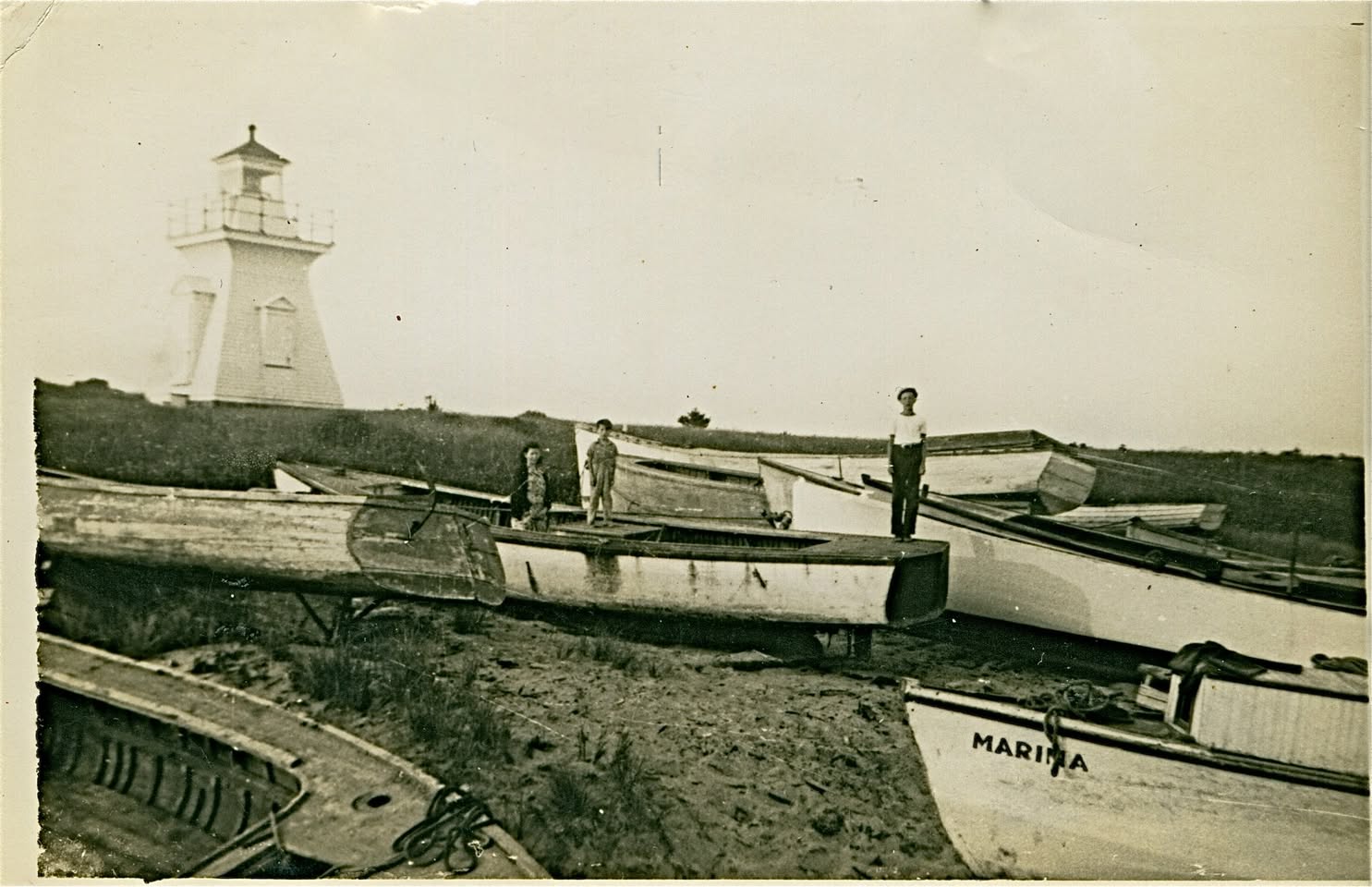
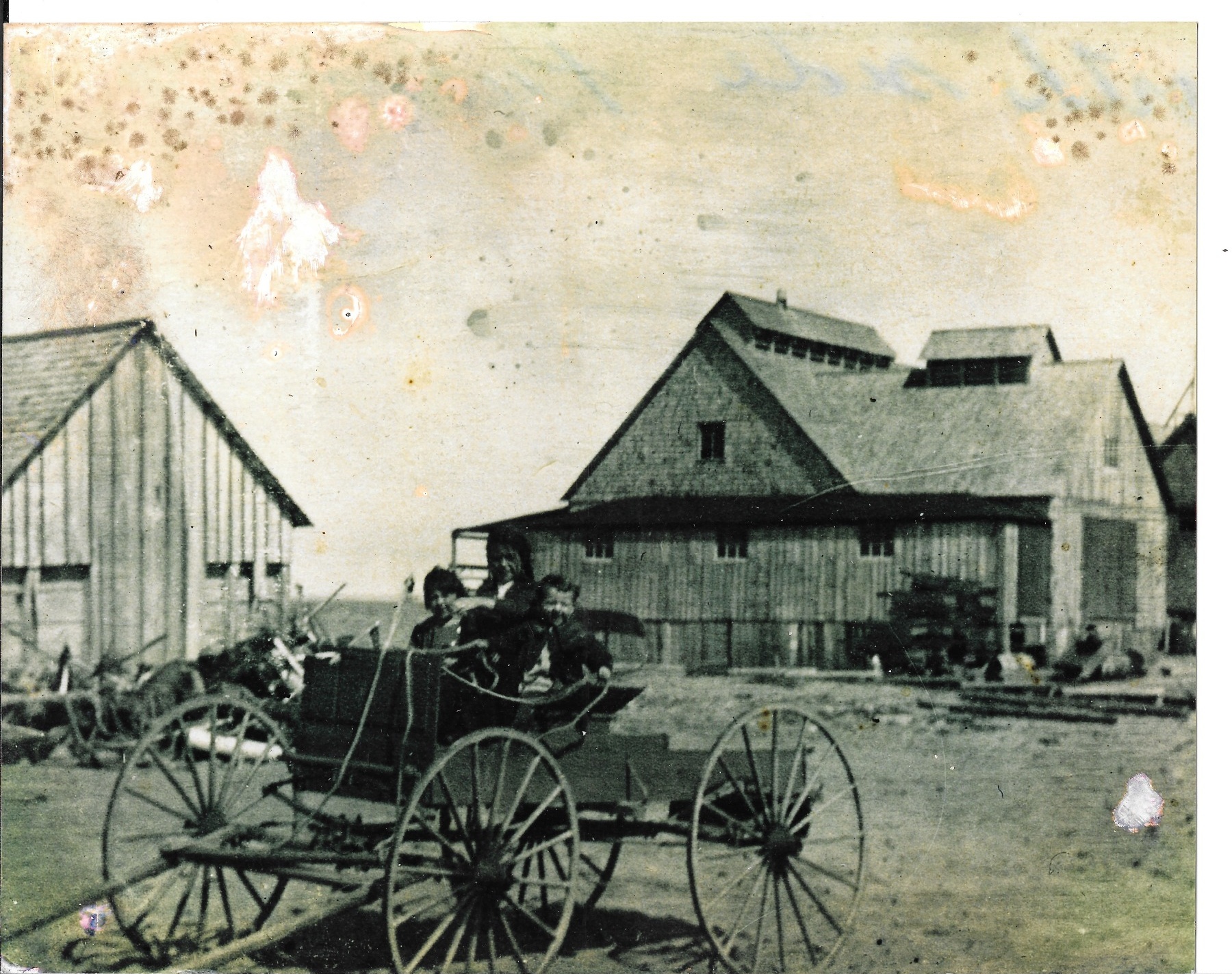
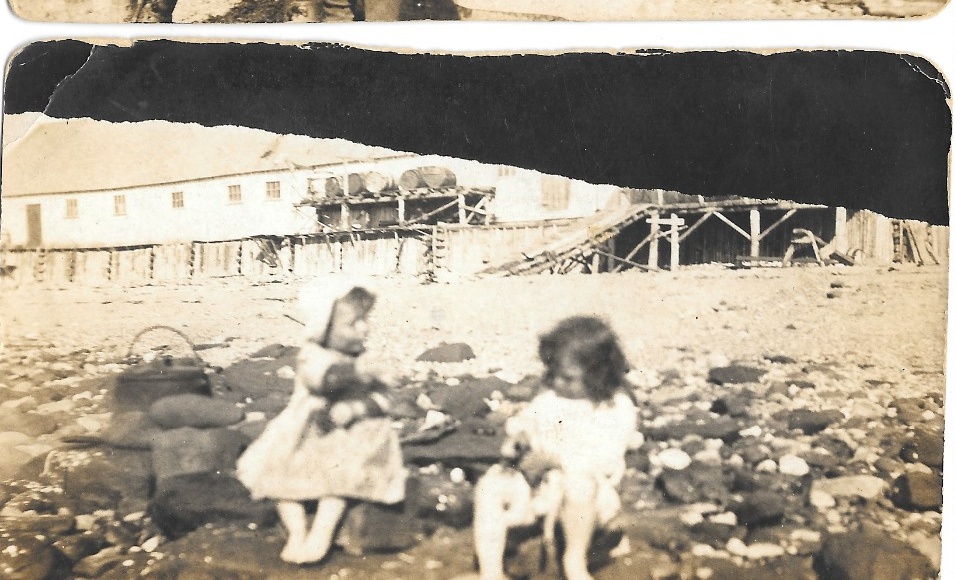
Enlarge & zoomFactory Road. PIHS contributed. PIHS welcomes help identifying the buildings and date.Enlarge & zoomPIHS-contributed photograph showing a horse-drawn carriage and large industrial buildings.Enlarge & zoomTemporary Ray Hayman crop showing children on the shore with industrial buildings and wharf structures in the background. Exact location and date remain to be identified.Enlarge & zoomFishing boats and stacked lobster traps show the later island fishery and its mainland connections.Enlarge & zoomJohn Alexander 'Jack Happy' MacDonald began working at Magee's cannery at thirteen and later became a fisherman and lighthouse keeper.Enlarge & zoomFishing boats beside the South Side Lighthouse. PIHS contributed.Enlarge & zoomLobsterFest continues the island's connection between the fishery, fundraising, and community gathering.
Cannery and fishery timeline
1847
Commercial canning introduces the possibility of processing lobster near island fishing grounds.
Early 1870s
A local-history recollection places the first lobster factory on the south shore in the early 1870s; the exact site, owner and opening year remain unresolved.
1882
Licensing and a closed season form part of early efforts to protect lobster stocks.
1891
The Bay View lobster hatchery is established near Pictou.
1901
Federal reporting describes packers around Pictou Island enlarging older factories and building new ones, without identifying the packers or sites.
1905
A federal schedule documents McLeod & Stewart as a Pictou Island lobster-packing firm; its exact factory site remains unresolved.
1906
Gasoline make-and-break engines begin changing the island fishery.
1890 and later
A.H. MacKay records factory locations. Roy MacCallum’s later undated map marks sites and operators; Munro’s five-factories recollection is separate from the map.
1903
The federal fisheries return for 1903 records three Pictou Island canneries.
1906
Federal fisheries returns again record three operating Pictou Island canneries.
1916
Federal records identify separate Fred Magee canneries at the West End and East End.
Early 1920s
Available evidence indicates that two factories remained: Magee at the East End and another near Factory Road; the latter operator remains unresolved.
1923–1926
Lobster canning appears to end during this period; last fish packing in 1926 is a separate MacCallum finding.
By 1930
The East End plant, which continued processing herring, has closed.
2024
The final buying smack at the Pictou Island wharf becomes part of the past.
Historical account contributed by Brenda Spence MacLeod and edited for clarity and accessible online reading. PIHS welcomes corrections, factory locations, worker names, photographs, and family stories.
A. H. MacKay recorded the name “Lobster Factory Cove” in his 1891 account of Pictou Island. Ron MacDonald identifies that historic cove as the place Islanders now call John Dans Cove, also written John Dan’s Cove.
Explore the cove, its name, factory history and Campbell Lane.
The Church Cemetery lies behind Sutherland Memorial Church. Its memorials show that the cemetery was in use by 1959.
Ruth Munro’s 1984 Island history says the cemetery land was purchased from Gordon MacCallum in 1959 for $100. She describes twenty-four double lots, each twenty by twenty feet. The underlying deed and plan have not yet been checked.
Early memorials
A shared memorial records James D. MacDonald (1906–1959) and Lavina M. Glover (1917–1959). Their deaths in 1959 are the earliest identified so far among the cemetery memorials documented by PIHS.
Island community history remembers James MacDonald and Lavina, also recorded as Lavinia, Glover as the first people buried in the Church Cemetery in December 1959. Their civil registrations do not name the cemetery or establish burial order.
The original Nova Scotia death registrations name James Duncan MacDonald and Lavinia Margaret MacDonald and record that both died on 10 December 1959. They record asphyxia associated with a bedroom fire and burial or removal to Pictou Island on 15 December 1959.
Island community history recalls an Aladdin lamp and carbon monoxide in connection with their deaths. The death registrations record a bedroom fire and asphyxia, but do not identify an Aladdin lamp, confirm carbon monoxide through laboratory testing, or say when the couple were discovered.
Family memorials and continuing use
The cemetery holds memorials to several generations of Island families. Island history also tells of the MacMillan family acquiring a large plot after William “Billy” MacMillan settled on Pictou Island and married Annie Jane MacLean.
Family stories, shared markers and later memorials help trace relationships across generations. A memorial commemorates a person, but does not by itself establish an exact burial date or everyone buried in a family plot.
Documenting the cemetery
In September 2026, PIHS photographed twenty-two groups of memorials in twenty-nine images, including additional views. The photographs show the memorials visible at the time; they are not a complete burial register.
Both the Church Cemetery and Pioneer Cemetery served Island families, and their use may have overlapped. There is no confirmed date when one stopped being used and the other began.
Reading the record
Memorials, cemetery transcriptions, family records, obituaries and civil and land records each add to the story. Questions remain about the land acquisition, the first burial and some burial locations.
Photographs on the panels
Images preserved in the completed panels
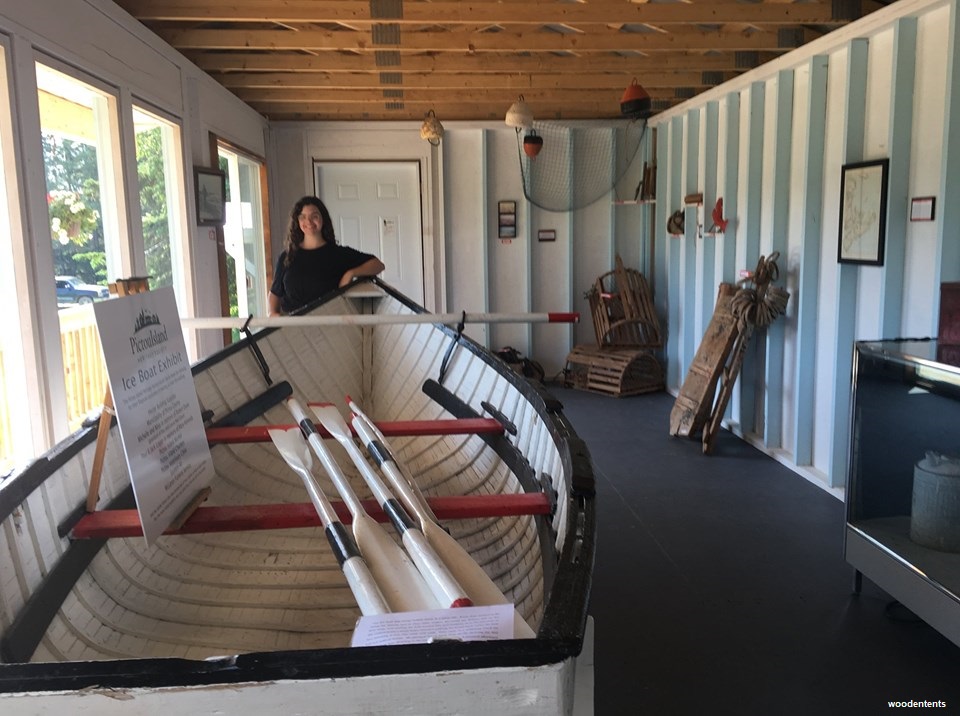
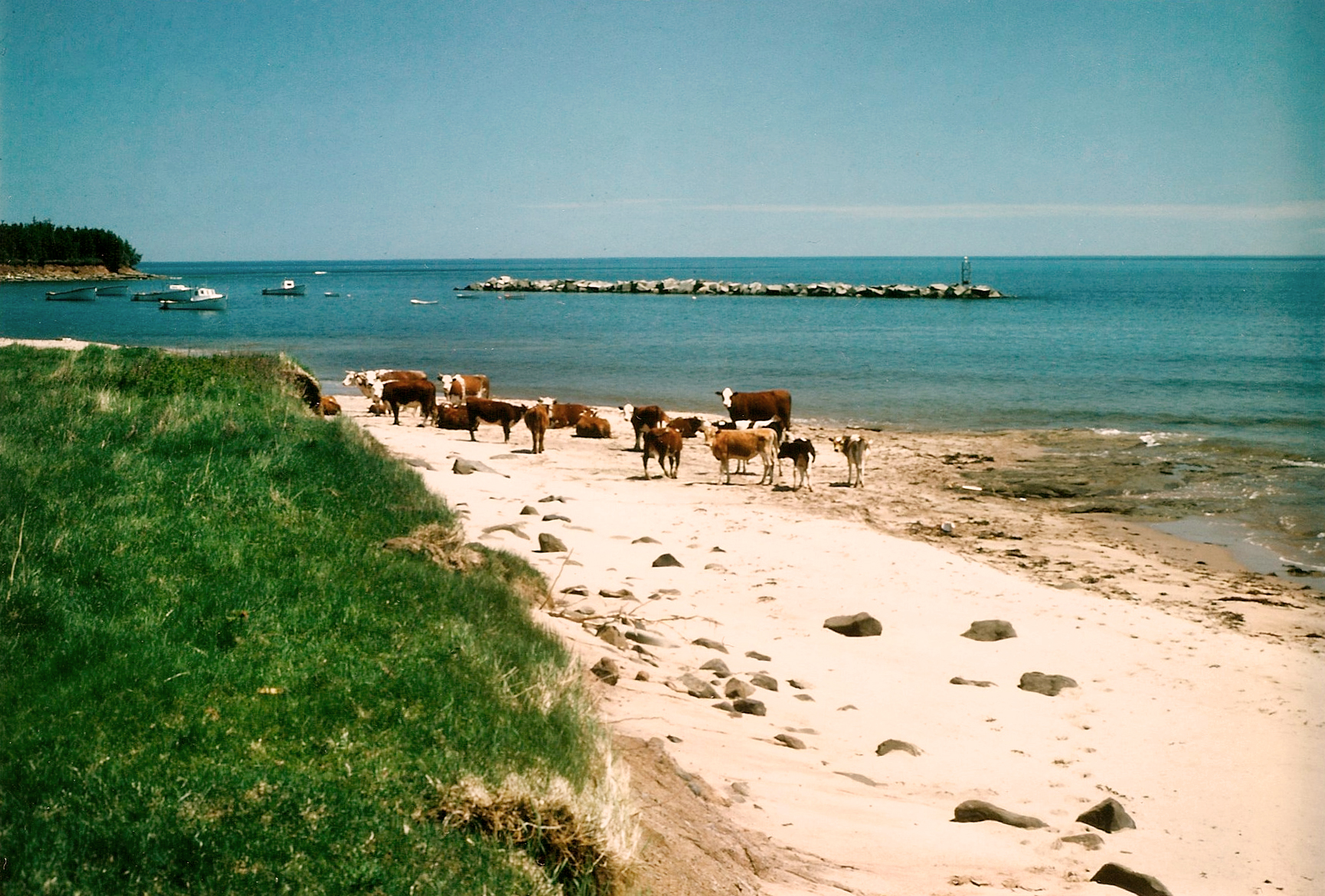
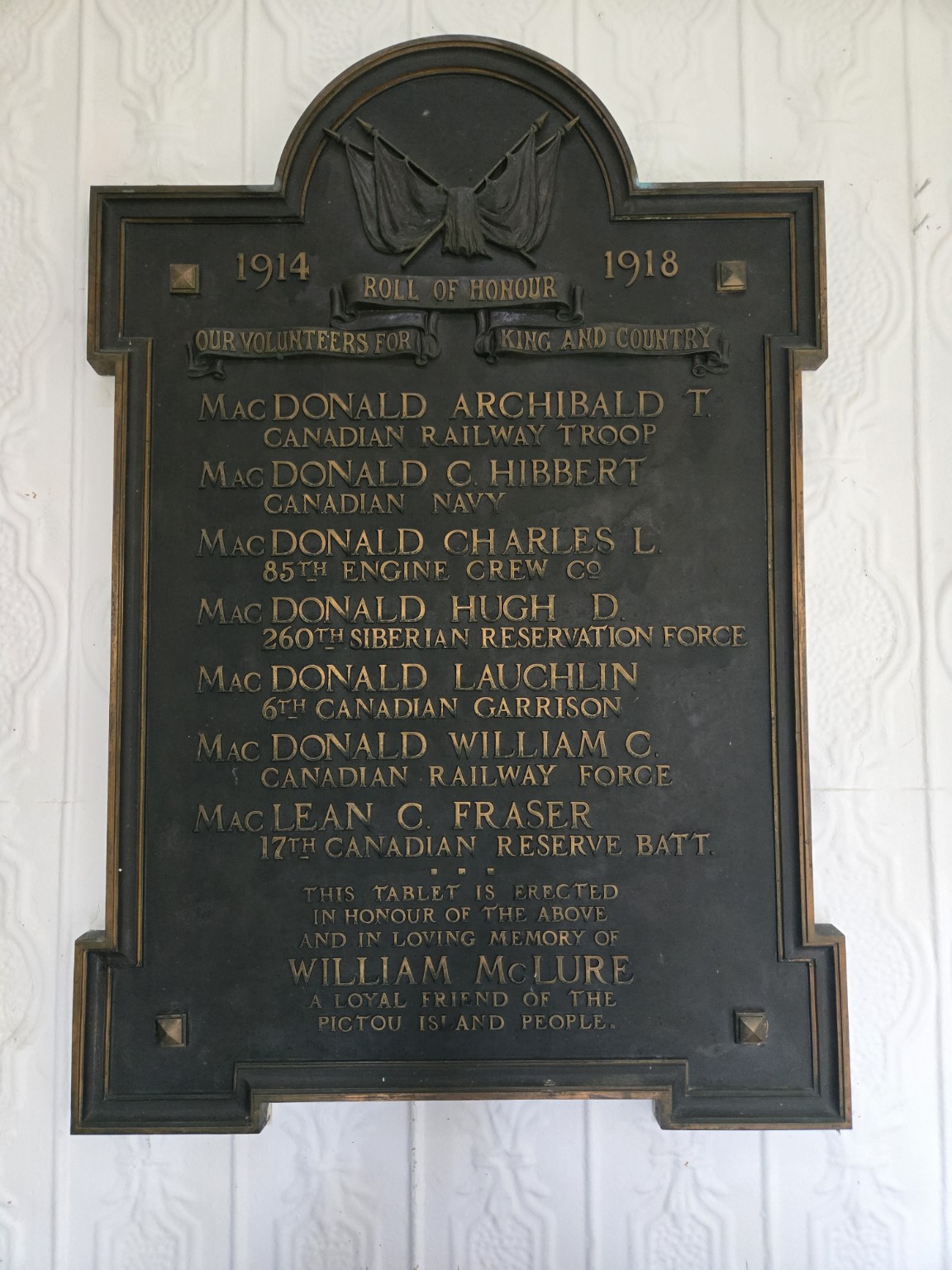
These working copies have been extracted from the interpretive panels. Select an image to enlarge it or contribute names, dates, places, and corrections. Higher-resolution originals can replace these copies later without changing their records.












 Enlarge & zoom