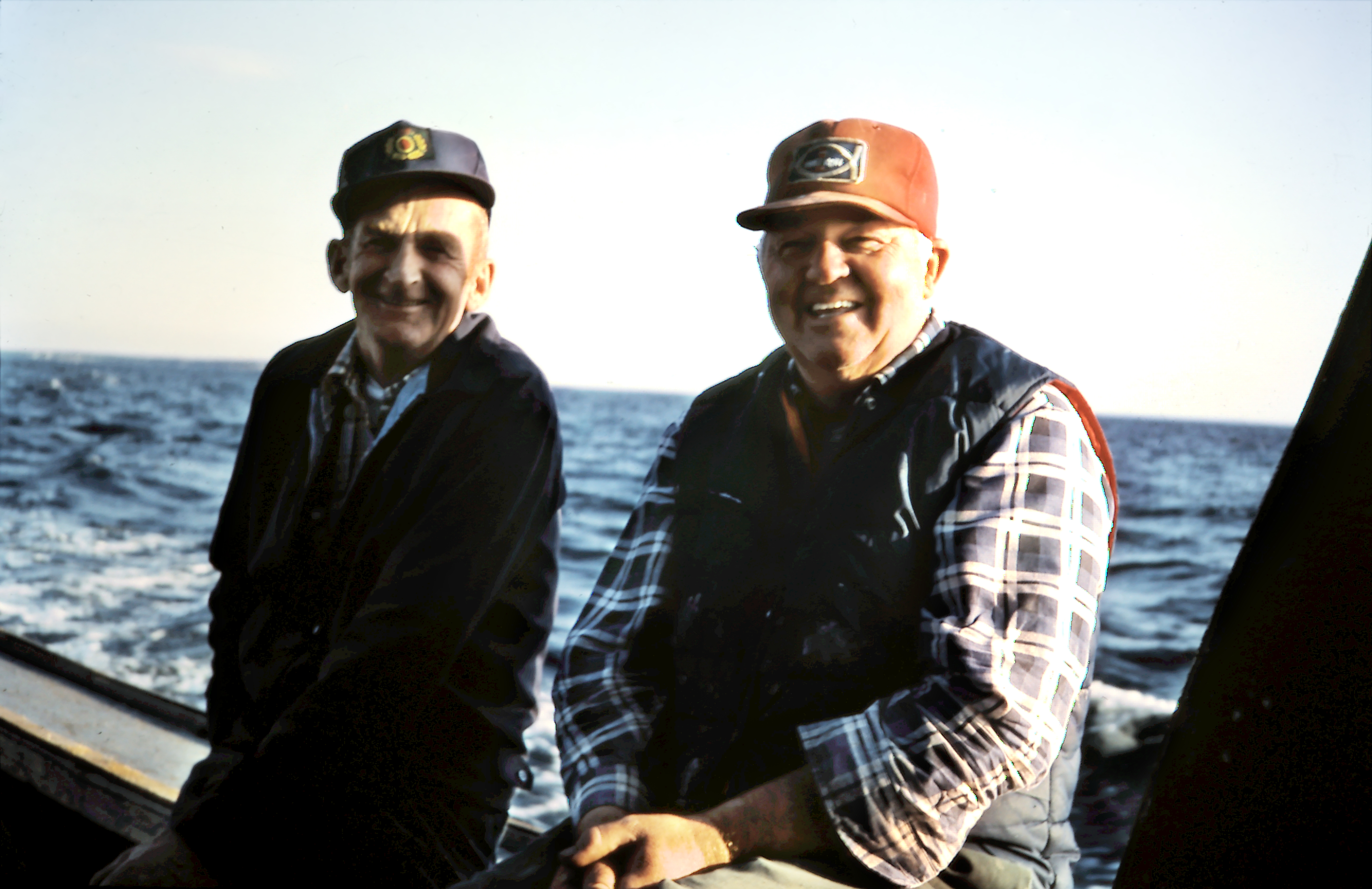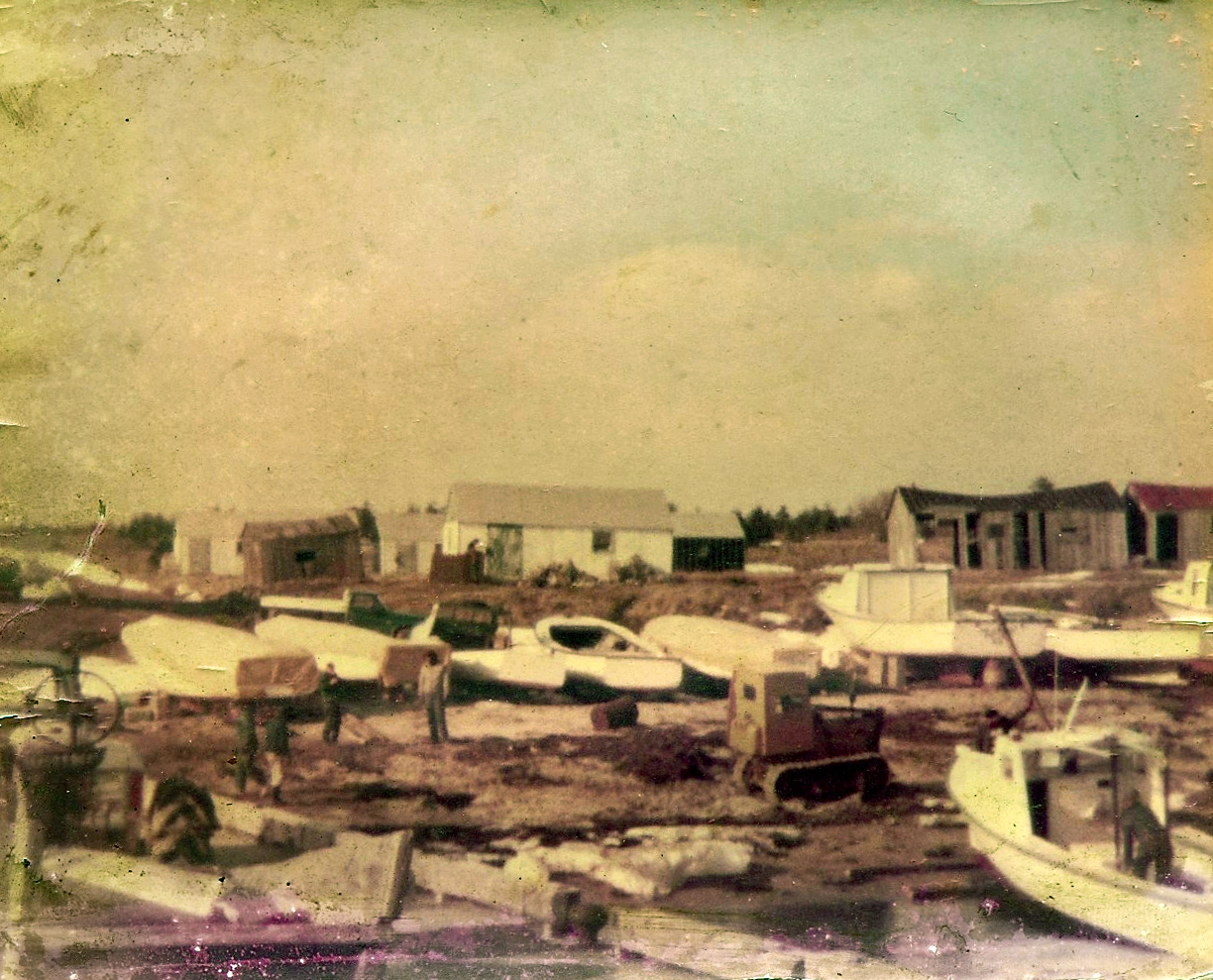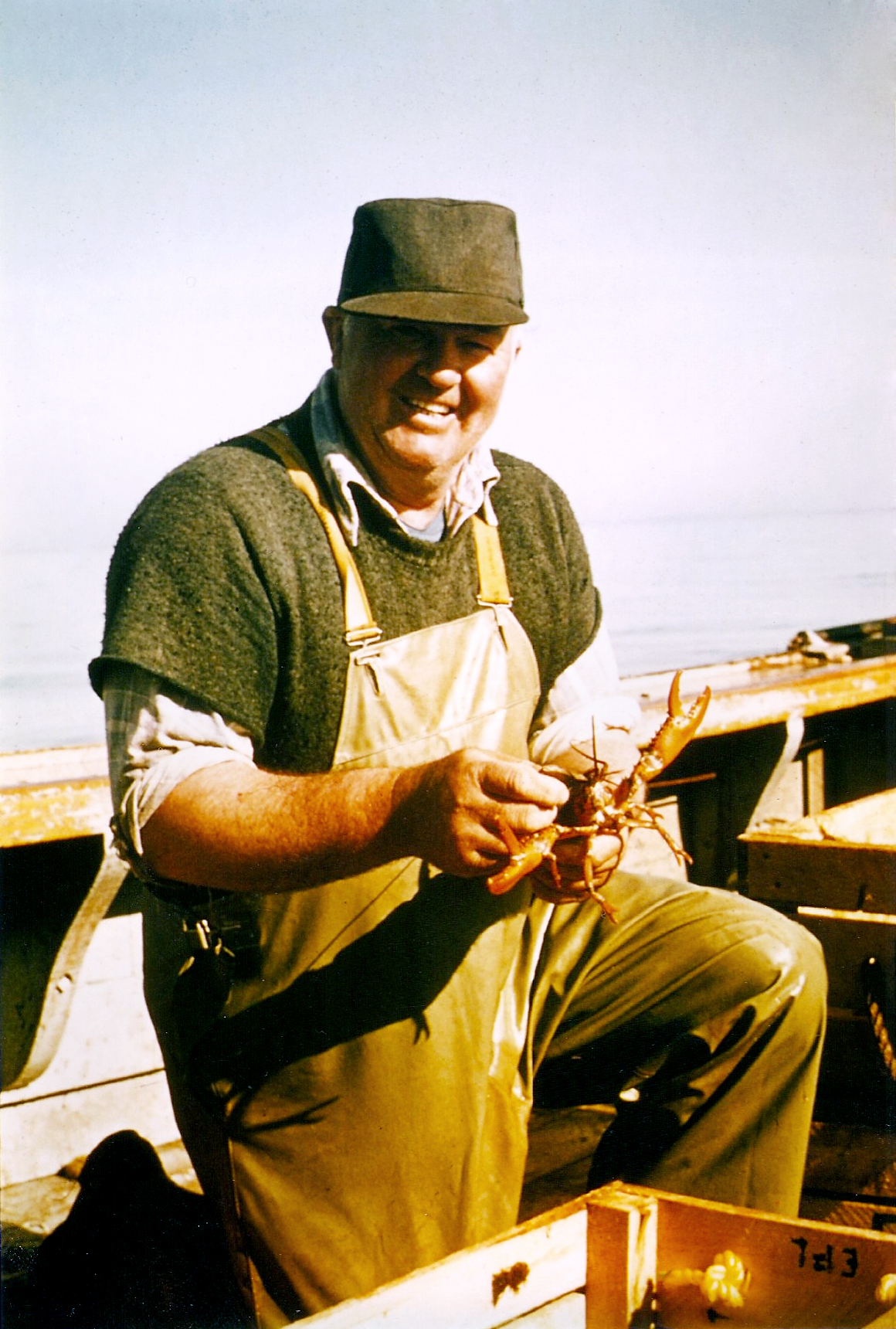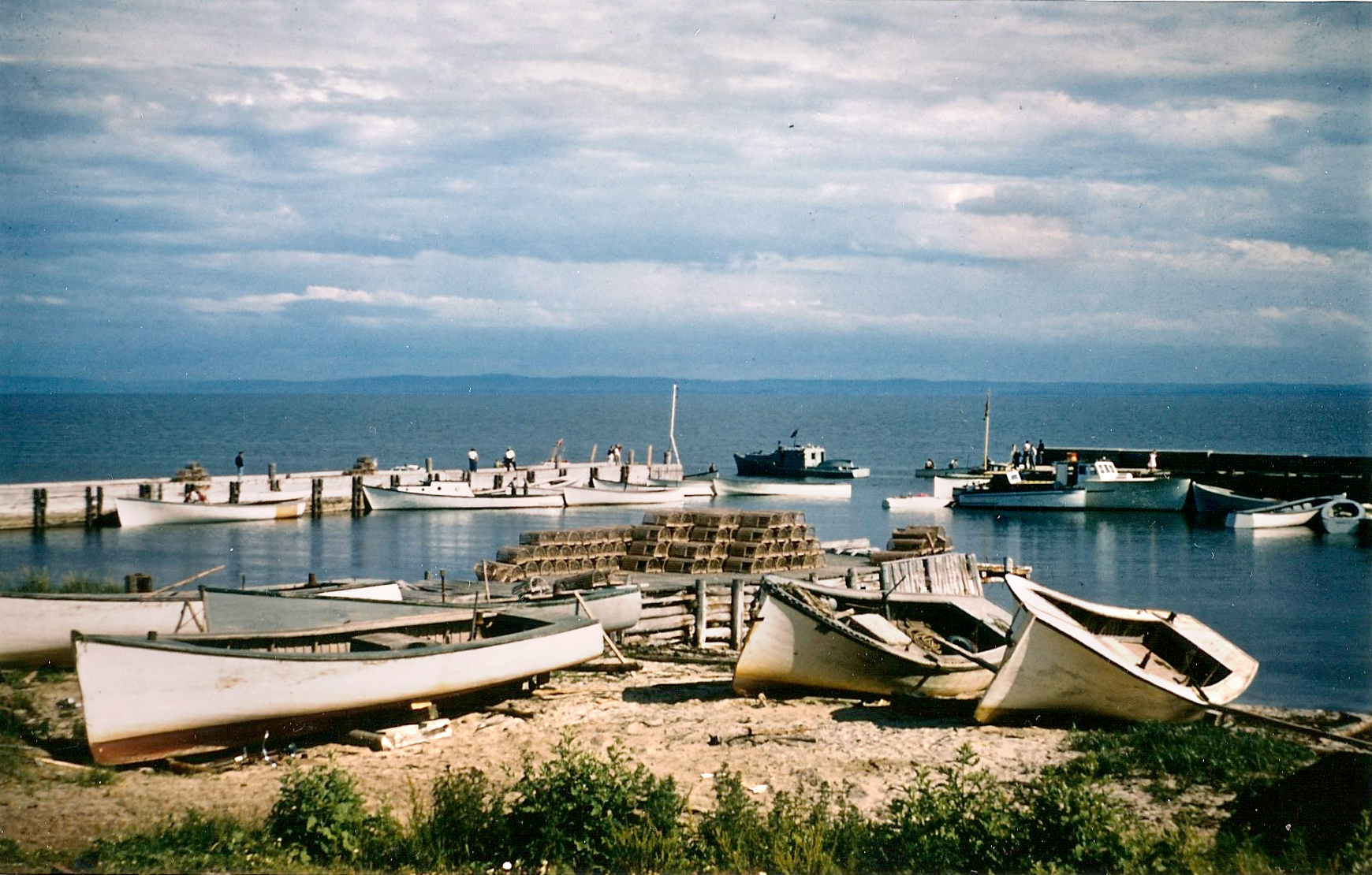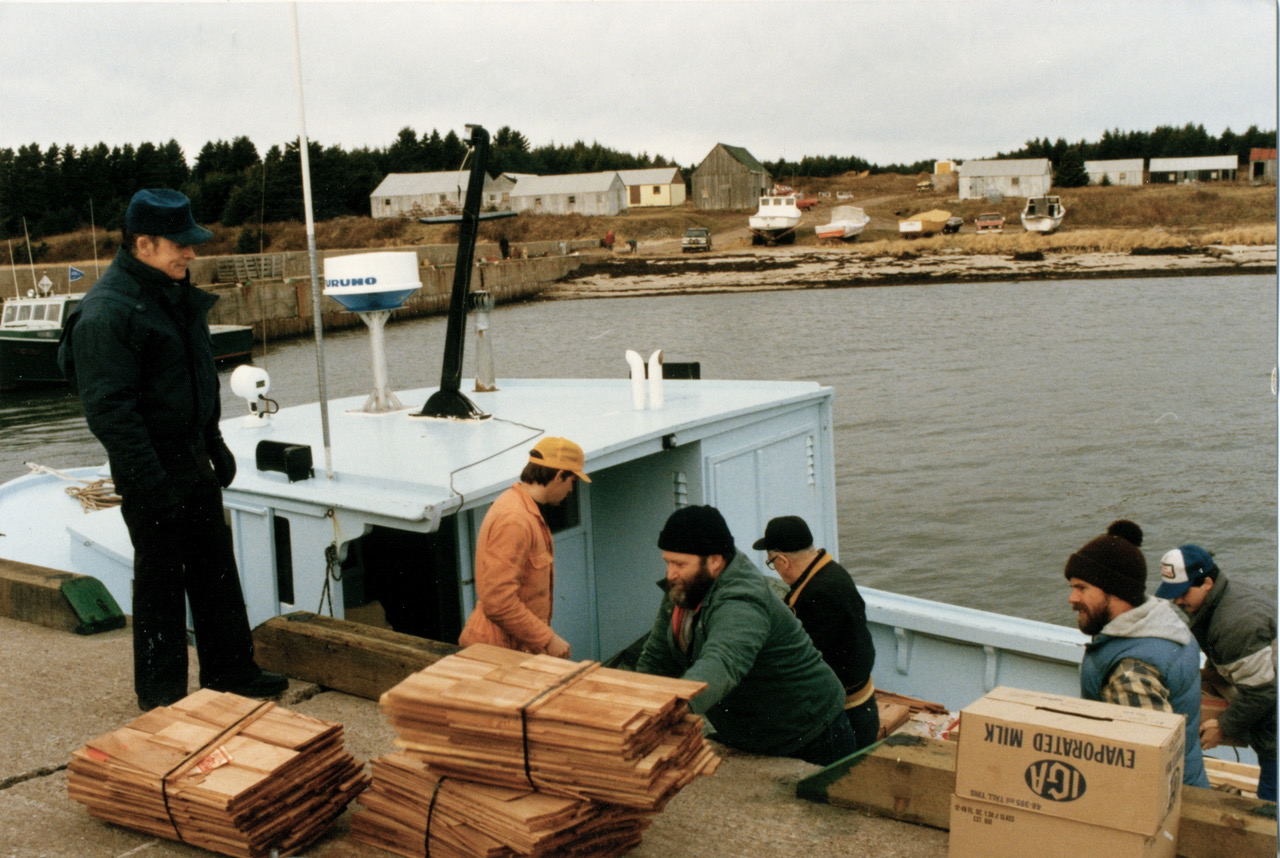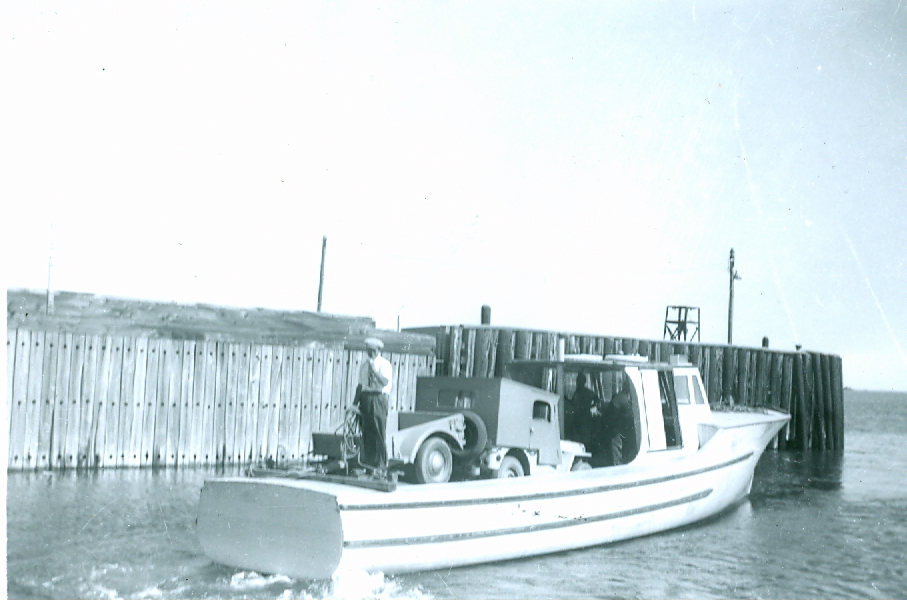
On a working shoreline, lobster was never just the catch in a trap. It meant boats and bait, steam and boiling water, cans and packing tables, family labour and seasonal crews, shore roads, wharves and the trip to market. For a time, factories reshaped several parts of Pictou Island’s coast. Fishing continued long after the factory buildings were gone.
Follow the people behind the catch—from the crews who went out to sea to the women and young people whose work helped keep processing running. Historic photographs show buildings and gathering places; government returns and property records reveal the changing business beneath them. The name ‘The Lobster Island’ is a modern exhibition title, not a proven old geographic name.
Chapter 1
The sea becomes an industry
Pictou Island families fished before lobster factories lined the shore. By the later nineteenth century, however, processing linked the island to firms, outside buyers and seasonal labour.
The Lobster Island is PIHS’s modern exhibit title for Pictou Island’s fishery and cannery history.
Heartz’s April 1907 account mentions a lobster factory as part of Island life. This brief description does not count the canneries or identify a particular site; federal returns record three in each of 1903, 1906 and 1907.
For island families, the surrounding waters were a source of food and livelihood long before factory buildings appeared. Commercial lobster fishing is firmly documented by 1881, with processing operations documented in the 1870s, but the exact first Island transaction remains open.
Lobster was important without being timelessly uniform or the only fishery. Federal records also document mackerel, cod, salmon, herring and wild kelp at different dates, while later buyer evidence adds rock crab and an area record for scallop work. A local-history recollection places the first lobster factory on the south shore in the early 1870s and associates it with the MacDonald family. The exact first factory, its identification with Bob’s Hollow, its ownership and its opening year remain unresolved; Shedd & Knox is separately documented at the East End in the 1870s.
Chapter 2
Factories on the shore
The factory history becomes clearer when we follow the original documents. Geologist Alexander Howard MacKay saw several shore workings in 1890; federal returns record separate locations and business interests, including four site/operator entries in 1895 and three canneries in 1903, 1906 and 1907.
Land records document the rights behind some shoreline operations. On 21 April 1883, Malcolm McDonald leased William F. Shedd a parcel on the south side of his farm for twenty-five years. The lease describes the public wharf, shore and access to the main road, with water privileges. Its one-dollar payment was acknowledged in full for the term, not as an annual rent. The lease was registered on 11 October 1887.
A separate deed of 16 September 1887 records Gould N. Brown, trustee of the late William F. Shedd’s estate, conveying interests to James Hogg, a Pictou Island lobster packer, for $485. It describes a freehold parcel with a cookhouse reference, the unexpired 1883 lease and two shanties at West End Cove, while reserving Hugh McLean’s right of way. These are separately described interests, not proof of one factory site, a first factory or a modern property boundary.
A.H. MacKay studied Pictou Island in August 1890 and published his account in 1891. His geological sections identify multiple factory contexts, including a lobster factory and wharf at a south-shore sandy cove and a north-shore factory at a white sandy cove near Hugh McLean’s. His map labels the locations, but they must remain source-specific rather than being merged into one modern point.
The 1895 federal evidence lists four separate egg-source factory/site entries: West End — McClure Bros.; North Side — McClure Bros.; North Side — D. McKenzie; and East End — Jas. Hogg. This is not an exhaustive census of every Island factory. By 1901, federal reporting described packers around Pictou Island enlarging older factories and building new ones, without naming the packers or sites. The federal fisheries return for 1903 records three Pictou Island canneries. Federal returns record three again in 1906 and 1907.
Federal records date the establishment of the Bay View lobster hatchery to 1891. Later records connect the hatchery with eggs collected from Pictou Island canneries.
The federal fisheries report reproduces 1894 testimony associated with McLure, Alexander Leslie and Hogg on printed page 408. Their source forms and locations differ: McLure is described as a Pictou Island packer; Leslie’s Island dateline relates to Bay View/Cariboo work; Hogg’s extract is dated Pictou. The extracts document participation in the hatchery network, without establishing that all three operated Pictou Island factories.
A. H. MacKay recorded the name “Lobster Factory Cove” in his 1891 account of Pictou Island. Ron MacDonald identifies that historic cove as the place Islanders now call John Dans Cove, also written John Dan’s Cove. Brenda Spence MacLeod’s research identifies Prince Edward Islander John Dan MacLeod and a group of PEI fishermen with a factory at the cove. This association does not establish John Dan’s legal title to the land.
A 1905 federal schedule documents McLeod & Stewart as a Pictou Island lobster-packing firm. Evidence strongly supports Alex Stewart, Norman MacLeod and John D. McLeod as partners, but the original 1914 newspaper page has not yet been inspected, the exact newspaper-partner identification remains qualified, and the firm’s exact Island site remains unresolved. In 1916, McLeod & Stewart appears separately from Fred Magee’s West End and East End establishments.
The marriage registration of 16 April 1912 records John MacLeod, indexed as John D., as a bachelor lobster packer living on Pictou Island and born at High Bank, Prince Edward Island. It names his parents Donald and Janet and his bride Ethel A. MacKenzie, an Island-born resident whose parents were Murdock and Ellen. A Prince Edward Island legislative biography identifies John Dan MacLeod as Norman MacLeod’s brother and cannery partner. The matching marriage and family evidence strongly supports the John Dan identification, while the handwritten middle initial remains uncertain. Neither source locates his factory at a particular Island parcel.
Roy MacCallum’s undated map, reproduced by Ruth Munro, marks several historic factory sites and operator names. Munro separately wrote that five factories operated at the same time, but the map itself should not be read as a count of five geographic sites or a 1908 operating census. The available evidence does not establish that Fred Magee owned three factories in 1908; ownership and licensing that year remain uncertain.
Chapter 3
Factory Road—a working landscape
Ron MacDonald remembered today’s Factory Road as New Factory Road, leading to New Factory Cove. His account separately identifies historic Lobster Factory Cove with today’s John Dan’s Cove.
On a map reproduced by Kenneth MacCallum, the road corresponding to today’s Factory Road is labelled ‘North Shore Road.’ Ron MacDonald remembered the road as ‘New Factory Road,’ leading to ‘New Factory Cove.’ The dates, overlap and sequence of these names have not yet been established.
Ron MacDonald remembers the present Factory Road as “New Factory Road,” leading toward a place known as “New Factory Cove” and the canneries there. This remembered factory landscape is separate from John Dans Cove, historically called Lobster Factory Cove. Dana Morin identifies New Factory Cove at the shoreline locality shown by marker 12 on the PIHS map. The marker does not define a surveyed boundary or factory footprint.
Campbell Lane is remembered as the older road to John Dans Cove, with the newer private Josh & Julia Way running parallel. Local accounts describe factory remnants, including brickwork, at the cove. The cove’s factories and the separate Factory Road landscape formed part of an industry spread around the Island’s shore.
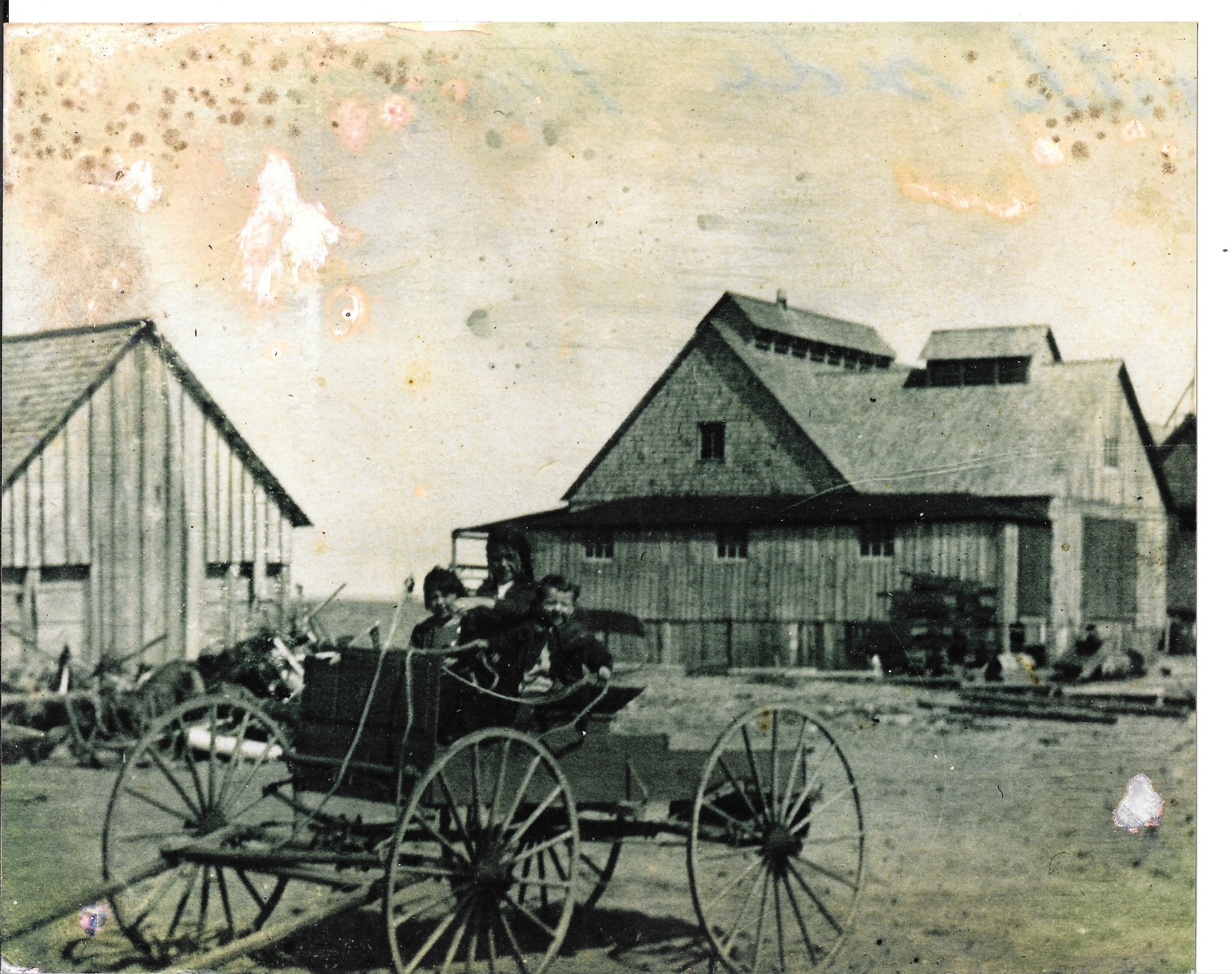 Enlarge & zoom
Horse-drawn carriage beside large industrial buildings
Chapter 4
Work behind the catch
A factory did not run on fishermen alone. Cooking lobster required heat and water; meat had to be cleaned, packed and sealed; supplies and empty tins arrived from outside.
Processing required much more than catching lobster. Cooking, removing and cleaning meat, packing and sealing cans, and supplying fuel and water made the factory a labour system. Census evidence records eleven factory workers in 1901, ten of them women, and seventeen factory employees in 1911. Those counts remain partial because census dates and occupation labels did not capture every seasonal worker or every Islander who supplied food, fuel, water and transport.
Later recollections name cooks Janet Rankin, Lorraine MacMillan, Thelma MacDonald, Ona Glover, and Lois (MacCallum) MacLean. Andy Ward MacCallum hauled spring water to the East End cookhouse.
 Enlarge & zoom
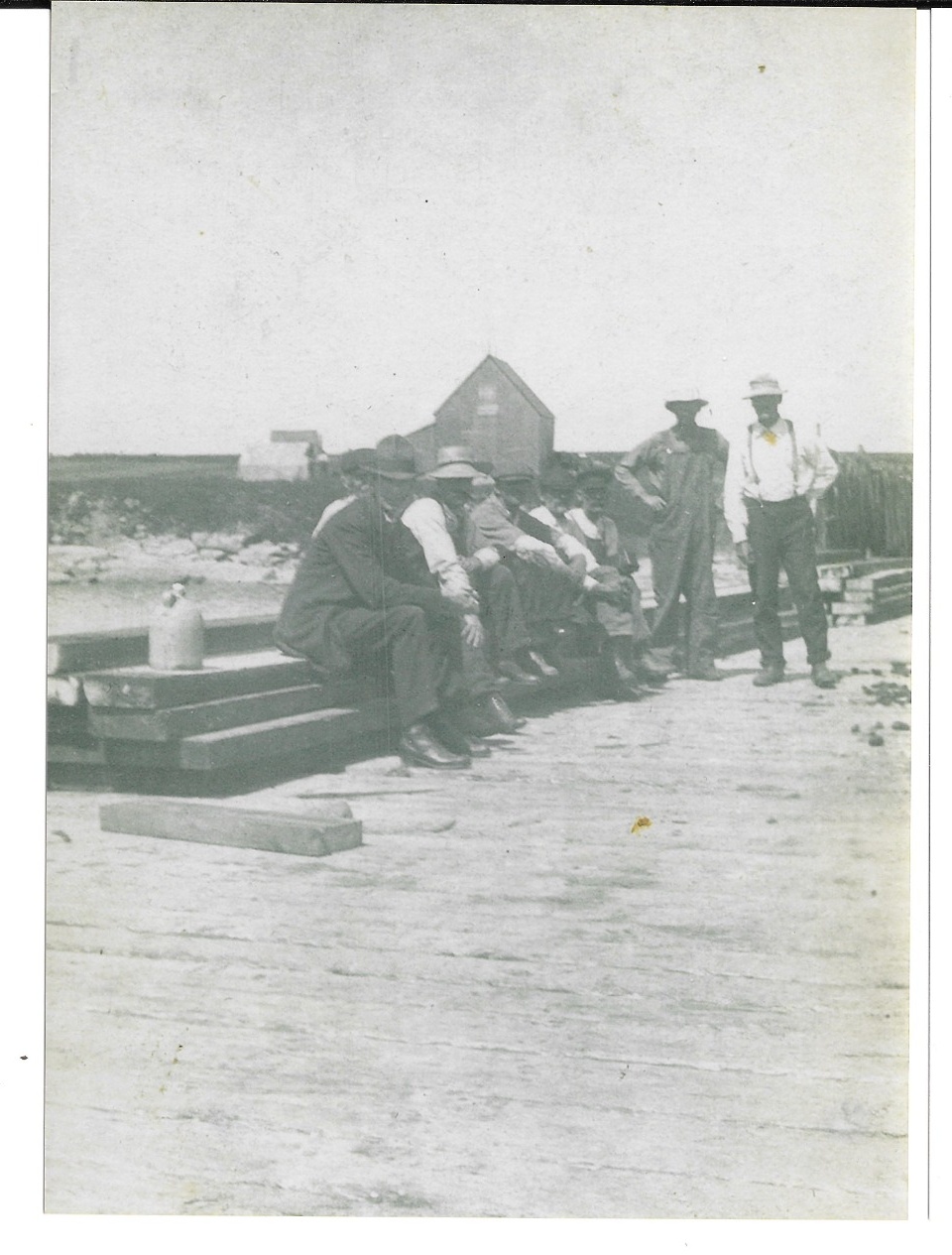
People gathered at the Pictou Island wharf
Chapter 5
Factory communities
Factories created temporary communities as well as products. Some crews came from Prince Edward Island, mainland Nova Scotia and New Brunswick.
Seasonal workers from Prince Edward Island, New Brunswick and mainland Nova Scotia joined island families. Cookhouses, bunkhouses, stores, wharves, trap buildings and homes created small working communities around the plants.
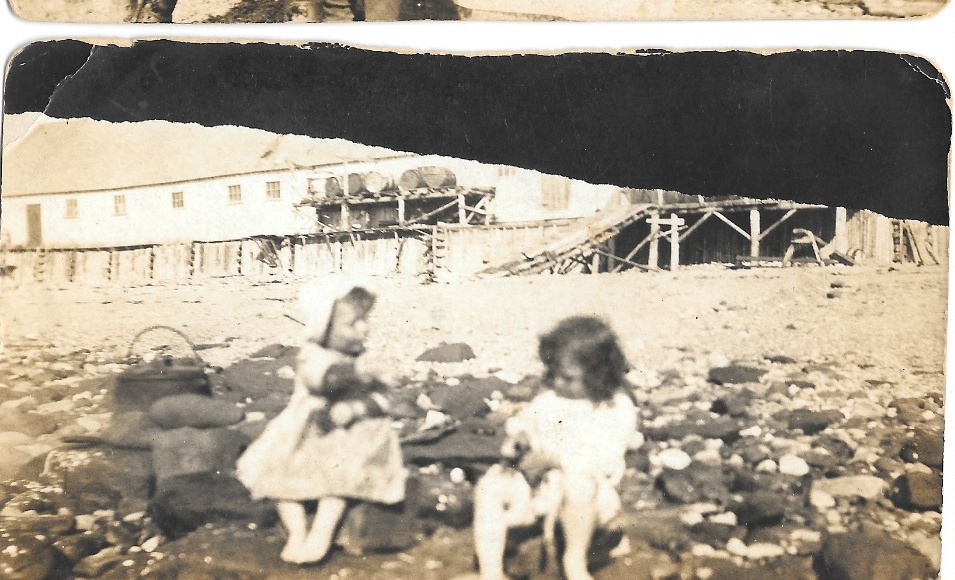
Surviving photographs show shoreline buildings, wharf structures, workers and children, but many people, dates and exact locations remain unidentified. They document the scale and social setting of the industry without authorizing identifications by resemblance.
 Enlarge & zoom
Two children on the rocky shore near large shoreline buildings
Chapter 6
Jack ‘Happy’ MacDonald: Factory work, fishing and the lighthouse
Jack Happy’s life makes the larger fishery more personal. Later accounts remember him entering work as a boy at Fred Magee’s East End factory, fishing with his own gear in youth and becoming a well-known West End fisherman and lighthouse keeper.
John Alexander MacDonald, remembered as Jack ‘Happy’ or ‘Happy Jack’, worked in the Island fishery and served as West Lighthouse keeper. Sources also record his name as John A. MacDonald and use both MacDonald and McDonald spellings.
Later recollection places him working at Fred Magee’s East End lobster factory at thirteen and having fishing gear of his own by seventeen. Those details are useful retrospective evidence of youth labour and entry into the fishery, but they are not a recovered payroll or employment register. His later lobster-fishing career is strongly supported, as is his service as West End lighthouse keeper from about 1933 through the reported 15 February 1962 automation date.
No evidence currently connects Jack to ownership, residence, naming, work or fishing at a historical place called ‘Lobster Island.’ Biographical accounts report that he fished about 460 traps and landed roughly 5,000 pounds in each of 1925 and 1926, with later annual landings reportedly reaching 15,000 pounds. These are attributed figures for one fisherman, not Island-wide totals.
Chapter 7
Boats, traps and fishing grounds
Fishing was a craft handed down through families: making traps, knitting and mending heads, judging grounds, maintaining boats and preparing for seasons. Lorraine MacMillan remembered a winter spent helping her mother knit a thousand trap heads.
The factory era ended, but fishing culture continued. MacCallum describes early shallow-water catching and two-person crews tending about 200 traps, followed by a system in which some canneries financed boats, gear and provisions. Families later made wooden traps and knitted or repaired trap heads; Lorraine MacMillan recalled helping her mother knit one thousand heads in a winter. Prince Edward Island fishermen stayed in East End shanties, while the offshore Eastern Banks later became the subject of a fishing-ground dispute in 1977.
The regulatory history reaches back into the nineteenth century. MacCallum records protective measures beginning in 1871 and a broader 1892 licensing proposal. Hogg, Craig & Co.’s response shows the commercial concerns of packers and exporters; it should not be presented as neutral fishery science.
Photographs captioned “1954 Boat Races – East End” and “‘Mary Mae’ 1954 Boat Races” record boats as part of recreation and community life after the factory era. Those captions do not identify every owner, crew, boat type or race result.
Fishing work included women, young people, wage workers and unpaid family workers. The 1931 census records women among the temporary fishing workers enumerated on the Island, alongside varied fishing occupations. These records describe work in its historical setting, not a single pattern shared by every Island household.
 Enlarge & zoom
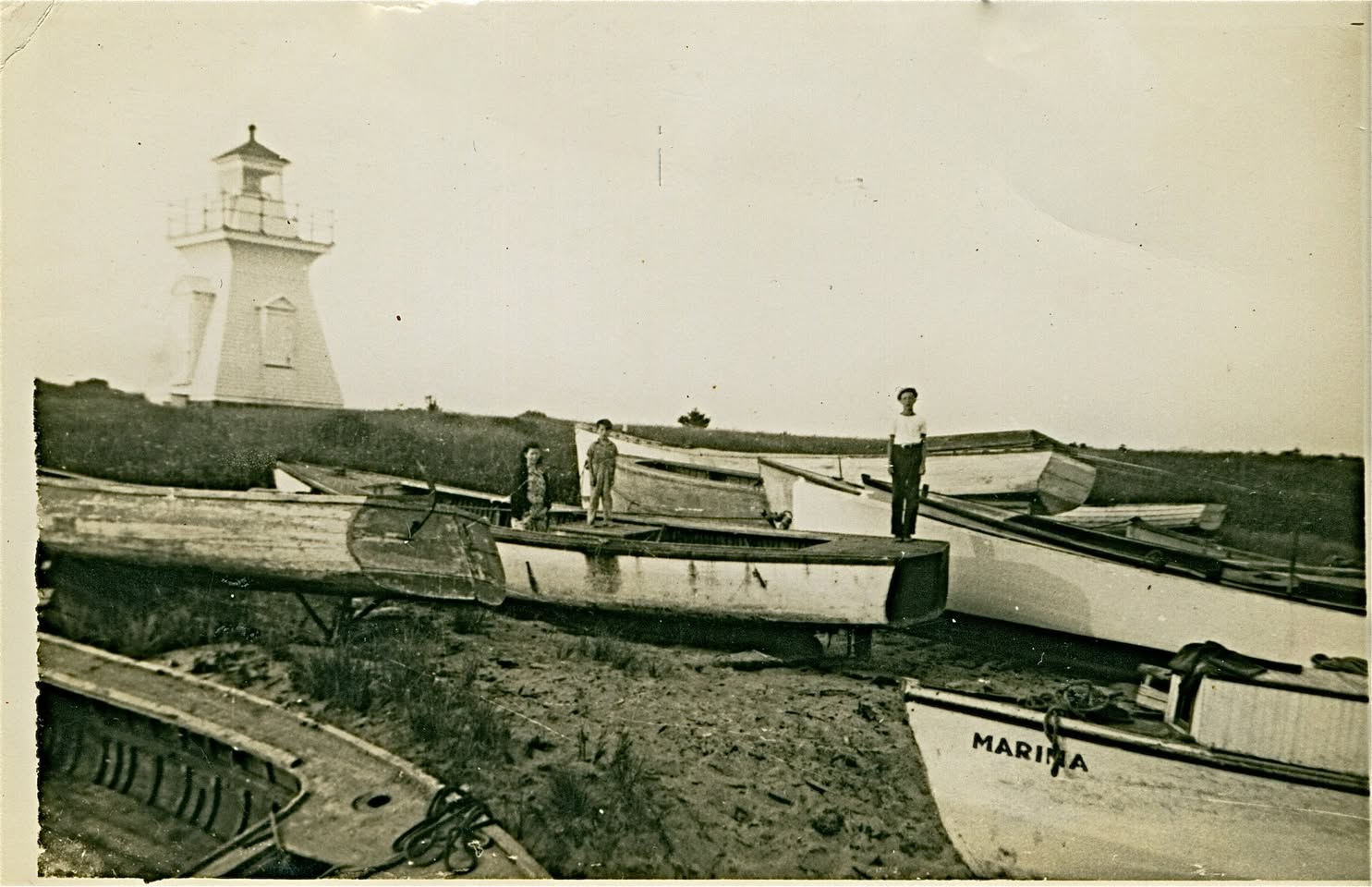
Fishing boats beside the South Side Lighthouse
Chapter 8
When the factory era ended
The cannery era did not end with one universal closing date. The surviving evidence places its winding down broadly in the 1923–1926 period, and later reports distinguish the last packing from earlier closures.
The sources distinguish different kinds of ending. PIHS research indicates that by the early 1920s two factories remained: Magee at the East End and another near the end of Factory Road. The Factory Road operator and exact sequence remain unresolved. Lobster canning appears to have ended during 1923–1926; Kenneth MacCallum separately records the last fish packing in 1926. The East End Magee building was unused by the early 1930s and later dismantled as erosion threatened the site.
Chapter 9
A fishery after the factories
Once the canneries were gone, lobster was still central to many families’ livelihoods. Buying smacks, mainland processors, newer boats, licensing and changing markets altered the path from trap to buyer.
Fishing, buyers and island landing places continued after the canneries disappeared.
Later oral histories describe mainland smacks bringing bait and buying Island lobster, and North Nova Seafoods identified Pictou Island East and West among its supply locations around 2000. Brenda Spence MacLeod’s submitted account says the wharf smack stopped buying in 2024; that statement and the 2024–25 resident-fisher changes remain attributed community evidence until federal licence, transfer and buyer records are attached.
Brenda also records that Hurricane Fiona temporarily exposed factory traces at John Dan’s Cove and the New Factory site before shifting sand covered them again.
The clearest surviving evidence is a combination of place names, family memory, photographs, archival research and scattered physical traces. The factories are gone, but the island they helped shape remains visible in Factory Road, working boats, family histories and the stories people continue to preserve.
Final chapter · chronology
Timeline
Explore key dates in this story and follow the links to read more. Approximate dates and uncertain identifications are noted.
Processing and commercial lobster fishing are documented
The surviving record places shore processing in the 1870s and commercial lobster fishing firmly by 1881, while the first Island transaction remains open.
Bay View lobster hatchery is established
Federal evidence places the hatchery in 1891 and later records connect it with eggs collected from Island canneries.
Federal fisheries evidence lists four site/operator entries
The return records several factory contexts and operators; it does not establish four separate companies operating simultaneously.
Federal reporting records factory expansion
Packers around Pictou Island enlarged older factories and built new ones; the report does not identify the packers or sites.
Federal returns record three Island canneries
Federal returns record three Island canneries in 1903, 1906 and 1907.
McLeod & Stewart is documented at Pictou Island
A federal schedule records the firm as an Island lobster packer; its founding date and exact factory site remain open.
John MacLeod’s marriage records Island lobster-packing work
John MacLeod’s marriage to Ethel A. MacKenzie identifies him as a lobster packer resident on Pictou Island and born at High Bank, PEI. It records both parental pairs, without locating a factory or proving land ownership.
The shore-based cannery era winds down
The evidence places the end of lobster canning between 1923 and 1926; fishing continued after the factories declined.
Roy MacCallum’s lobster work
Ruth Munro records Roy weighing lobsters from 1935. His family history connects this working life to the Arthur Roy and Catherine memorial.