For Pictou Island, the Strait was the road to everything beyond the shore. A letter, a doctor, a visit home, a sack of flour and a catch destined for market all had to cross the water. Sometimes a steamer or ferry could make the trip. In winter, ice might make the simplest crossing difficult—or turn an ordinary journey into an emergency.
The island’s transportation history is not a tidy sequence in which one vessel replaced another. Steamers, ferries, small boats, iceboats and aircraft overlapped. Each solved a different problem, and every one depended on people who knew when and how it was safe to travel.
Read Transportation & Communication
The Strait Was the Road
For Pictou Islanders, Northumberland Strait was the route to market, mail, family and services. In winter it could become the greatest obstacle to all of them.
Boats, wharves, steamers, iceboats, ferries and aircraft offered different ways across. These systems overlapped as Islanders adapted to weather, season and changing needs. This is the story of how a community stayed connected.
Chapter 1
Steam and Scheduled Connections
An 1853 timetable for the Fairy Queen shows that regular passenger and mail routes crossed the Strait. It does not establish that the steamer stopped at Pictou Island.
By the middle of the nineteenth century, Northumberland Strait carried scheduled passenger and mail traffic. An 1853 advertisement listed the Fairy Queen for Pictou twice a week. That schedule describes the wider mainland–Prince Edward Island network; it does not establish a stop on Pictou Island.
On 18 February 1858, the Nova Scotia House of Assembly received Allan McDonald’s petition for aid to build a public wharf on Pictou Island. Later provincial estimates listed $100 in 1865 and $200 in 1867, while the 1866 grant allocation was $400. These records trace the effort to secure a landing place; they do not establish when a particular wharf was finished or how much was ultimately spent.
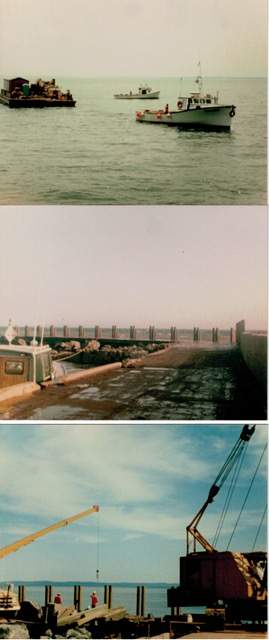
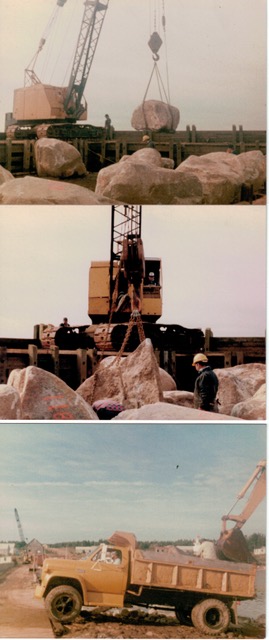
The Island had substantial public marine infrastructure before the twentieth century. Federal records describe repairs and strengthening of the West Wharf by 1880 and construction of the East Wharf in 1882–83. After damage in 1906, materials were procured for East Wharf reconstruction in 1908–09, but the following report records it as destroyed by 1910. The proposed reconstruction is not known to have been completed, and the East Wharf’s exact modern location remains uncertain. Wharves helped move goods between vessel and shore, but could not remove the uncertainty of weather and ice.
Wharf construction and repair also brought paid work. Two federal accounts from 1898 record 224½ carpenter-days and $336.75 for that labour. Their combined totals were $886.04, including other work and costs. The accounts do not establish how much reached Island households or each worker’s personal income.
The original accounts also record $1,200 spent on West Wharf repairs in the fiscal year ended 31 March 1915; $75 for West Wharf repairs in the year ended 31 March 1920; and $554.12 for Island wharf repairs in the year ended 31 March 1922. The last row does not name an East or West side. These are maintenance expenditures, not first-construction dates. A separate Commons reply on 11 March 1902 records $800 authorized for Island wharf work, without proving its completion.
In a House of Commons reply on 18 November 1963, the government said it intended dredging at Pictou Island in the 1964–65 fiscal year, subject to Parliament approving funds. On 20 July 1964, a further reply proposed using departmental dredging equipment, with the starting date dependent on weather and progress on other scheduled work. These replies document proposed Island work; they do not establish that dredging began or was completed, its expenditure or its exact location.
Marine Atlantic’s histories record the Stanley in Northumberland Strait service from 1888 to 1909 and the Minto in Prince Edward Island–Nova Scotia service from 1899 to 1914. These government steamers carried passengers, mail and freight and were intended to make winter connections more dependable.
Household and fishery recollections show what those connections meant in everyday life. A 1955 household account describes buying flour, sugar, oatmeal and canned provisions in bulk in Pictou before winter. Fishery oral history recalls mainland smacks bringing bait to Island fishers and carrying lobsters back for processing. Island production and mainland supplies supported one another.
Chapter 2
When Winter Closed the Water
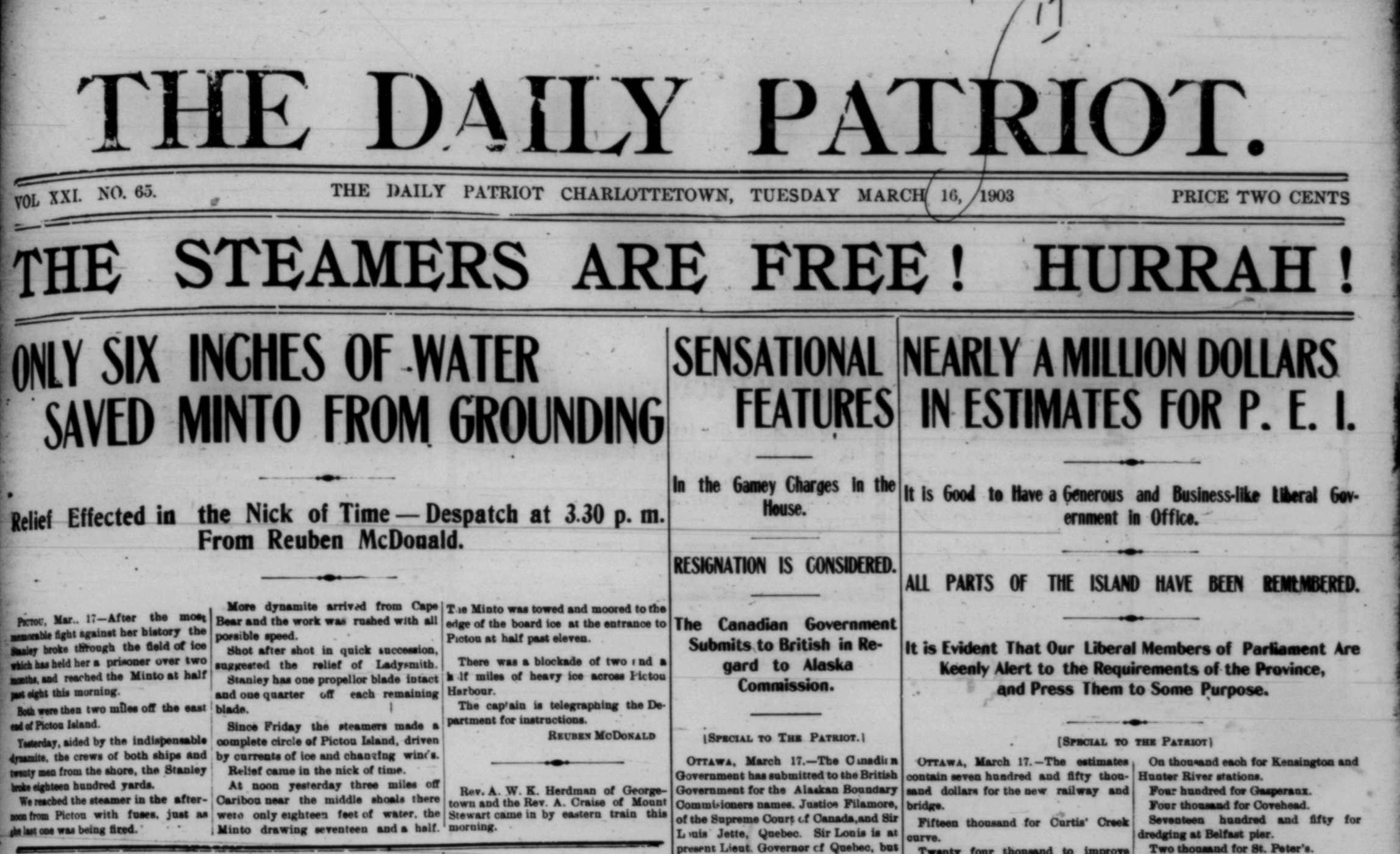
The government steamers Minto and Stanley were built to keep the Strait connected through ice. In February 1903, both struggled.
Winter could turn a familiar route into an obstacle. In 1903, even the government icebreakers Minto and Stanley struggled against the Strait’s ice. Pictou Island became a stepping stone for people trying to reach land from an immobilized ship.
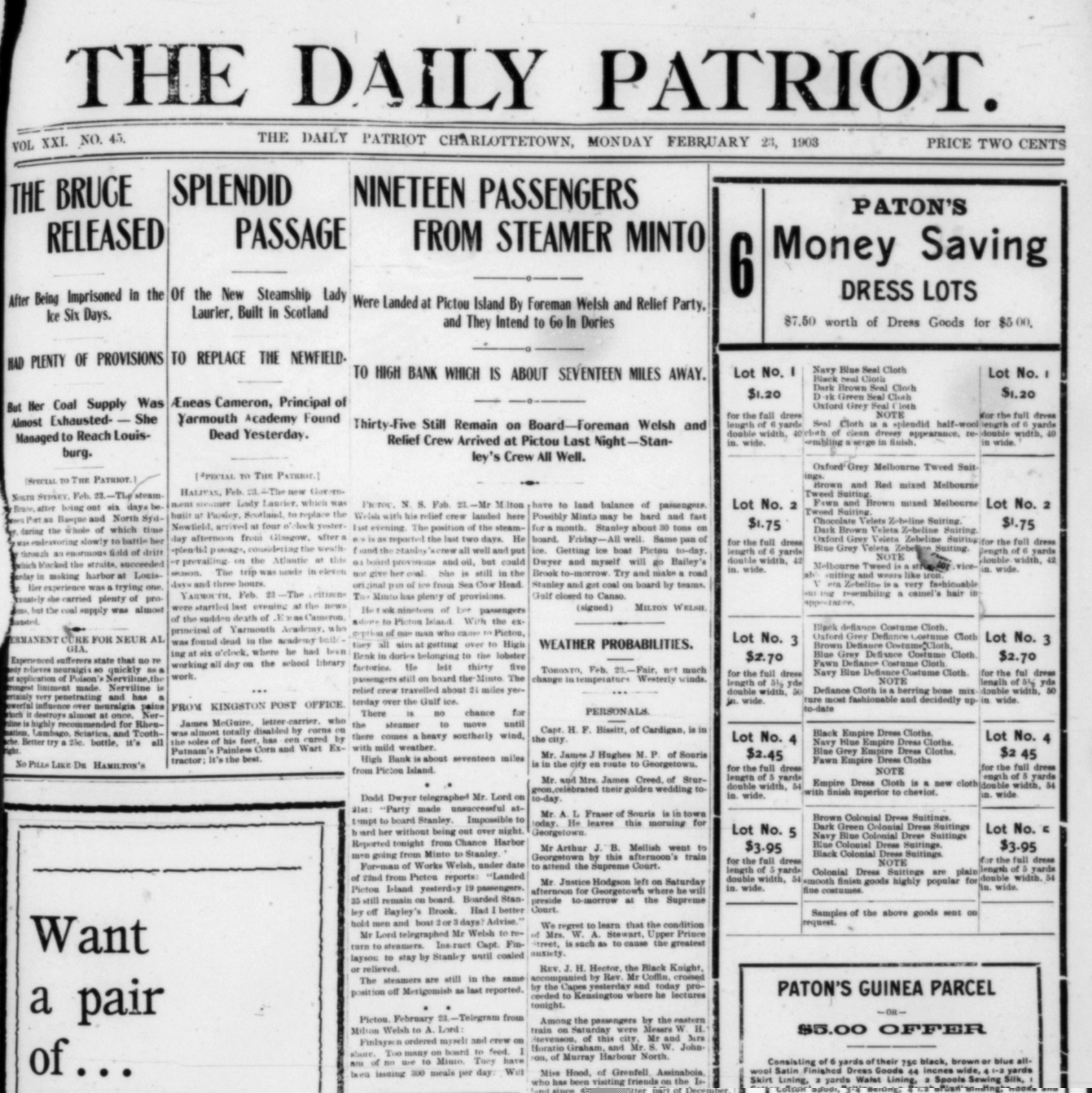
The Daily Patriot reported on 23 February 1903 that foreman Milton Welsh and a relief party landed 19 Minto passengers on Pictou Island while 35 remained aboard. Most of those landed intended to continue toward High Bank, about 17 miles away, in dories belonging to the lobster factories. The report records that plan, but does not establish that the onward crossing was completed in those dories.
The federal life-saving station return for the year ending March 1916 lists Duncan McCallum as coxswain at Pictou Island, a crew of seven, and a 25-foot Dobbins-pattern lifeboat designed to right itself and clear water. The boat offered trained crews another means of helping people in danger around the Island.
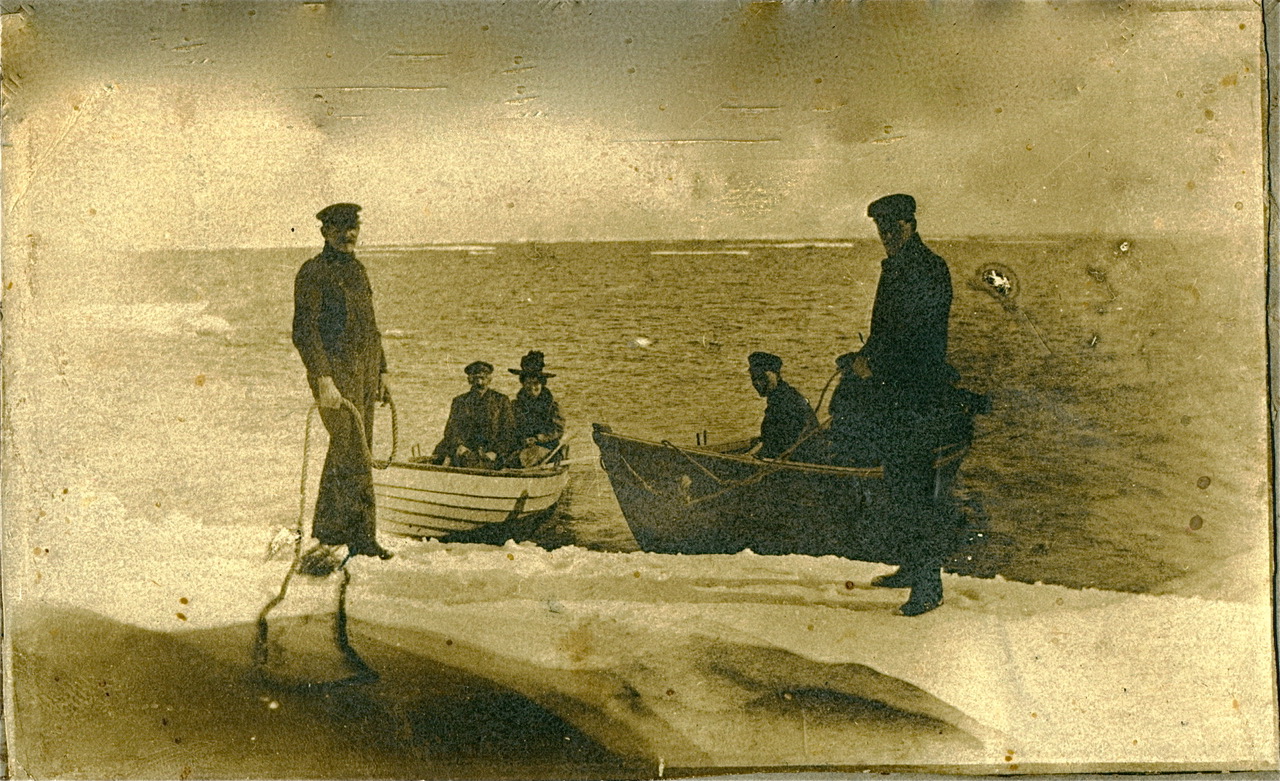
When large ships could go no farther, travel still depended on people reading the ice, walking and using small craft. The planned use of factory dories links this emergency to the Island’s working shore: equipment used for fishing could also become part of a route to safety.
Allison Mitcham’s revised account preserves a separate memory of an Island hockey team crossing in 1912 through open water and ice by small boat. It also recalls winter medical travel using a sleigh, human hauling and a mainland boat as conditions changed. These attributed recollections convey the improvisation involved; they are not a timetable or a single documented rescue.
 Enlarge & zoom
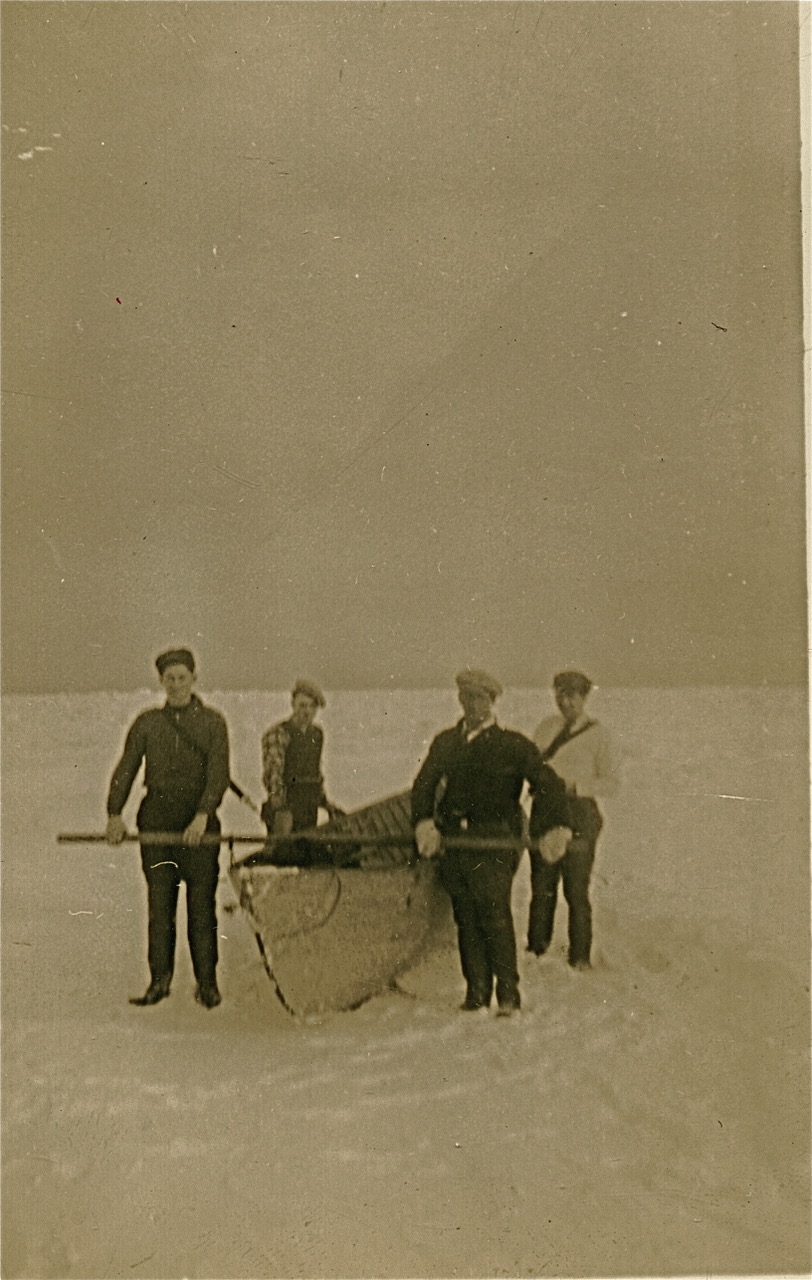
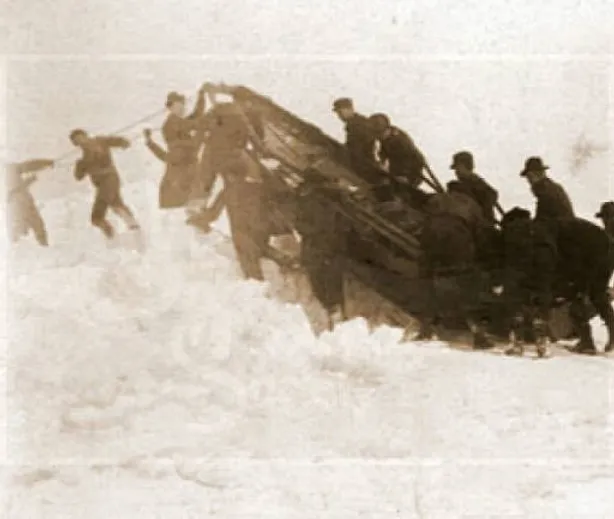
People hauling an iceboat across the ice
Chapter 3
Mail on the Ice
A letter mattered only when someone could carry it. Organized mail service is documented by 1902; winter journeys could involve hauling a small craft across ice, floating it through open leads and deciding when conditions were too dangerous.
Organized mail carriage between Pictou and Pictou Island is documented federally by 1902. Winter service depended on more than a boat: crews needed knowledge of tides, open leads and moving ice, and journeys could be hazardous or interrupted.
The surviving Pictou Island iceboat makes that work tangible. PIHS accounts attribute it to Vincent Turple Sr. and give conflicting construction years of 1940 and 1941. Eddie ‘Spike’ MacDonald is remembered as the last iceboat operator and iceboat postmaster.
This boat was built decades after the 1903 Minto–Stanley emergency. Its importance is that it shows how winter travel by small craft remained necessary long after large icebreaking steamers entered service. It was one part of a changing transport system, never a guarantee of an uninterrupted crossing.
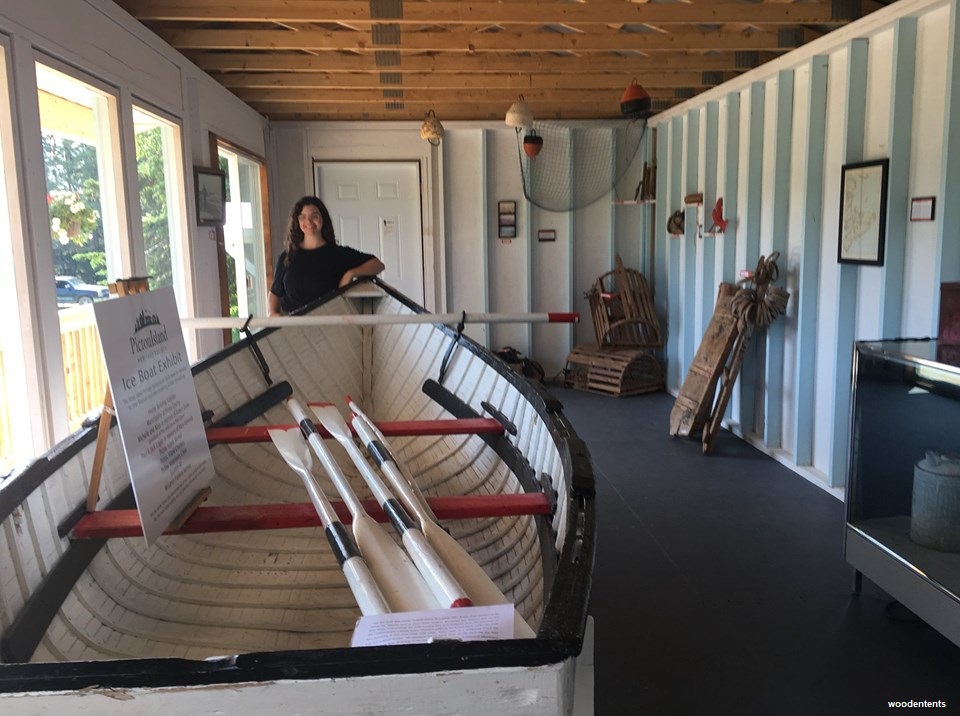 Enlarge & zoom
The preserved Pictou Island iceboat on display
Chapter 4
The Ferry Becomes Part of Island Life
Ferry service brought regularity to crossings that had long depended on individual arrangements, but it still relied on weather, operators and local landing places. Photographs preserve vessels and people, while records distinguish the 1930s Dot association, the later Pictou Island vessel and Vera III service.
Collection photographs captioned ‘Pictou Island Ferry 1920’s’ preserve evidence of the early ferry connection. A separate photograph is captioned ‘Ernie Rankin – Pictou Island Ferry.’ That association does not date Rankin’s operation to the 1920s, and the exact beginning of regular ferry service remains uncertain.
Local histories report Charlie Turple operating Dot in 1934; a 1937 newspaper identifies Charles Turple as the Island’s ferry operator. A federal record lists DOT DOT, official number 153360, registered at Pictou in 1934. The match is promising, but a registered-owner entry is still needed to confirm that this was Turple’s Dot.
The federal card for Pictou Island, official number 192306, records construction at Pictou in 1950 and first registration there in 1951. The card dated 29 January 1951 names Ernest Rankin, an Island fisherman, as owner of all 64 shares. Its 1950 build year conflicts with the later local account attributing construction to Stright-MacKay in 1949. The card’s builder lettering requires independent review, and registered ownership does not establish the vessel’s ferry-service dates.
The card’s reverse records a bill of sale dated 1 March 1974 and registration on 4 April, transferring all 64 shares to a new owner. The ownership transaction does not establish a ferry-service transition or explain the reported 1967 grounding.
Local accounts report a grounding in 1967 and place Charles MacMillan’s Vera III service from about 1968 to 1984. They also name Dot, Dinty and Jennie R. in Turple’s earlier sequence. These accounts preserve the people and boats behind the service, while some ownership details and transitions remain uncertain.
The ferry made the crossing part of ordinary Island life: a way to move passengers and supplies through the season. Its history belongs with the wharves and the families who operated it, as well as with the vessels themselves.
Chapter 5
From Iceboat to Air Mail
Aircraft introduced another way across the water and ice. An extraordinary 1934 wedding took place over Pictou Island, and by April 1949 a documented Air Stage flight delivered fifty-seven pounds of mail to the island.
A local account records an aircraft landing on Pictou Island in October 1930. The aircraft’s identity remains uncertain. Community histories place more regular air connections in the early 1940s, adding another way across when travel on the water was difficult.
The Daily News of St. John’s reported in November 1935 that Russell Lent and Margaret Little Wood had married in June 1934 while Walter Fowler’s aircraft circled Pictou Island. Rev. J. G. Wakeling performed the ceremony and Walter Grant witnessed it. The report connects the Island to an unusual journey across the Strait; the aircraft’s altitude remains uncertain.
Aircraft carried personal journeys as well as mail. Nova Scotia’s civil register records the marriage of Cameron Walter MacDonald and Clara Agnes Cheverie in Pictou on 28 February 1949. A clipping preserved by Ruth Munro describes their separate ski-plane journeys to the Island that afternoon, landing on snow-covered ice in a cove east of Norway Point. Munro labels the clipping 1948; the civil record dates the marriage to 1949.
A postal Air Stage flight is documented on 1 April 1949. D. S. MacNeil of Gulf Flying Service flew from New Glasgow to Pictou Island and back, carrying 57 pounds of mail to the Island and six pounds on the return. This establishes postal aircraft service by 1949, without fixing the first date of regular service.
The change was an overlap of methods, not a single clean handover. Local memory associates the end of the iceboat era with about 1950–51, but the precise transition remains uncertain. Mitcham’s recollection of sheep sometimes obstructing aircraft on the Island road adds a detail of everyday adaptation to the later aviation story.
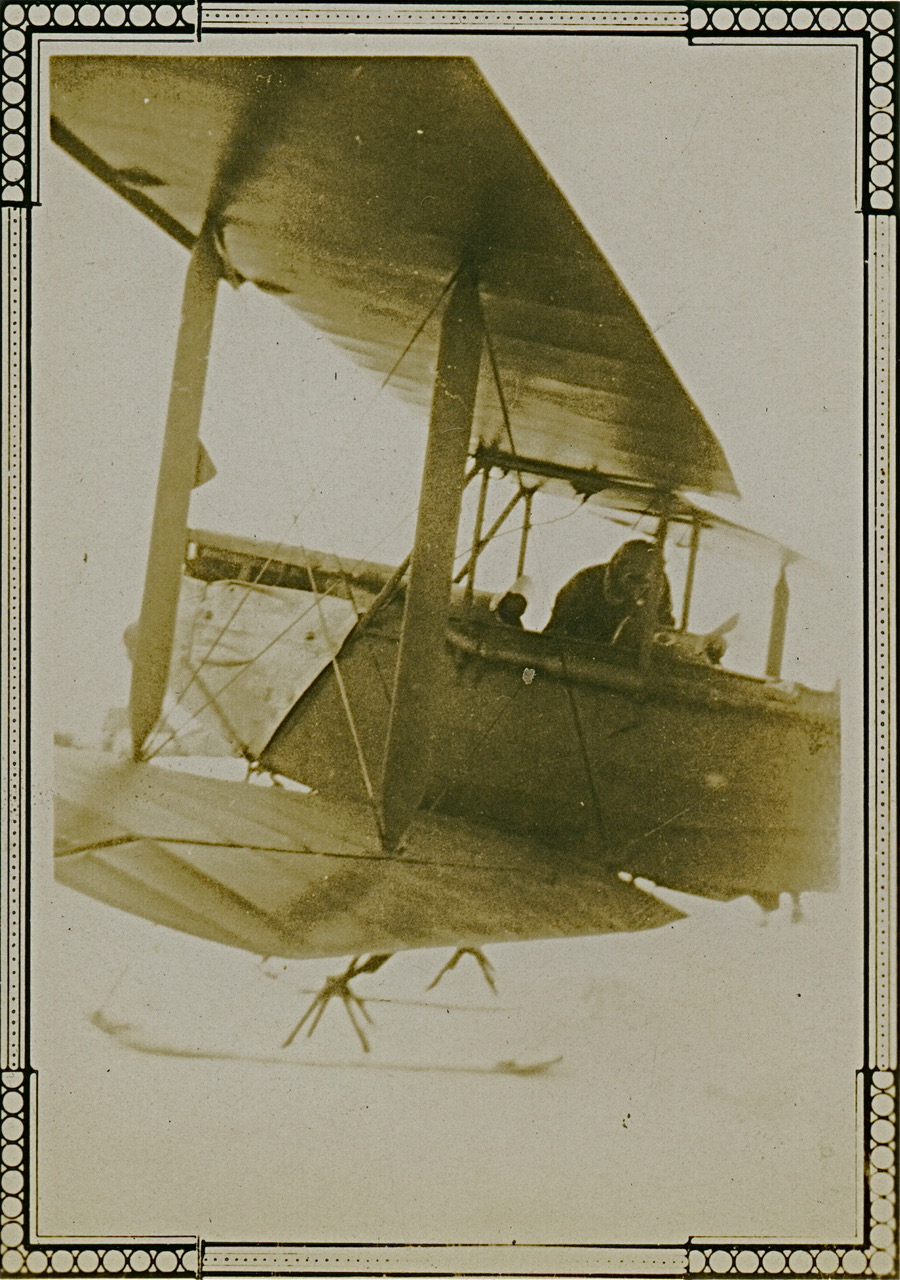 View photograph & help identify
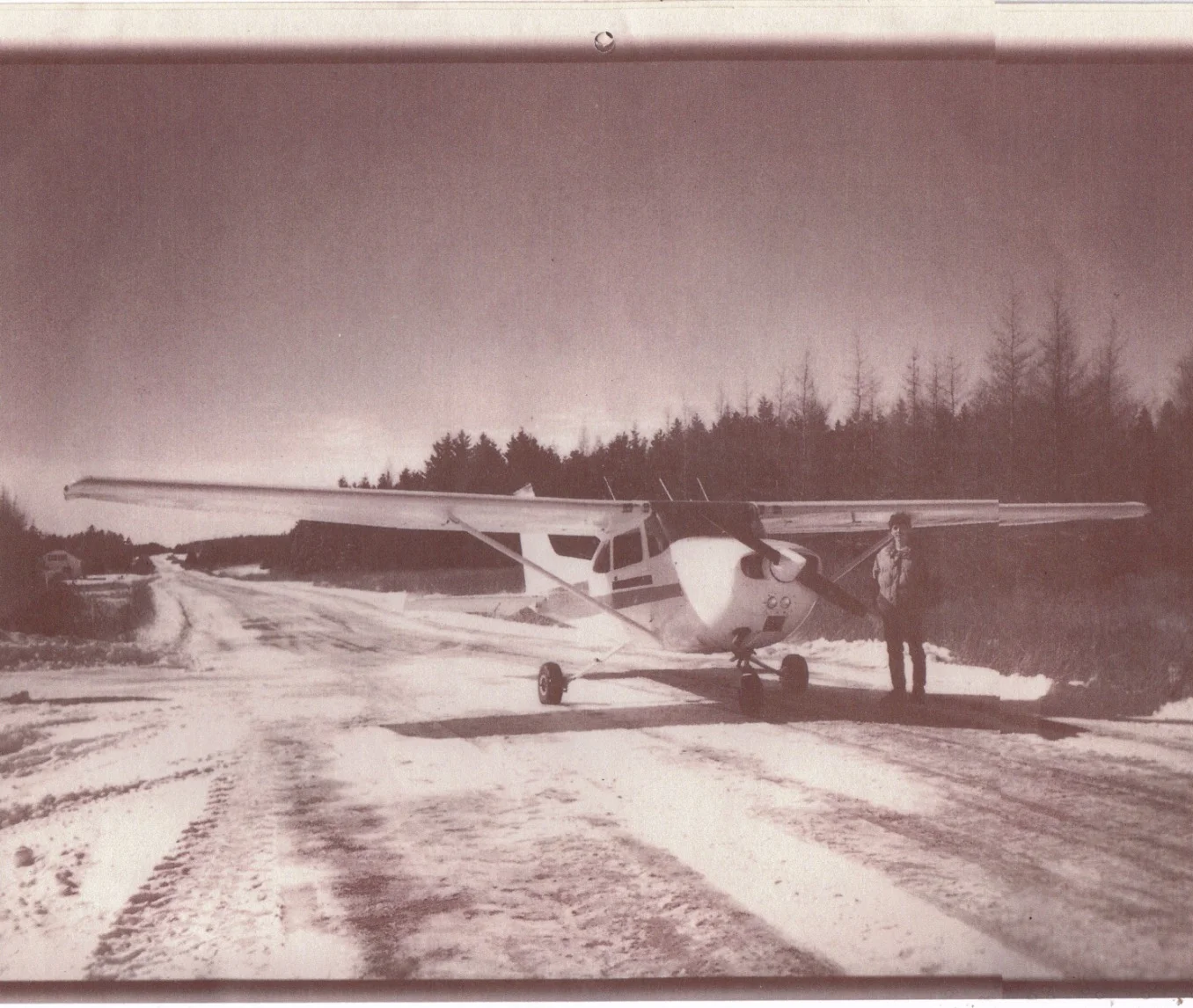 Enlarge & zoom
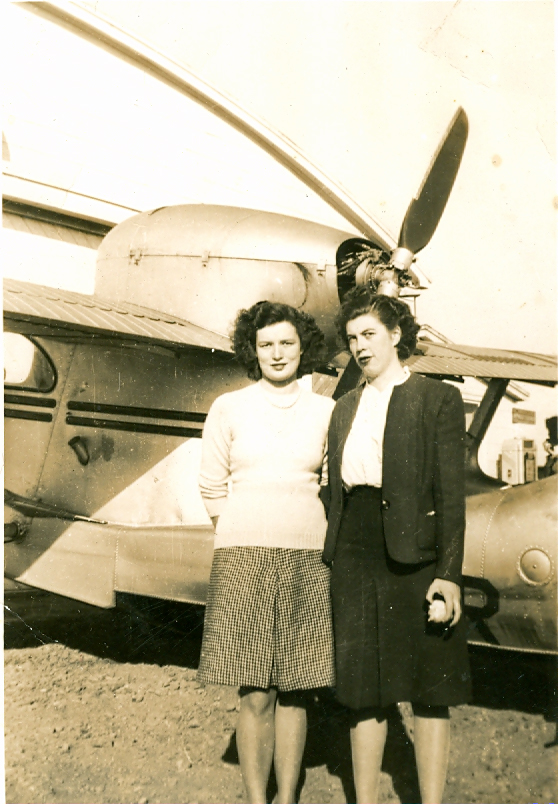
A Pictou Island mail-plane photograph
Chapter 6
From Torch Signals to Telephones
Before telephone contact, people could use lights, signals and messages sent by boat to communicate across the Strait. In July 1921 the federal government laid a submarine telephone cable, beginning a new communications chapter.
Messages did not always need a physical crossing. Ruth Munro records Islanders using burning straw torches to signal across the Strait, with Leslie Simpson at Bayview associated with the mainland signalling point. She identifies Hilda Simpson as an important source for that history.
Munro preserves an account of Islanders pressing for telephone service, although its exact newspaper date has not been established. Federal records independently confirm 1919 funding for the cable and document the government cableship C.G.S. Tyrian’s July 9–14, 1921 operation. Munro identifies 1921 as the year of the first telephone and the beginning of telephone contact with the mainland.
The Tyrian’s report distinguishes instructions issued on 9 July 1921 from cable laying on 10–14 July. The Public Works accounts record $8,942.50 for the cable under Construction and Improvements. These records do not identify the exact shore landing points or the date telephone service was activated.
Building an Island network required local work. In the account preserved by Munro, participating households supplied five poles, dug five holes and erected the poles, receiving shares in the Pictou Island Mutual Telephone Company. Contact across the Strait and connections between Island homes were parts of the same effort, but not the same installation.
The submarine cable needed repairs in its early years. Radio later offered another connection: Munro records a radio telephone in Allan MacFarlane’s house in 1930, moved to Charles MacCallum’s house in 1934 and operated by Duncan MacCallum after Charles’s death in 1940. Roland H. Sherwood recalled radio providing backup when drifting ice severed the cable in 1945.
Later radio links connected through Fraser’s Mountain near New Glasgow. In 1976, Munro records Maritime Tel & Tel installing a modern dial system, underground cable on the Island, new household equipment and a communications building, with wind-generated electricity. The old poles and wires were removed. Underground distribution between Island homes was distinct from the submarine connection across the Strait.
From a visible torch to a voice on the telephone, these systems changed how quickly news could travel. Their history sits beside the ferries and mail boats because each answered the same need to stay connected.
Chapter 7
The Same Problem, Different Tools
A modern visitor may focus on the boat ride. For Islanders, the crossing has always been about continuity: families reaching home, products leaving the shore, medicine or news arriving when needed.
A public wharf, an iceboat, a ferry, a government steamer, a mail aircraft and a telephone cable look like different stories. For Pictou Island they were overlapping answers to a shared problem: how could a community stay connected across the Strait?
The water made fishing, trade and travel possible, while weather and season shaped every crossing. Equipment mattered, but so did the work of crews, ferry operators, households stocking up for winter and neighbours maintaining a telephone network.
The preserved iceboat brings that history into view. Around it is a wider story of repeated adaptation, with no single tool able to meet every need in every season.
Final chapter · chronology
Timeline
Explore key dates in this story and follow the links to read more. Approximate dates and uncertain identifications are noted.
Public wharf support is documented
Petitions, estimates and allocations show the wharf as public transportation infrastructure serving the Island and surrounding waters.
The life-saving station formalizes rescue work
The station was established in 1889 and abolished in 1918–19, while local crews remained part of the maritime story.
Ice emergencies make Island connection visible
Reports of the Minto and Stanley show how wharves, dories, factories and local knowledge supported movement through Strait ice.
The submarine cable is laid and repaired
The communications chronology centres on the 1921 cable and the C.G.S. Tyrian’s return for repair in 1923; the exact Island landing remains unestablished.
Chester MacCallum’s ferry partnerships
Ruth Munro describes Chester’s ferry work with Archie and then William C. MacDonald, ending with the 1933 storm.
Air travel expands the Island’s connections
An airborne wedding and a dated 1949 Island flight illustrate changing access to mainland services and family life.