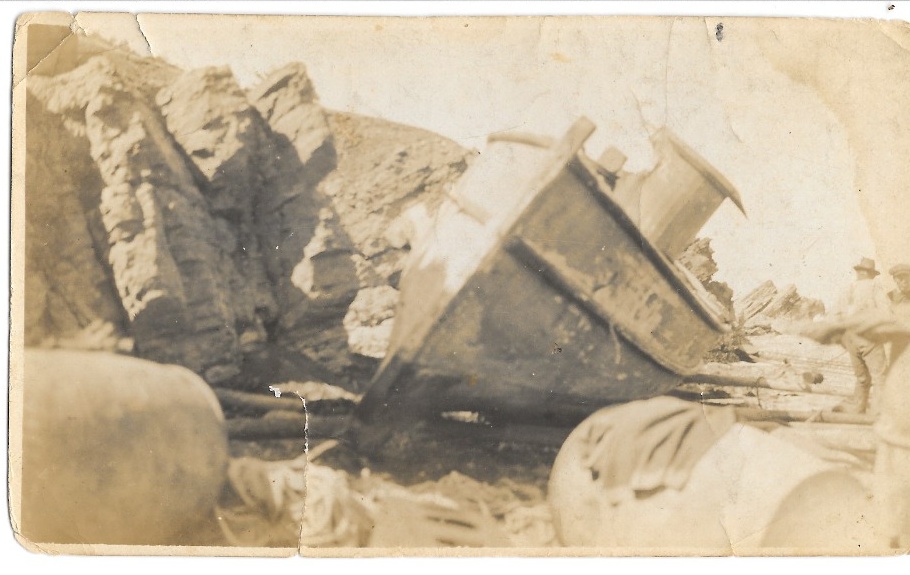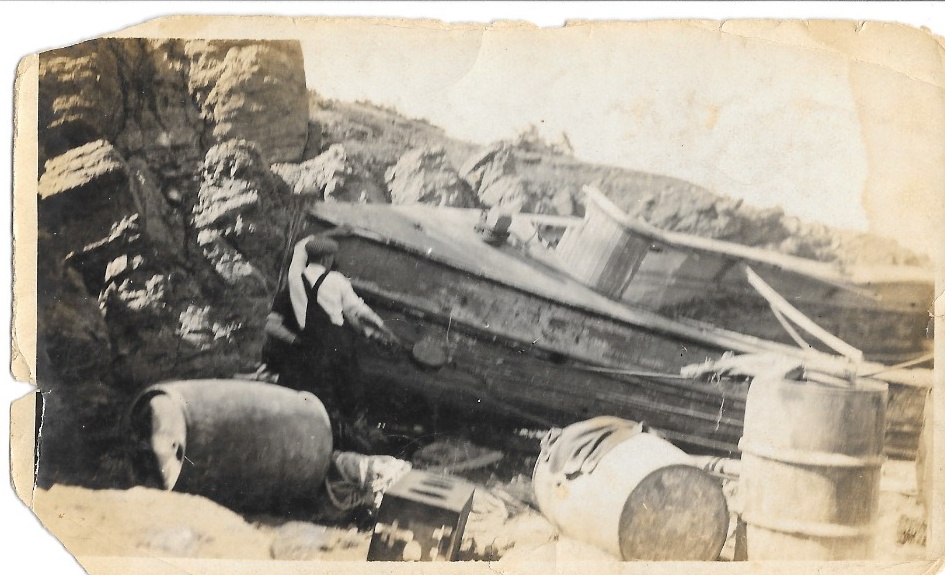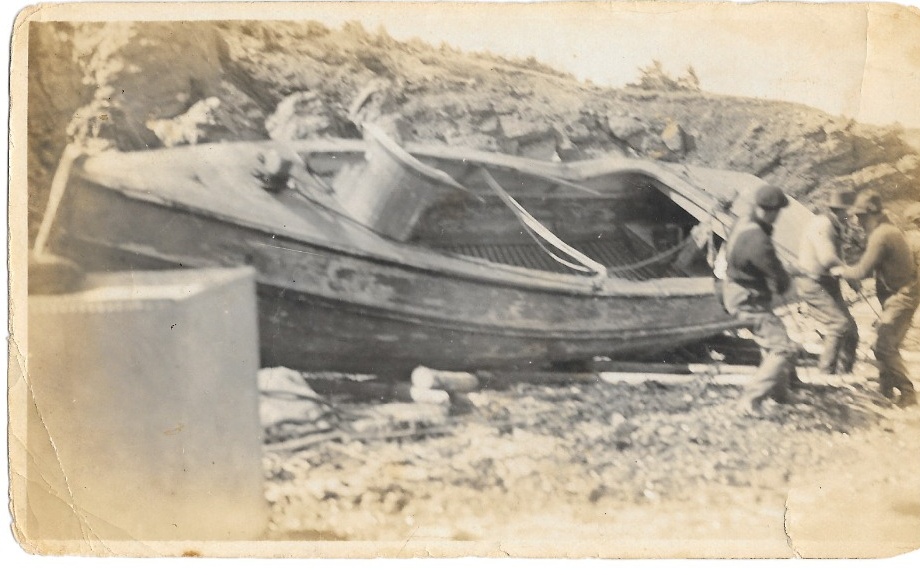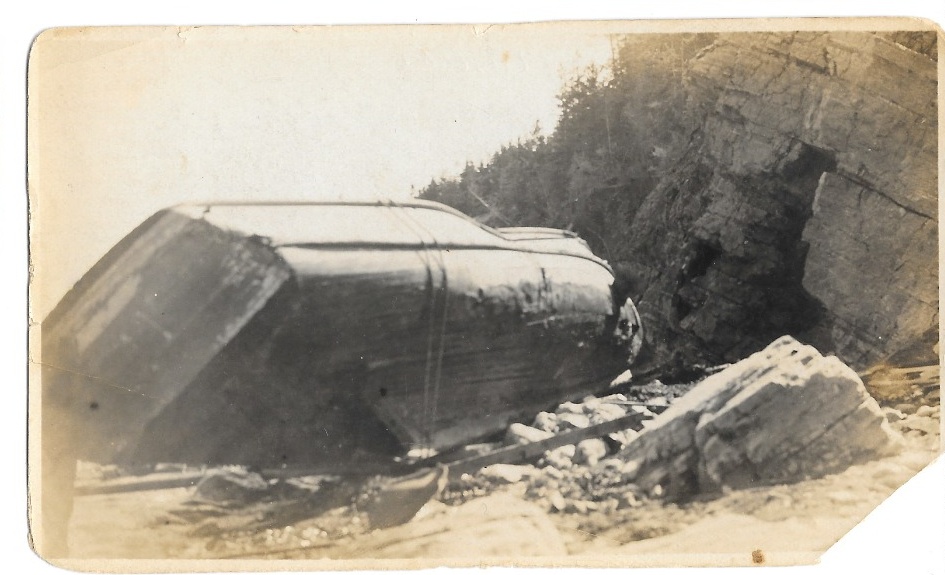
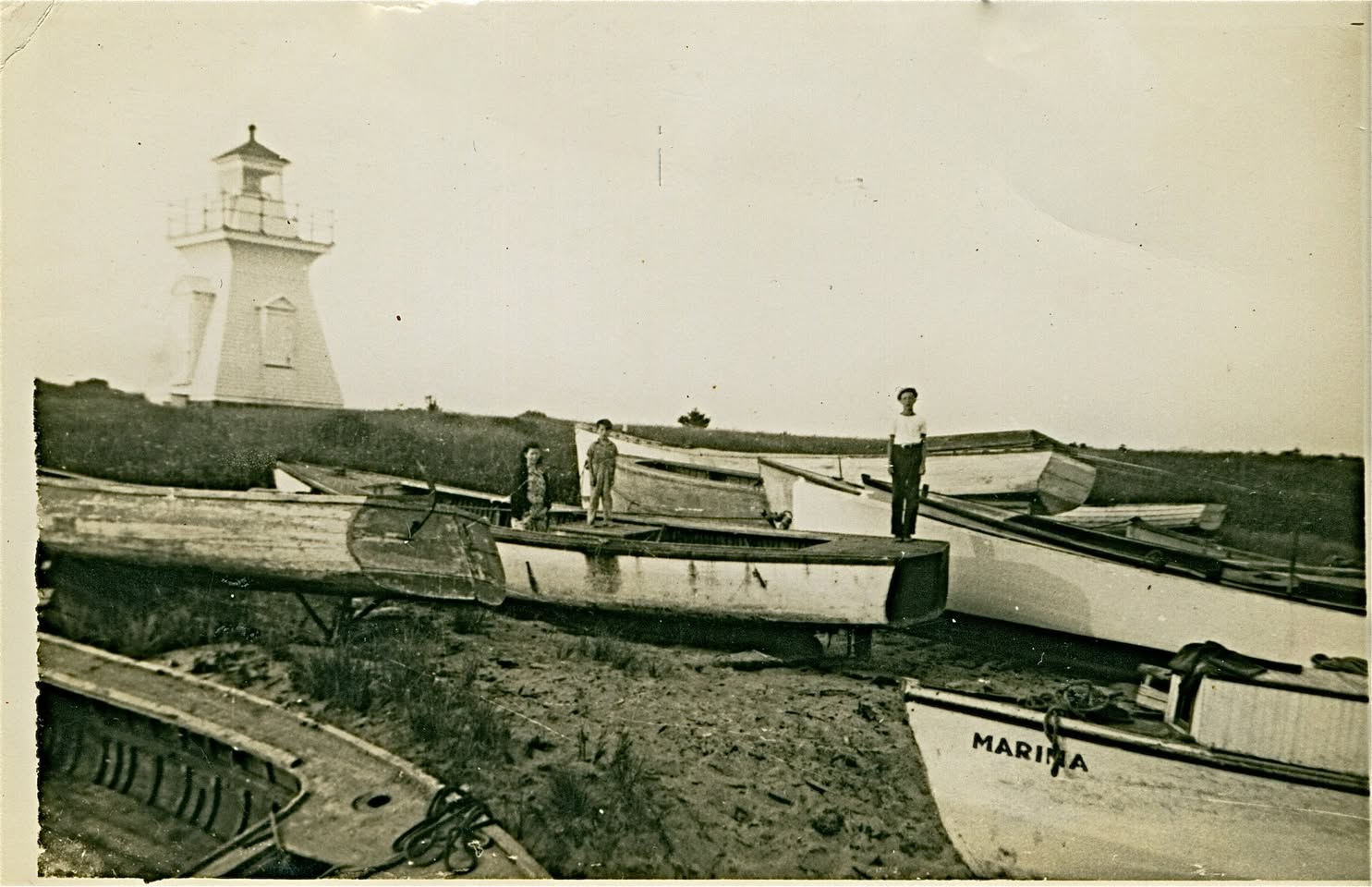
Every vessel approaching Pictou Island entered a busy, changeable stretch of water. The Strait carried mail, fish, supplies, workers and passengers. It also hid reefs, filled with moving ice and turned dangerous in fog or gale. Sometimes an Island boat went out to help. Sometimes stranded travellers were helped ashore. And sometimes the loss could not be prevented.
Read four visitor chapters, then explore the Asadalia dossier and the wider working register of wrecks and strandings. These stories are not all shipwrecks: an icebound steamer and an unexpected theatrical performance belong here too. The register is not exhaustive, and a broad reported locality is not a surveyed wreck position.
Maritime context
Shipwrecks & Strandings Around Pictou Island
A map offers a way into these stories, but not every incident can be fixed to one coordinate. The eight numbered markers connect to vessel and rescue accounts at qualified broad localities, including ice emergencies.
Pictou Island sits in a part of Northumberland Strait where reefs, fog, storms, moving ice and sudden weather have shaped travel for generations. Ships were lost or driven ashore near its coast, Island crews went to the aid of vessels in trouble, and government steamers struggled through winter ice.
Other ships carried passengers, supplies and communications across the Strait. These stories show that the waters around Pictou Island were both dangerous and essential—a place of wrecks and rescue, but also the route that connected the Island to the wider world.
The illustrated poster brings together maritime incidents and their approximate localities. Follow the numbered stories and read the corrections and evidence qualifications beside it.
The full map opens fitted to this window. Zoom to inspect details; scroll or swipe to explore.
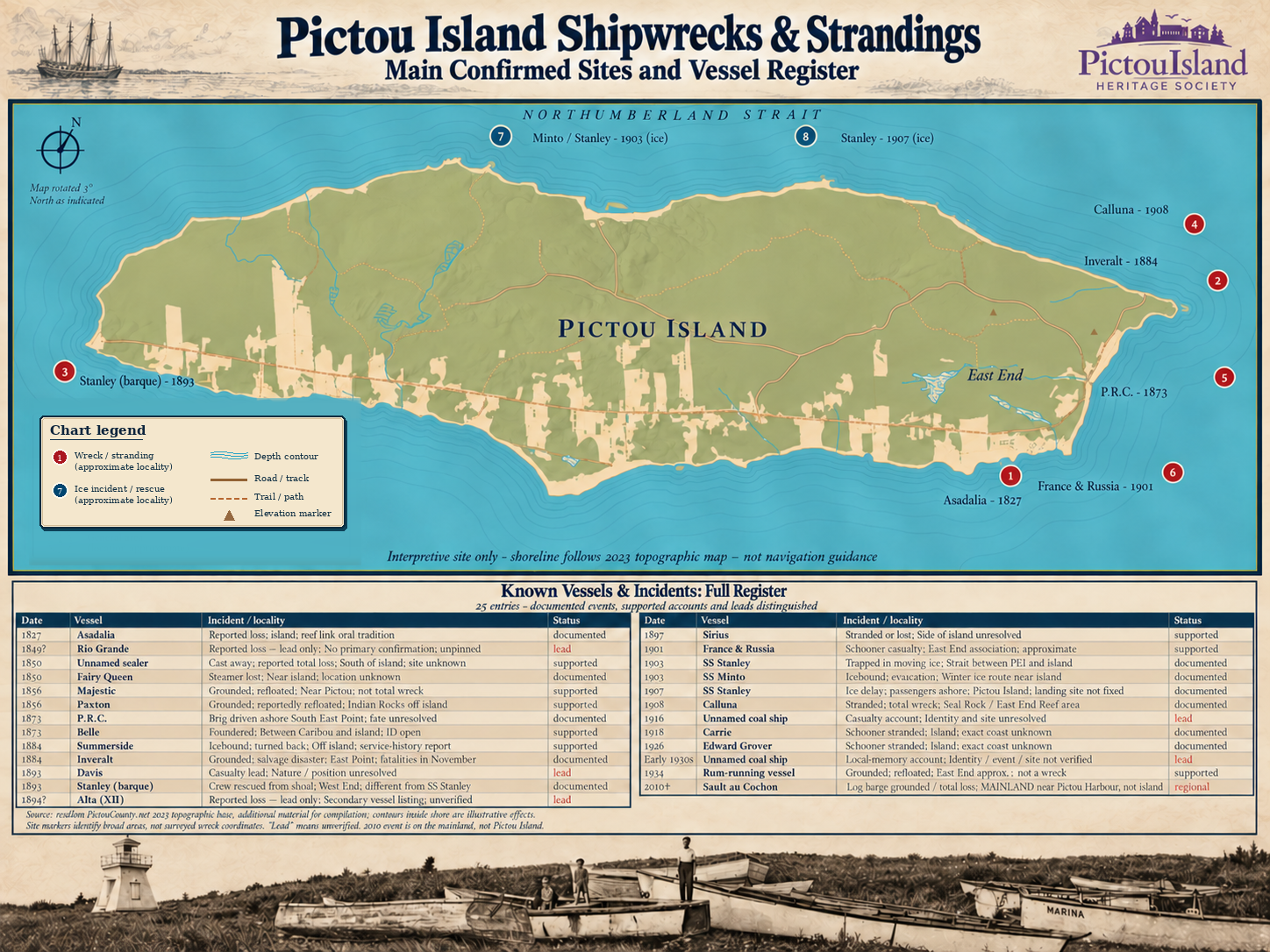
Read the poster’s 25 vessel and incident entries
Readable transcription with the date corrections above. “Lead” and “supported” entries remain qualified; repeated steamships refer to different incidents.
| Date | Vessel | Incident and evidence status |
|---|---|---|
| 1827 | Asadalia | Documented Island loss; reef location from oral tradition |
| 1849? | Rio Grande | Lead only; contemporary verification open; not pinned |
| 1850 | Unnamed sealer | Supported reported total loss; exact site unknown |
| 7 October 1853 | Fairy Queen | Documented loss near the Island; casualty counts disputed; corrects poster 1850 |
| 1856 | Majestic | Supported grounding/refloating near Pictou; not a total wreck |
| May 1860 | Paxton | Supported Indian Rocks grounding/refloating; primary report open; corrects poster 1856 |
| 24 August 1873 | P.R.C. | Strongly supported South East Point casualty; final disposition unresolved |
| 1 July 1875 | Belle | Supported foundering between Caribou and Island; same-name identity unresolved; corrects poster 1873 |
| 1884 | Summerside | Supported icebound/turned-back account; not a wreck |
| 1884 | Inveralt | Documented August grounding; separate November salvage-party disaster |
| 1893 | Davis | Lead; casualty, identity and position unresolved |
| 30 September 1893 | Stanley (Norwegian barque) | Documented West End lifeboat rescue; different from SS Stanley |
| 1894? | Alta (XII) | Unverified secondary-list lead; not pinned |
| 13 November 1897 | Sirius | Supported stranding/loss; side of Island unresolved |
| 1901 | France & Russia | Supported schooner-casualty account; broad East End association |
| 1903 | SS Stanley | Documented moving-ice emergency; not a fixed wreck site |
| 1903 | SS Minto | Documented icebound evacuation; not a fixed wreck site |
| 1907 | SS Stanley | Documented ice emergency and passengers ashore; not a wreck |
| 10 November 1908 | Calluna | Documented stranding/total wreck; Seal Rock/East End locality approximate |
| 1916 | Unnamed coal ship | Secondary-source lead; identity and site unresolved |
| 20 October 1918 | Carrie | Documented stranding; exact coast unknown |
| 7 September 1926 | Edward Grover | Documented stranding; exact coast unknown |
| Early 1930s | Unnamed coal ship | Local-memory lead; identity, date and site unverified |
| 1934 | Rum-running vessel | Supported grounding/refloating account; approximate East End; vessel unidentified |
| 2010 | Sault au Cochon | Regional mainland-associated incident in poster; not an Island wreck marker |
Eight numbered markers link to the existing historical accounts. A readable version of the poster register accompanies the map.
Exact site not fixed
Majestic · Davis · Sirius · unnamed 1916 coal ship · Carrie · Edward Grover · unnamed early-1930s coal ship
Feature 1 · 5 November 1827
Asadalia — 1827
An 1827 newspaper notice reports Asadalia lost at Pictou Island on 5 November. The locally remembered reef and the documented loss are distinct evidence tracks; their association does not establish an exact wreck position.
A locally known reef southwest of the East End breakwater, visible from shore and associated in Island fishing knowledge with a shipwreck. Boats keep clear, especially at low tide. The map marks the approximate locality; the 1827 newspaper notice does not establish that the vessel was lost on this precise reef.
Asadalia — 5 November 1827
Asadalia is the earliest documented loss presented in this exhibit. On 10 December 1827, The Standard of London printed a short notice in ‘Ship News — By This Day’s Post’ on page 3:
‘The Asadalia, from Liverpool, was lost on Pictou Island, on the 5th ult.’
‘Ult.’ means the previous month: the notice reports a loss on 5 November 1827. It names the vessel, gives Liverpool as the place it came from, and identifies Pictou Island as the place of loss.
Local fishermen associate the wreck with Asadalia Reef southwest of the East End breakwater. The newspaper records the Island loss; the reef’s name and more specific location are preserved through local knowledge.
Known from shore and water
Asadalia Reef lies southwest of the East End breakwater. Islanders describe a reef visible from shore and familiar to people who travel these waters by boat. Fishermen know to keep clear of it, particularly at low tide.
This is a living place-name carried through local knowledge of the shore and sea. It identifies a different feature from East End Reef and the Seal Rock locality beyond the northern tip of the East End.
The remembered shipwreck
Local accounts associate Asadalia Reef with a shipwreck remembered as Asadalia. The reef and the wreck story remain familiar to former Island fishermen, connecting maritime history with a hazard that people still recognize today.
In September 2026, Dana Morin reported conversations with several Islanders, including former fishermen Ron MacDonald, Darrell Rankin and Almer MacDonald. Darrell was the first person to tell Dana about the reef and its wreck association; the later conversations corroborated familiarity with both. Dana identified the locality as southwest of the breakwater.
These accounts preserve the community’s identification of the reef and its shipwreck association. The contemporary newspaper notice independently records Asadalia’s loss at Pictou Island in 1827.
A name carried forward
Darrell Rankin told Dana Morin that his son, Jason Rankin, named Asadalia Fisheries in honour of the reef and shipwreck’s history. The name carries that maritime memory into a later generation of the fishing family.
A 2021 Fisheries and Aquaculture Loan Board profile identifies Jason with Asadalia Fisheries Ltd. and shows Jason and his father, Darrell, fishing together off Pictou Island’s East End. The explanation of the company’s name is attributed to Darrell’s account, as reported by Dana.
Locating the reef
The historic map marks the approximate locality southwest of the breakwater. It does not show the reef’s surveyed extent, a seabed wreck position or a safe passage. No particular surviving wreck remains are identified here.
Sources and further reading
- Local knowledge from former fishermen Ron MacDonald, Darrell Rankin and Almer MacDonald, reported to PIHS by Dana Morin, September 2026. Darrell was Dana’s initial source for the reef and wreck association.Source enquiries: PIHS research resources
- Dana Morin’s location clarification: southwest of the East End breakwater; visible from shore and known to boat users, particularly at low tide, September 2026.Source enquiries: PIHS research resources
- Darrell Rankin’s explanation of the Asadalia Fisheries name, reported and reaffirmed by Dana Morin, September 2026.Source enquiries: PIHS research resources
- The Standard (London), 10 December 1827, p. 3, ‘Ship News — By This Day’s Post.’ Original notice inspected from the newspaper screenshots supplied by Dana Morin in September 2026; the line break in ‘Island’ has been joined in the transcription.Source enquiries: PIHS research resources
- Fisheries and Aquaculture Loan Board, ‘Launching a hybrid/electric fishing vessel,’ 5 May 2021.
- The Standard archive — 10 December 1827, page 3 ↗
- Published Asadalia wreck entry and its Standard citation ↗
- Fisheries and Aquaculture Loan Board — Jason and Darrell Rankin, 2021 ↗
Feature 2
Fairy Queen—1853
The mail and passenger steamer Fairy Queen left Charlottetown in severe weather on 7 October 1853. Later accounts describe a broken tiller rope, damage to the vessel and passengers struggling to survive.
A mail steamer, a storm, and a confused first record of a tragedy near Pictou Island.
A regular route into bad weather
The Fairy Queen was a mail and passenger steamer serving routes that included Charlottetown and Pictou. An advertisement published in the summer of 1853 shows the vessel scheduled for Pictou twice a week, evidence that the crossing was part of an ordinary transportation network rather than an exceptional voyage.
On Friday, 7 October 1853, the steamer left Charlottetown for Pictou in poor weather. Duncan Campbell’s 1875 History of Prince Edward Island records that, after the vessel passed Point Prim, heavy seas damaged the gangways. Near Pictou Island the tiller rope broke, leaving the vessel difficult to control.
Passengers help—then the ship breaks apart
Passengers helped splice the tiller rope, but the steamer continued to make little progress. Campbell records that the captain and some crew left in a boat. After repeated heavy seas, part of the upper deck separated from the vessel and became an improvised raft for a group of survivors.
Among those who survived on the detached deck were Martin I. Wilkins of Pictou, Edward Lydiard and Mr. Pineo. Campbell says they eventually reached the north side of Merigomish Island after hours exposed to the storm and cold. Campbell’s later account implies seven deaths, but other surviving sources give different totals. PIHS does not treat seven as a settled casualty count.
Why the first reports are dangerous to quote
A Royal Gazette telegraphic dispatch printed on 10 October initially named Wilkins, Pineo and Lydiard among the lost. A second dispatch printed immediately afterward listed all three among those saved. The report acknowledged uncertainty and indicated that a formal inquiry would follow.
That contradiction is useful evidence, not something to hide. Campbell’s later account implies seven deaths; James F. Smith’s 1973 reconstruction lists six passenger and four crew deaths, while a contemporary Public Ledger reprint preserves several different figures as reports evolved. These records establish the disaster but do not settle a complete casualty total.
The inquiry and conflicting casualty records
James F. Smith’s 1973 reconstruction, based on October 1853 newspaper accounts, describes a Pictou magistrate’s inquiry and a grand-jury manslaughter charge on 28 October. He could not establish the final court outcome. His roster lists six passengers and four crew as drowned, conflicting with Campbell’s seven. Neither dismissal nor acquittal is established here.
The Public Ledger of 21 October 1853, page 2, reprints the Halifax Colonist of 11 October. Its headline reports eleven presumed drowned, while its list names seven people still missing; the adjoining editorial says nine deaths. These are provisional, conflicting reports, not three independently established totals. Missing people and confirmed deaths are different categories. The reprint reports the captain and crew arrested after survivors reached Pictou; it does not establish a verdict.
Why this belongs in Island history
The Fairy Queen was not an Island-owned vessel, but the disaster occurred in the waters that defined Pictou Island’s connections with Prince Edward Island and the mainland. The disaster also acquired a life in Maritime folklore; those traditions are linked to this documented wreck but are not evidence of what happened aboard the steamer.
Feature 3
Inveralt—1884
The Inveralt grounded near the East End in August 1884; the fatal salvage-boat capsize followed in November. The detailed record below retains the difference between the reported death toll and the surviving list of names.
A grounding at East Point, eight salvage deaths, and the Island crews who answered the emergency.
Grounded at East Point
The Inveralt was a British steamship of 841 tons, registered at Liverpool. A contemporary Canadian government report states that, while travelling from Montreal to Pictou, the vessel went aground on the East Point of Pictou Island on 4 August 1884. The night was described as very thick and foggy.
The investigation found that because the master did not know the locality, he should not have continued in thick weather without a pilot. Several attempts by a wrecking company to free the steamer were unsuccessful.
Eight men die during the salvage
James W. Hogg acquired the salvage rights, and work continued into November. On 15 November 1884, eleven wreckers tried to come ashore in a lifeboat during a northerly gale. The boat overturned on the reef and eight men died.
The clipping requires caution: after reporting eight deaths, its closing list appears to contain nine names. PIHS does not present that inconsistent list as a settled roll of the dead. The older Hugh MacFarlane of Pictou Island (c.1859/60–15 November 1884) was among those lost. Lewis Lawrence had been an Island resident and had married into the Patterson family. The loss affected Island families as well as the men working at the wreck. Contemporary reporting dated 16 November says the disaster occurred ‘yesterday,’ and the federal recognition record gives the service date as 15 November 1884. PIHS therefore uses 15 November; MacCallum’s later 17 November chronology is retained only as a superseded secondary conflict.
Island boats answer the emergency
William Allard first put out alone in a small dory but lost an oar. James Currie and another Islander then launched a larger boat and reached the overturned lifeboat. A second Island party led by James Hogg pursued the boats in an open sailboat.
Survivors and rescuers were carried away from the Island by the gale; the rescue party ultimately reached the mainland and the lifeboat crew landed at Big Island the following morning.
The Island crew remembered
Government records list silver watches for Captain James Currie, W. Wales, William Allard, Daniel McCallum and Andrew MacFarlane, and a binocular glass for James W. Hogg. A proposed East End monument was introduced to Pictou County Council in January 1885 but failed for want of a seconder.
The story cannot be reduced to a successful rescue. A summer grounding became a months-long salvage operation and then an eight-death disaster with direct Island losses. The rescue preceded the establishment of the federal Pictou Island Life Saving Station on 23 November 1889. Andrew MacFarlane later became keeper of the East Lighthouse, with his appointment recorded on 8 June 1892.
A different Stanley: the rescue of 1893
On 30 September 1893, Donald McLean, coxswain of the Pictou Island lifeboat, and his crew rescued thirteen men from the Norwegian barque Stanley on a shoal off the Island’s west end. This sailing vessel was distinct from the government steamer Stanley involved in the ice emergencies of 1903 and 1907.
The federal reward table published in 1894 records $3 for each of the seven lifeboat men, $21 in all, with a further $70 for wages and expenses after the boat and crew were weather-bound for six days at Pictou. The table names Donald McLean but does not individually identify the other six rescuers. Their reward was money, distinct from the watches and binocular glass awarded for the Inveralt rescue.
Feature 4
Frozen in the Strait—1903
In 1903, even the powerful government steamers Stanley and Minto were caught in Strait ice. Pictou Island became an emergency stepping stone: a contemporary report says nineteen passengers were brought ashore while thirty-five remained aboard Minto.
The Minto, the Stanley and Pictou Island in the winter of 1903.
The Stanley trapped in the Strait
The Stanley became trapped in Northumberland Strait ice in January 1903 and was carried back and forth by a large field of moving ice. By mid-February it was reported embedded between Wood Islands and Pictou Island. The Minto was sent with coal and supplies, but it too became trapped. By 23 February, reports placed the Stanley east of Pictou Island after about forty days in the ice, while the Minto had been immobilized for roughly ten days.
Passengers leave the Minto
The 23 February Daily Patriot says foreman Milton Welsh landed 19 Minto passengers on Pictou Island while 35 remained aboard. The relief crew had travelled about 24 miles over Gulf ice. Most of the landed passengers intended to continue toward High Bank, about 17 miles away, in dories belonging to the lobster factories. The report does not prove that they completed the crossing in those dories or identify which factory owned one.
The following day’s reporting said the group walked approximately six miles over the ice to Pictou Island and then continued toward Caribou and Pictou. Reports vary on the exact number aboard but consistently establish that passengers were removed over the ice.
Coal, ice and another breakdown
By 26 February, shifting ice allowed the Minto to reach the Stanley off Arisaig and transfer about 40 tons of coal before escaping to Georgetown. The Minto went out again carrying approximately 100 tons of coal. While trying to break through ice reported to be about four feet thick, it stripped the blades from its propeller. Both government icebreakers were again disabled, with coal and provisions transferred between them.
On 13 March, after a premature report that the Stanley had broken free, officials arranged to obtain explosives from Halifax. The intended rescue party was to proceed to the east end of Pictou Island, take a lifeboat from there and try to reach the trapped vessels.
Around Pictou Island in the ice
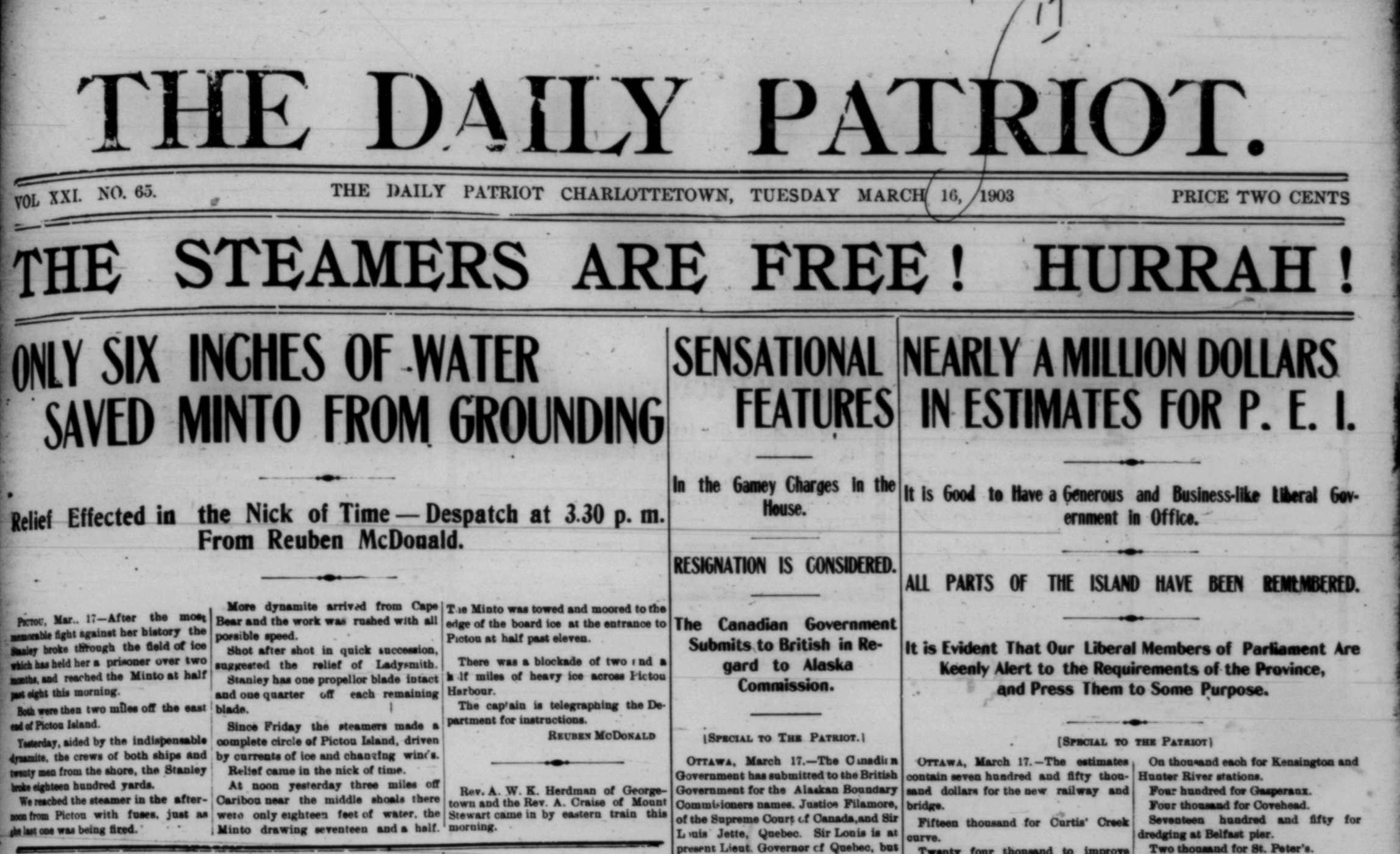
By 16 March the vessels had again been driven toward Pictou Island and were reported about three miles northeast of it. The Daily Patriot of 17 March said winds, currents and moving ice had carried them in a complete circuit of the Island.
On 16 March the Stanley broke free after more than two months and reached the disabled Minto at about 8:30 in the morning. Both vessels were reported less than two miles off the Island’s east end. The Stanley then towed the Minto toward Pictou, where approximately two and a half miles of heavy ice still obstructed the harbour entrance.
The report also mentions twenty men ‘from the shore’ helping with dynamite-assisted work. It does not identify them or establish that they were Pictou Islanders.
Steam power meets the iceboat
The vessels represented powerful ice-breaking technology, yet passengers still depended on walking, iceboats and small craft. The PIHS iceboat was built decades later and is not presented as the craft used in 1903; it demonstrates that winter crossing skills remained essential long after icebreakers appeared.
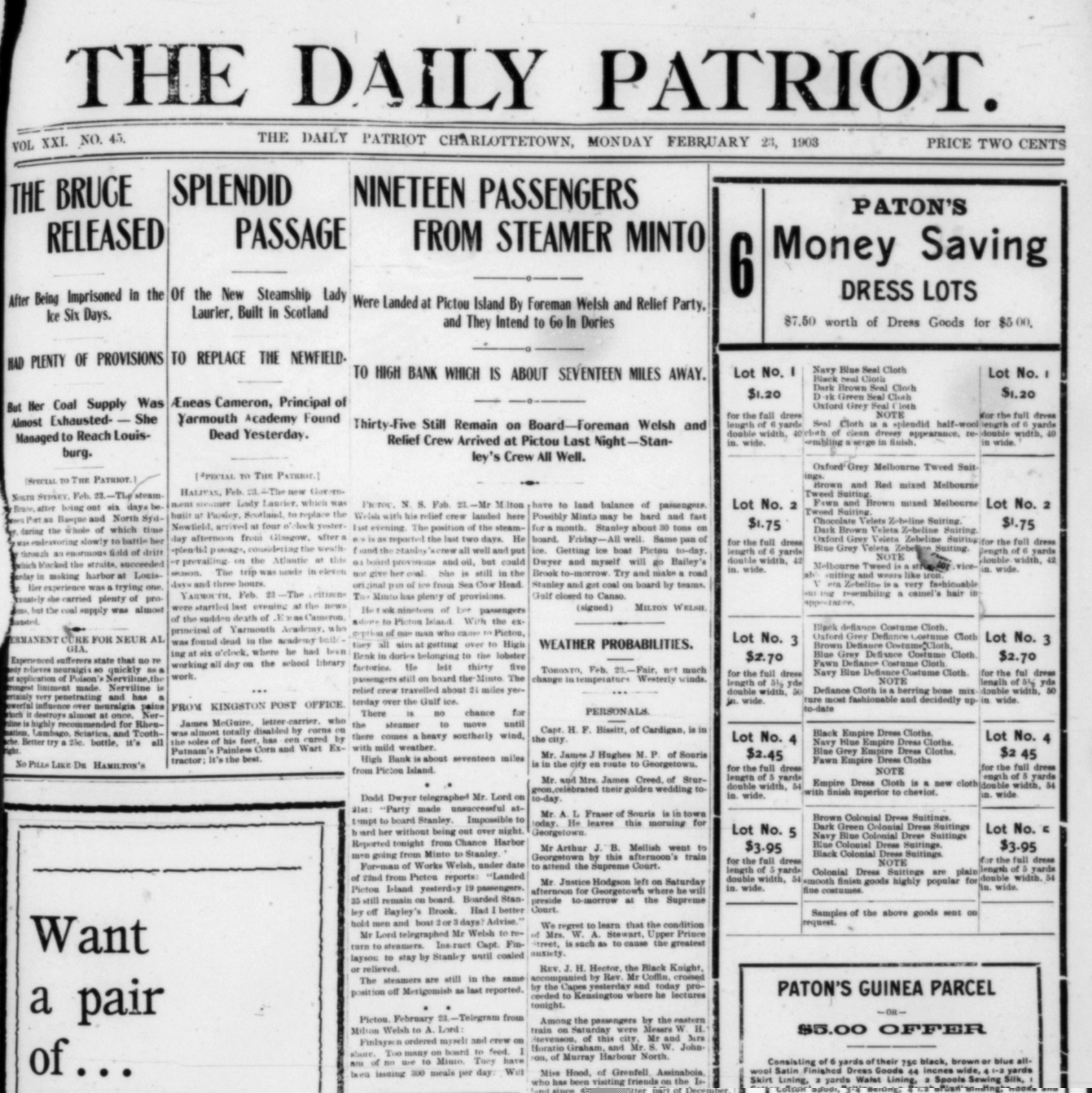 Enlarge & zoom
Daily Patriot report of 23 February 1903
Feature 5
Comedy on the Rocks—1907
When the icebound Stanley sent passengers to Pictou Island in March 1907, an unexpected group was among them: Jere McAuliffe’s touring company. The performers gave a concert in the Island post office on the evening of 4 March.
The Stanley, a stranded comedy company and a stage in the Pictou Island post office.
An ice emergency brings travellers ashore
In early March 1907, severe ice forced passengers from the government steamer Stanley onto Pictou Island. The Moncton Transcript of 4 March reported about fifty passengers ashore. Its 5 March account identified the Abegweit hockey team, Jere McAuliffe’s Comedy Company and about thirty other passengers as a group that had landed on Friday, 1 March, when the vessel was in danger of being crushed by ice. The reports record different passenger movements and do not establish one landing or departure time for everyone.
Marooned on Pictou Island
The 5 March report said the company, hockey team and other passengers were still marooned, with the Minto expected to collect them when conditions permitted. By 8 March the Stanley was at Georgetown while the Minto was stuck off Pictou Island, and the McAuliffe company was still described as marooned.
The reports show that different groups left at different times. Colonel Stanton, the company’s business manager, and several others reached the Caribou shore on 5 March and then travelled to Pictou.
The post office becomes a theatre
On Monday night, 4 March, the company gave a concert in the Pictou Island post office. The Moncton Transcript described it as the first theatrical performance on Pictou Island. PIHS retains that as an attributed contemporary claim rather than an unqualified modern assertion.
The reports establish the date, Stanley connection, company’s marooning, post-office venue and contemporary significance. They do not establish the programme, costumes, audience composition, exact lodging arrangements or one departure date for everyone.
Hospitality and the outside view
Contemporary press accounts could portray Pictou Island as bleak and its shelter as poor. Kenneth MacCallum’s later history describes members of the company dispersed among Island families and contrasts that outside picture with accounts of generous hospitality. This remains an attributed account; it does not identify particular host households or establish a common length of stay for all passengers.
In the Pictou Advocate of 16 April 1907, Evangeline Heartz described a community of about 150 inhabitants with a school, hall, post office, lobster industry, lighthouses, farming and fishing. Her estimate captures a visitor’s impression rather than a census count. Her account thanked Islanders for their hospitality to passengers stranded by ice during the Stanley episode.
Why this matters
A professional travelling company turned the Island post office into a temporary performance space when winter steam transportation failed. The story belongs to navigation history and to the Island’s social history.
Feature 6
The crews of 1911 and 1912
A maritime register will always be broader than a handful of featured stories. It contains losses with different levels of documentation and varied location precision.
In an answer to the House of Commons on 11 December 1912, Minister Hazen named the Pictou Island lifeboat crew of 1911 and its replacement in 1912. Each list contains a coxswain and six other men. The two lists do not identify one-for-one replacements.
Hazen stated that the whole crew changed in 1912 because Alex. Currie had ceased to reside permanently on Pictou Island. He said the superintendent of the lifesaving service recommended the new coxswain, who selected his own crew. This is the minister’s stated account; it does not establish that the other six former crewmen moved away or prove a political motive.
Duncan McCallum was therefore named as coxswain by 11 December 1912. His exact appointment day remains unknown. The literal roster spellings and initials are preserved here; they do not alone identify the people with similarly named canonical biographies.
1911
Alex. Currie (coxswain)
Angus MacDonald
Hugh McCallum
Robt. McFarlane
Chas. A. McCallum
George D. Rankin
Torquil McLean
1912 replacement crew
Duncan McCallum (coxswain)
Allan McFarlane
John W. McDonald
John A. Rankin
J. Ward McCallum
Charles McIver
Dan Hector McLean
Supporting record
Other Wrecks & Strandings
A maritime register will always be broader than a handful of featured stories. It contains losses with different levels of documentation and varied location precision.
The major stories are only part of the record. Shipping reports, government records and Island memory preserve a wider series of vessels driven ashore, stranded or lost around Pictou Island. In many cases the general locality is known even when an exact wreck position is not.
| Date | Vessel | Record | Location / status |
|---|---|---|---|
| 1850 | Sealer | Schooner cast away; complete loss reported. | South of Pictou Island. Exact position unresolved |
| 1856 | Majestic | Driven ashore, then refloated and taken to Charlottetown. | Near Pictou. Stranding; not a total wreck |
| 24 August 1873 | P.R.C. | Jersey brig driven ashore; contemporary evidence describes it as wrecked / expected total wreck. | South East Point. Strongly supported; final disposition open |
| 1893 | Davis | Identified incident lead retained for further research. | Casualty details and locality unresolved |
| 13 November 1897 | Sirius | Stranded or lost at Pictou Island. | Exact side of Island unresolved |
| 1901 | France & Russia | Schooner casualty associated with the Island. | East End association; approximate only. Approximate locality |
| November 1908 | Calluna | Stranded and later treated as a total wreck. | Seal Rock / East End Reef locality. Confirmed; link to East End place record |
| 1916 | Unnamed coal ship | Secondary-source account of a coal ship casualty. | Eric Ross lead; identity and locality unresolved |
| 20 October 1918 | Carrie | Schooner stranded at Pictou Island. | Confirmed; exact locality unresolved |
| 7 September 1926 | Edward Grover | Schooner stranded at Pictou Island. | Confirmed; exact locality unresolved |
| Early 1930s | Unnamed coal ship | Local-memory account involving coal and the Island blacksmith. | Local memory; identity, date and locality unresolved |
| 1934 | Rum-running vessel | Grounded near the East End; casks were reportedly thrown overboard and the vessel floated free. | Approximate East End grounding. Grounding, not a confirmed wreck |
Vessel index
Notable Ships of the Strait
Not every vessel important to Island history was wrecked. Passenger service, supplies, rescue and communications also connected Pictou Island with the wider Strait.
Some vessels recur in the Island record because they carried people, supplies, rescue work or communications. Their existing narratives remain in place; this index connects them without duplicating those accounts.
Stanley — Norwegian barque
Rescued off the West End in 1893. This sailing vessel is distinct from the later government steamer Stanley.
Read the rescue record →SS Stanley
Government steamer central to the Island’s winter transportation story and already covered in the 1903 and 1907 features.
Read the 1903 story →Read the 1907 story →SS Minto
Government steamer and ice-service vessel central to the 1903 emergency; its story is already covered in Frozen in the Strait.
Read the 1903 story →C.G.S. Tyrian
Government cableship that laid a new Pictou–Pictou Island cable in July 1921 and returned for repair on 23–26 May 1923. The exact Island landing of the 1921 cable remains unestablished.
Read the communications history →Roger Point context →Final chapter · chronology
Timeline
Explore key dates in this story and follow the links to read more. Approximate dates and uncertain identifications are noted.
Asadalia is reported lost at Pictou Island
The contemporary notice establishes the Island loss; the association with locally named Asadalia Reef remains attributed oral history rather than an exact wreck position.
Fairy Queen is lost near Pictou Island
A mail and passenger steamer was lost near Pictou Island in severe weather; surviving accounts disagree on the casualty total.
Inveralt grounds at East Point; salvage later turns fatal
The steamship grounded at East Point on 4 August 1884. During later salvage, a lifeboat carrying eleven wreckers overturned on 15 November; eight men died and Island boats answered the emergency.
Minto, Stanley and the icebound crossing
Winter reports show the Island’s role in moving people and supplies through Strait ice and turning emergency into community story.
Calluna is stranded near the East End
The casualty is dated and linked to the Seal Rock / East End reef locality, with the exact position qualified in the register.