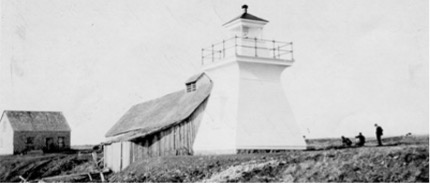
On a dark night in Northumberland Strait, a light could make the difference between finding a safe passage and approaching the wrong stretch of shore. Pictou Island needed more than one such light. Its East, West and South/Wharf stations served different parts of the coastline and entered service at different times.
Each light also had a human story. Behind its lantern were keepers who tended lamps, handled supplies and made a working home at the edge of an island. Their families, buildings and photographs turn a history of navigation into a history of people. Follow the three stations separately, then see what happened when automation changed the job and heritage stewardship kept a tower standing.
Chapter 1
Why the island needed lights
Pictou Island’s reefs, shoals, fog and ice were known hazards long before the first tower stood. Mariners needed dependable bearings, while islanders knew the waters could threaten passengers, cargo and friends returning home.
Reefs, shoals, ice and darkness made the waters around Pictou Island dangerous. The East, West and South—or Wharf—stations answered different navigational needs and must be read as three separate histories.
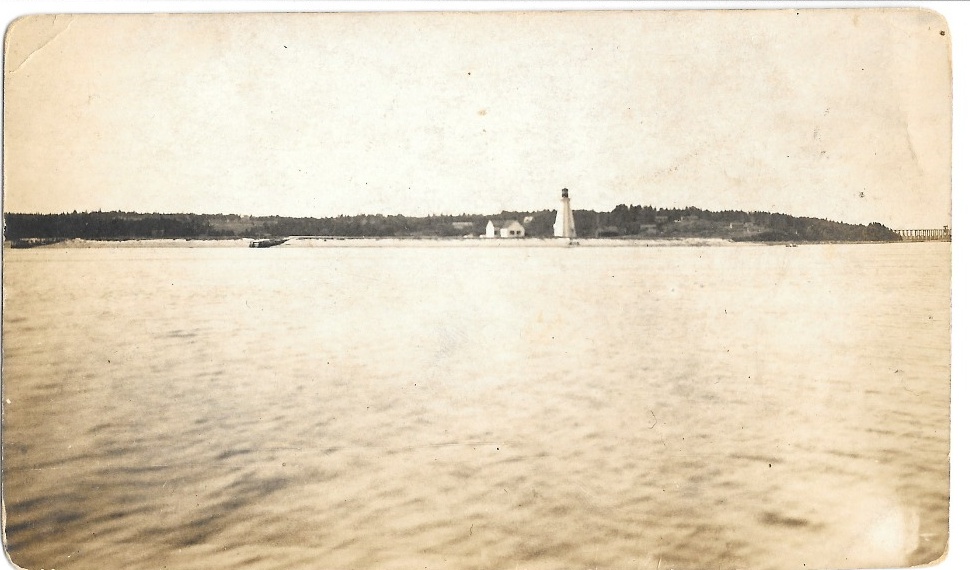
Heartz’s April 1907 visitor account mentions two lighthouses without identifying them. Her brief description offers a glimpse of the landscape; the station histories below follow the more detailed navigation records.
The answer was not one tower but three connected lights, the families who maintained them, and a transition from staffed stations to automated navigation aids and heritage preservation.
Chapter 2
East: the first light
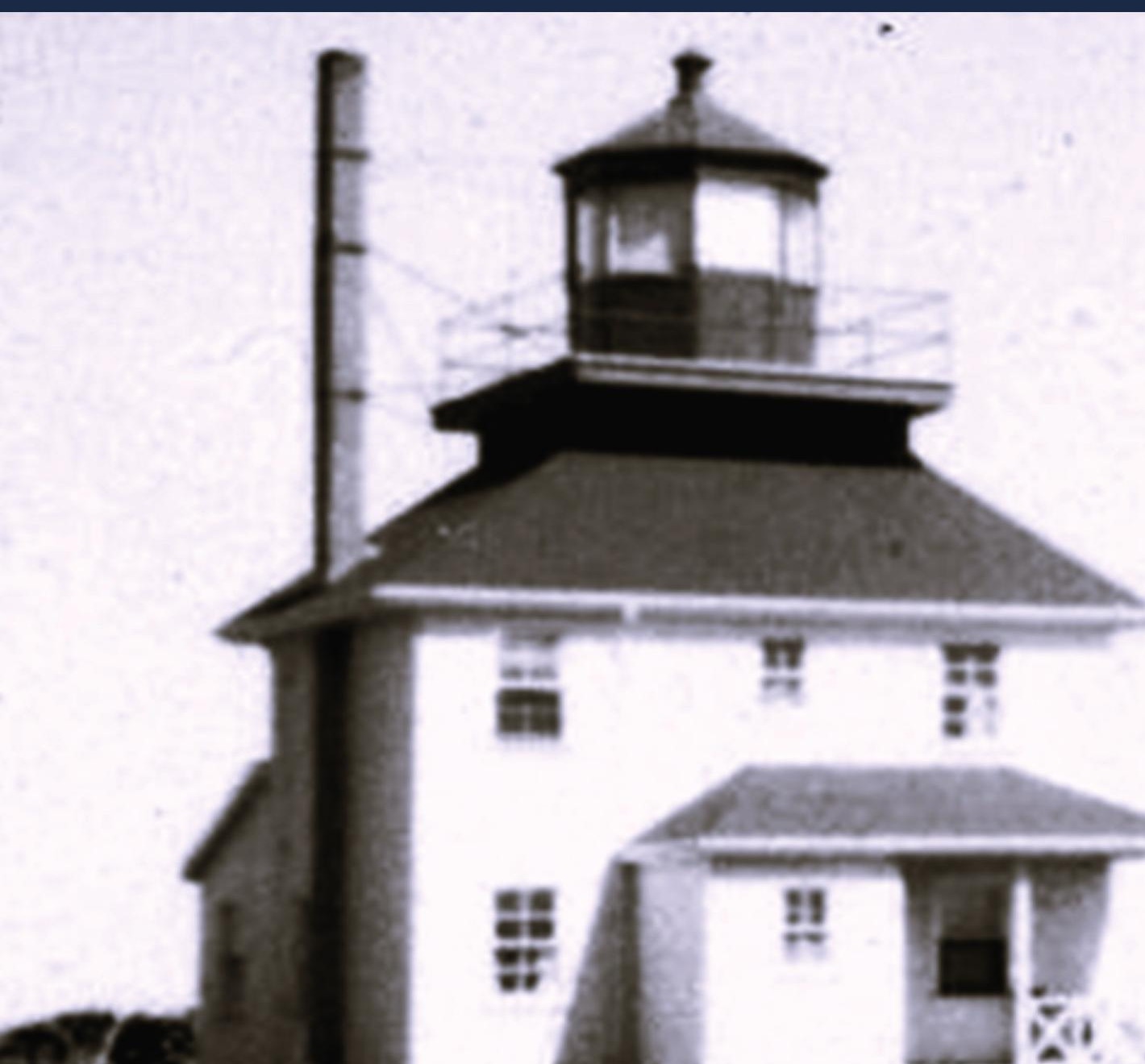
By November 1853 the East Lighthouse was reported nearly complete, with William Hogg appointed its keeper. A naval officer’s letter documents a functioning light in September 1854, but the exact first night remains unconfirmed.
Ships faced dangerous shoals around Pictou Island long before its first lighthouse. Kenneth MacCallum names the brig Rio Grande in a reported 1849 loss, although the loss has not been confirmed in contemporary records. Calls for a lighthouse predated 1849, and the reported loss is not established as the reason for construction.
An Eastern Chronicle notice reprinted in the Newfoundland Express on 19 November 1853 described the East station as nearly complete and William Hogg as appointed keeper. Its expectation of lighting within two or three weeks is not a confirmed first-light date. Kenneth MacCallum reproduces correspondence about a commissioning dispute involving Superintendent J. P. Miller, but the original correspondence has not yet been inspected. Commander G. J. Napier’s letter of 11 September 1854 reports that he observed the Pictou Island light well lit. This establishes operation by then; the exact first-light date remains uncertain.
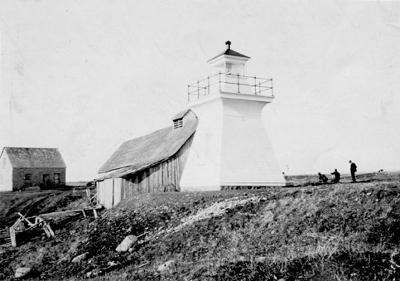
An inspection report dated December 1857, published in 1858, describes William Hogg tending a fixed white light produced by six lamps with reflectors. The white, square building combined the lighthouse and family dwelling; the inspector found its lamps and lantern in good order. The light was discontinued at the close of navigation and relit as needed in spring.
The Marine report for 1874, published in 1875, records two circular-burner lamps with 18-inch reflectors and four A lamps with 12-inch reflectors. The station used about 240 gallons of oil a year. A separate oil store, supplies landed by boat and continual maintenance made the light a working household as well as a navigational mark.
A later lighthouse history, drawing on the federal report, describes a lantern fire on 19 April 1876 and the light’s restoration on 28 April. The original fire-report page has not yet been inspected for this account. The federal report for 1877 records instructions for Andrew Hogg to show lamps for winter navigation, evidence of the station adapting to service in ice season.
The separate lifesaving-station records name D. McLean or Donald McLean, followed by Alexander Currie and then Duncan McCallum; the station was abolished in 1918–19. It was a separate lifesaving service, not the lighthouse keeper succession.
Around 1962 the staffed East station gave way to an unattended skeletal aid. The exact federal automation and removal record remains open.
 Enlarge & zoom
The East Lighthouse in a historical photograph
Chapter 3
Keepers and family life
Keeper records connect William Hogg with later Hogg family service and Andrew MacFarlane, whose appointment is supported by a federal date of 8 June 1892. The job linked engineering and ordinary family life.
Keeper service joined technical work with household life at an isolated station. William Hogg, Andrew H. Hogg and James W. Hogg are reported in the East keeper sequence, followed by Andrew MacFarlane, whose federal appointment is securely dated to 8 June 1892.
Andrew MacFarlane also took part in the Inveralt rescue of 15 November 1884. A federal reward table records a silver watch awarded to him for that service. This recognition predates the later federal Pictou Island life-saving station.
William ‘Bill Cole’ MacDonald and Willena ‘Lena Bill’ MacCallum later lived at the East station. PIHS history recalls that the distance from her family contributed to their decision to leave keeper service. Archibald MacDonald is identified as the later longtime keeper, although his full service dates remain unresolved.
Chapter 4
West End
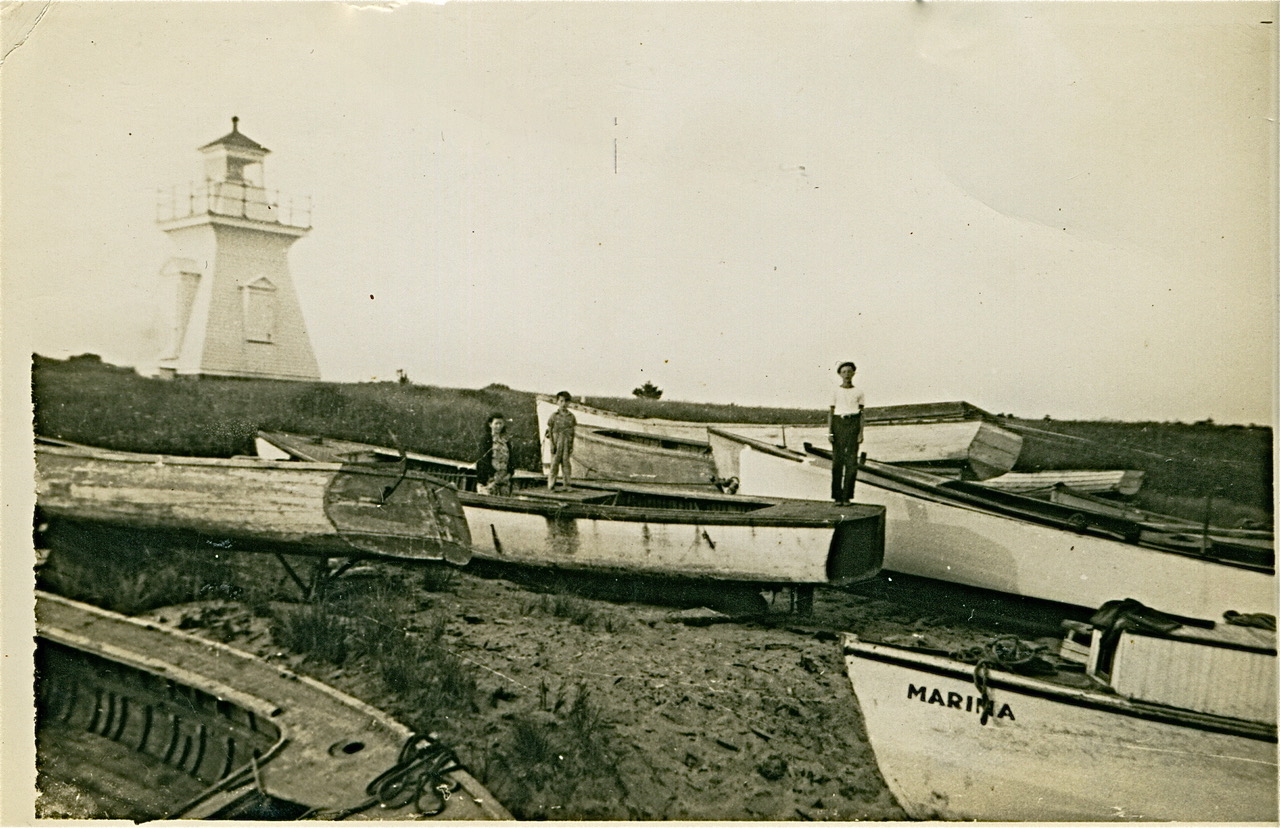
The 1905 West End tower was unlike the wharf-side South station. A historic image captioned ‘West End Lighthouse — Home of Happy Jack’ makes a useful starting point: a keeper’s workplace was also a family home.
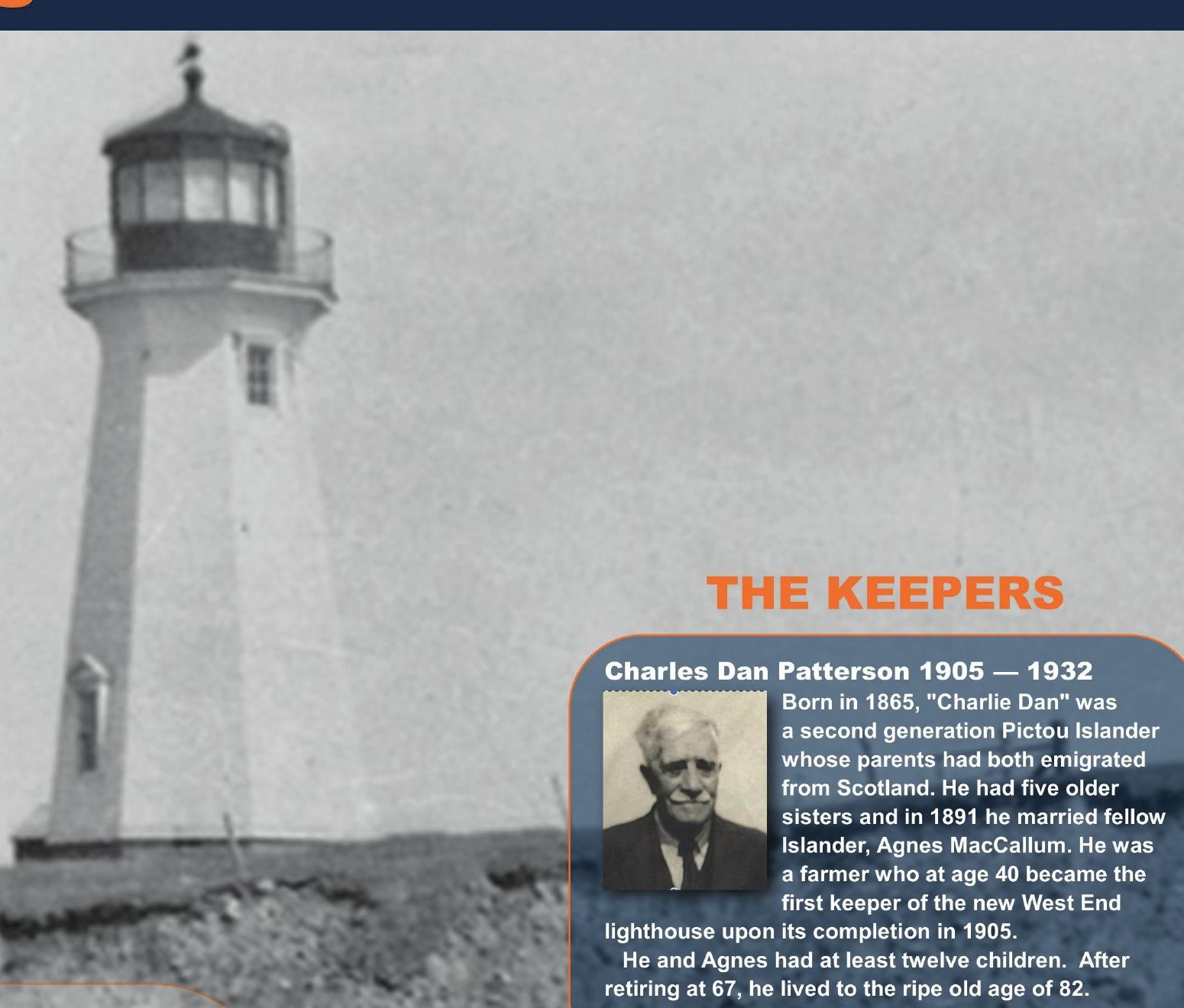
The West End Lighthouse entered service in 1905 at the island’s western extremity. Its tall octagonal wooden tower with a red iron lantern was distinct from the separate wharf-side light on the south shore.
Charles D. Patterson was appointed keeper on 29 March 1905. John Alexander ‘Jack Happy’ MacDonald later became the principal staffed-era keeper. The light reportedly became automatic on 15 February 1962 and the wooden tower was later replaced by a skeletal aid; the exact federal records remain open.
Ron MacDonald later recalled a March 1945 emergency associated with the West End Lighthouse. Contemporary records confirm difficult ice conditions, but the specific event remains attributed oral history.
Chapter 5
South / Wharf
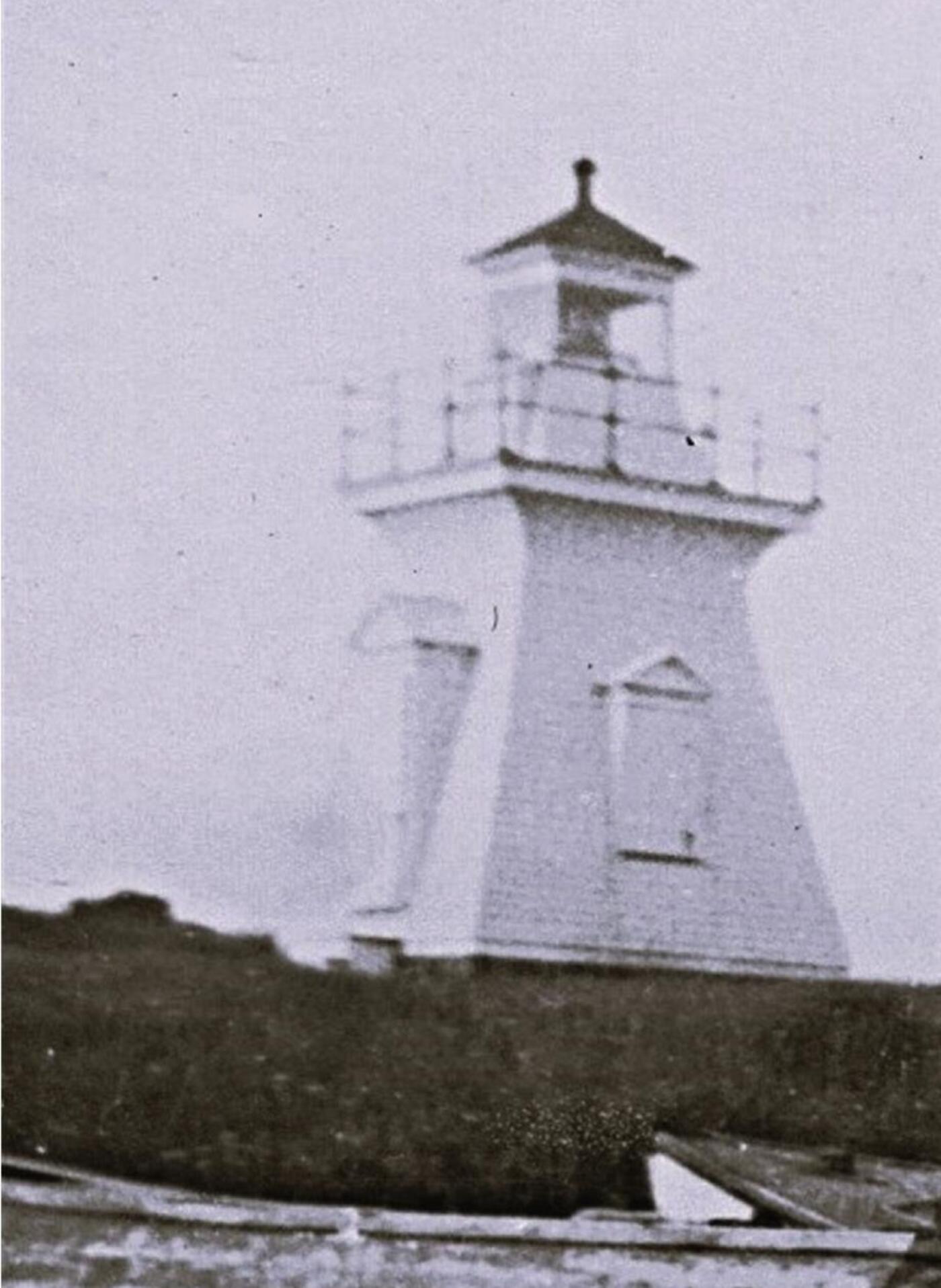
The square, tapered South/Wharf tower began with a working landing place. Its project was under way in 1905, it is documented as a structure by 1906 and the permanent light operated for the opening of navigation in 1907.
The surviving historic tower began as a wharf-side station serving an established government landing place. The project was listed under construction by 1 April 1905, Hugh McLean was appointed on 24 June 1905, the tower is documented by 19 November 1906, and the 1907 federal List of Lights carried it as Pictou Island West Wharf. The permanent light entered operation for the opening of navigation in 1907.
The period-name sequence is Pictou Island Wharf, Pictou Island West Wharf and later Pictou Island South. Four keepers served across five reported terms: Hugh McLean; Lauchlin Rankin in two periods; John M. MacLean, with John A. retained as a disputed legacy variant; and Edward D. Rankin.
Specialist histories report range-light service from about 1951 to 1974, followed by use as a single automated aid; the original light-list endpoints remain open. The traditional alarm-clock mechanism remains local tradition pending documentary or object evidence.
 Enlarge & zoom
The South / Wharf Lighthouse
Chapter 6
Automation and changing technology
Electric lamps, unattended aids and skeletal replacement towers altered what a lighthouse needed and who had to live beside it. The East and West staffed stations changed around the early 1960s, while the South/Wharf tower followed its own path as a range light and later single aid.
Automation changed both the work and the buildings needed at a lighthouse. The East and West staffed stations reportedly ended around 1962, while the South tower followed its own range-light and automated history. Exact federal automation and removal records remain open.
Automation reduced keeper work but did not erase the separate station histories or the families associated with them.
Chapter 7
Lighthouse as heritage
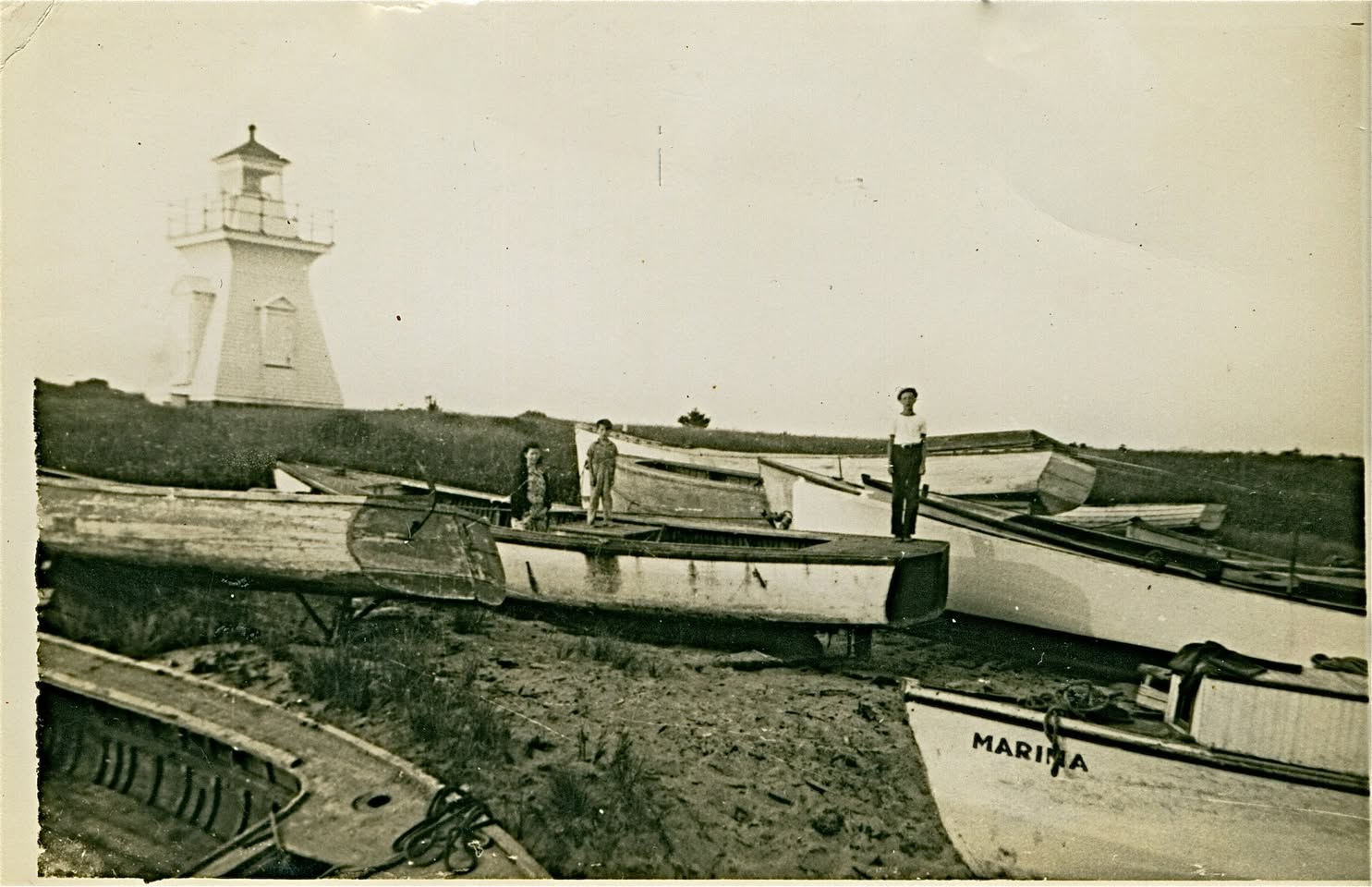
The South/Wharf tower survived when the older East and West buildings did not. It received federal heritage recognition in 2015.
The South/Wharf tower received federal heritage recognition in 2015 and survives under PIHS stewardship. July 2026 Coast Guard amendments removed South No. 899 while retaining the separate East and west-point aids. Navigational discontinuation did not establish demolition, end heritage recognition or transfer ownership.
Keeping the three stations distinct allows visitors to see both their shared navigational purpose and their different dates, keepers, technologies and later histories. Legal ownership of the surviving South tower remains unresolved.
 Enlarge & zoom
South Side Lighthouse, fishing boats and wharf
Chapter 8
Names in the 1913–14 salary accounts
The federal Auditor General’s 1913–14 accounts list “McFarlane, Andrew, Pictou Island” at $600 on printed O-47 and “Patterson, C.D., Pictou Island, South East Point” at $600 on O-48. These are expenditure entries, separate from appointment instruments or census occupations.
The same account prints J.N. McLean. That literal initial form remains distinct from the J./J.M. appointment reports and the unresolved 2/22 December 1911 day readings. The entries do not by themselves establish a canonical keeper’s full identity, parentage, appointment day or total years of service.
Three places, three interpretive panels
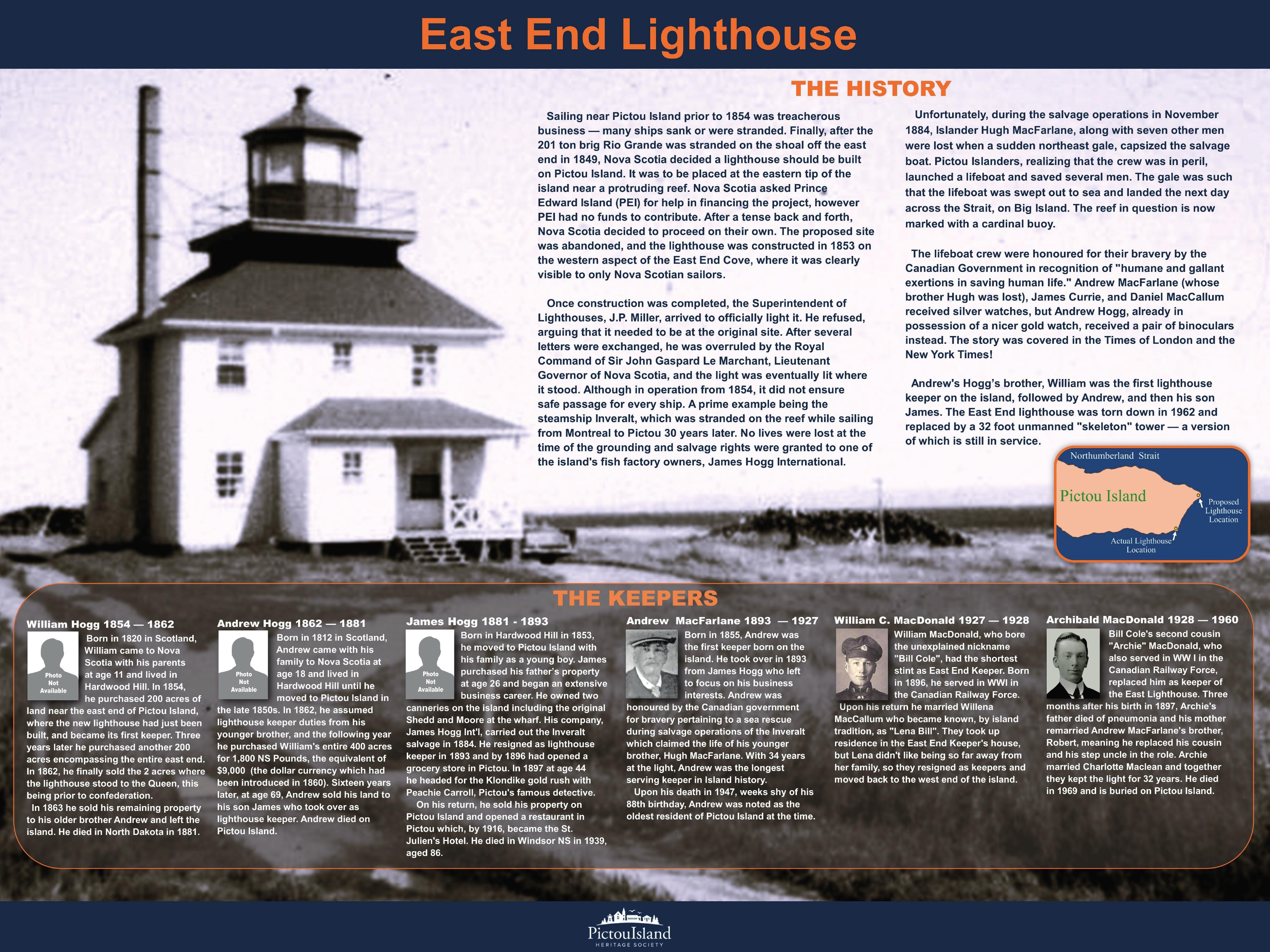
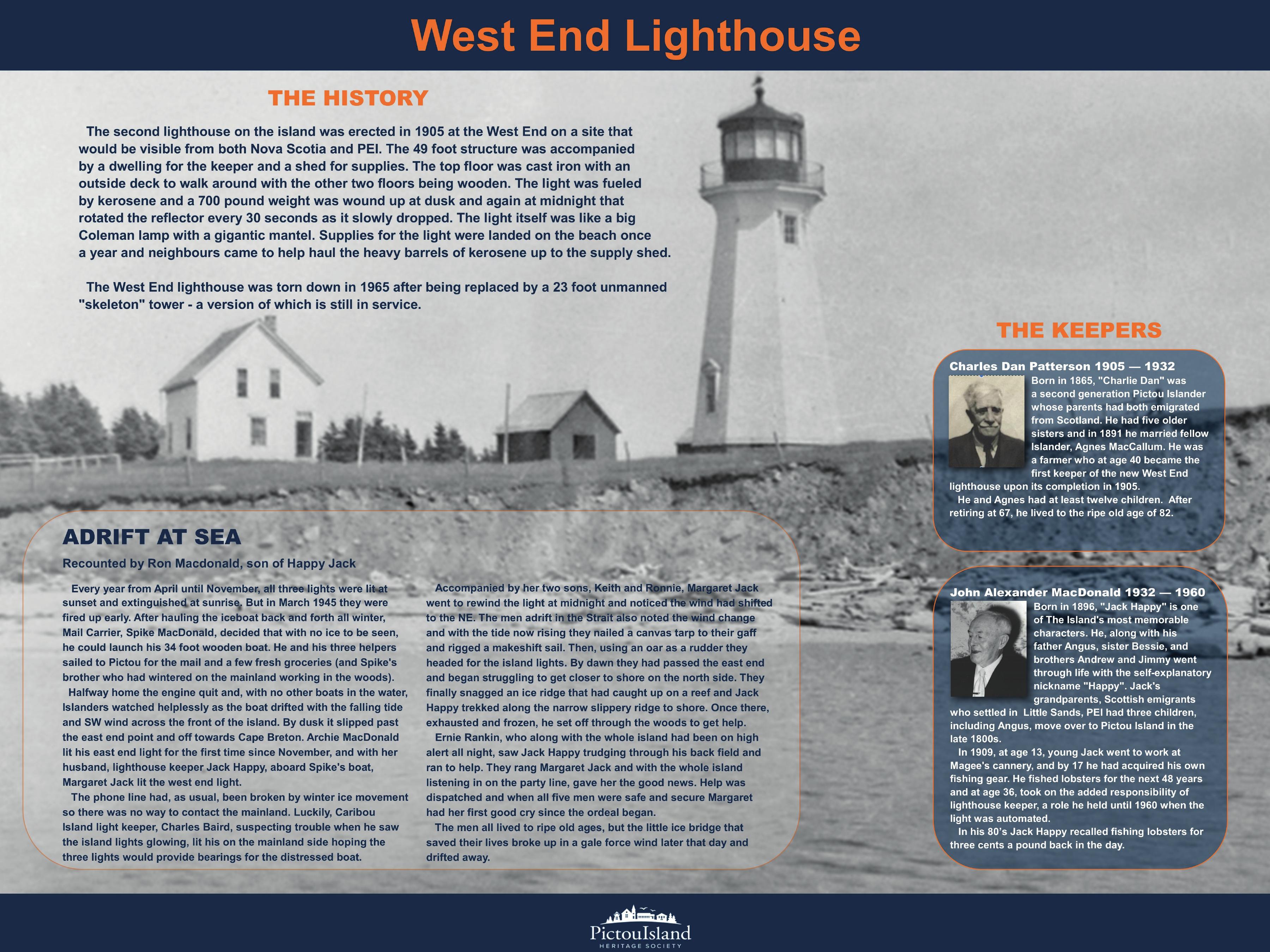
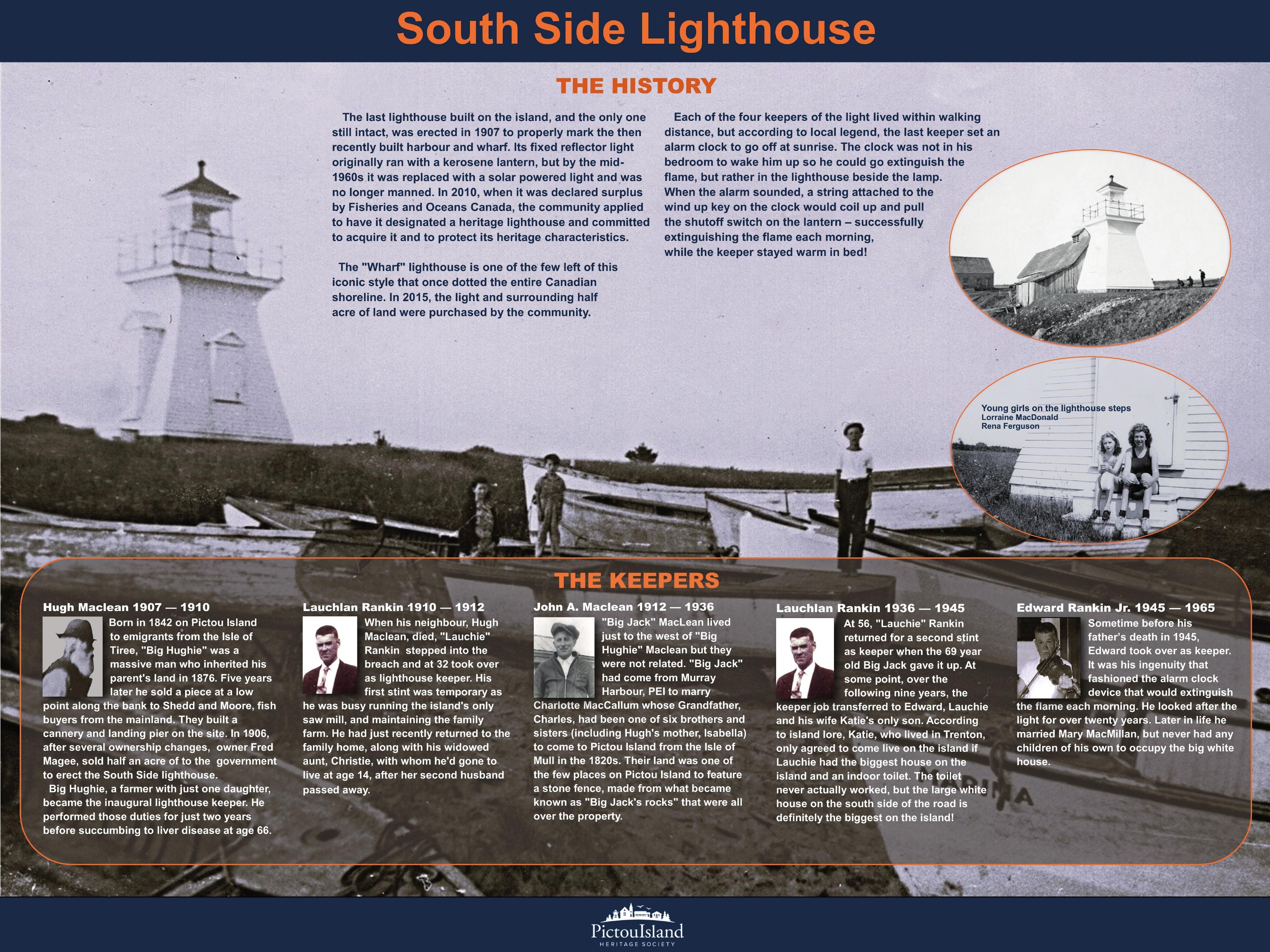
These completed PIHS panels preserve the interpretation at each station. The online chapters incorporate later source corrections; the original panel wording remains visible as part of the record.
 Enlarge & zoom
Completed PIHS interpretive panel. Original panel wording is retained.
Explore the station and its place historyEast Lighthouse
 Enlarge & zoom
Completed PIHS interpretive panel. Original panel wording is retained.
Explore the station and its place historyWest Lighthouse
 Enlarge & zoom
Completed PIHS interpretive panel. Original panel wording is retained.
Explore the station and its place historySouth / Wharf Lighthouse
Final chapter · chronology
Timeline
Explore key dates in this story and follow the links to read more. Approximate dates and uncertain identifications are noted.
The East End light enters service
The station was nearly complete in November 1853. Napier’s letter of 11 September 1854 confirms that the light was operating; its exact first-light date remains unknown.
Andrew MacFarlane’s appointment is recorded
The recorded appointment date helps trace the East station’s keeper history.
West and South/Wharf lights strengthen navigation
The West light enters service in 1905 and the permanent South/Wharf light is operating for the opening of navigation in 1907.
A lighthouse household in the census
The 1931 census transcription records keeper Archie, Charlotte and children Lexie, Henry, Frank and Logan. Henry is a strong match to the photographed 1923–1988 memorial.
The South/Wharf tower serves a range
The tower is reported as the rear light of a range before continuing as a single automated aid.
Automation and heritage reshape the light system
The West light is reported automatic in 1962; the South/Wharf tower received heritage recognition in 2015 and its listed navigational service ended in July 2026.