
On Pictou Island, stories travelled where people did: along the road, between fishing boats, through kitchens and around gatherings after work. Some warned of danger. Some offered a laugh. Others were told in quiet voices after someone had died or a strange light had appeared offshore.
This exhibit preserves the stories as people told them, with their different versions and their humour intact. A ghost need not be identified as a historical person for a tale to matter. And a good story need not be presented as a proven event to tell us something about the community that remembered it.
Chapter 1
The White Lady
A figure in white appears in several Pictou Island tellings, with different explanations and identities. The variants belong together as oral tradition rather than a single established biography.
Pictou Island oral tradition
The White Lady is the best-known ghost story in Pictou Island folklore. Several versions have circulated through the community.
The most familiar account tells of a young island woman who fell in love with a sailor visiting Pictou Island. They became engaged before he left for the fishing season. His ship encountered heavy weather near the island and did not return. The woman continued walking the island road and shoreline, hoping to see the vessel come home.
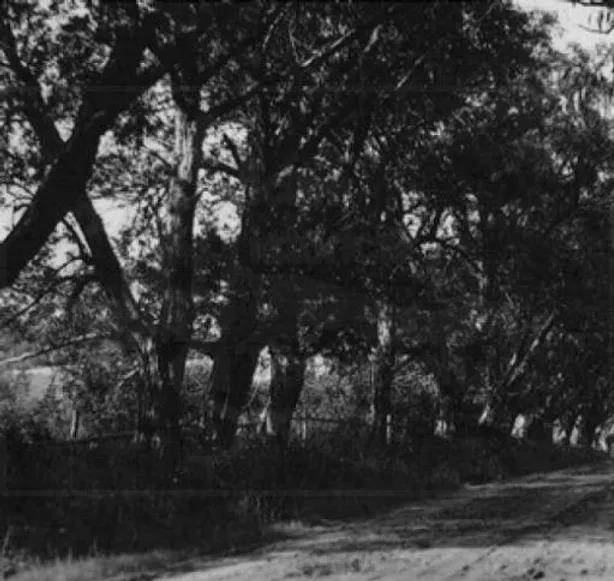
Stories passed down on the island describe a young woman in a long white gown appearing along the main road and beaches. Other versions connect the White Lady with a child lost early in life and describe her searching the road for the child.
The details vary, but the image of a solitary white-clad figure waiting and searching has remained part of island storytelling for generations. The White Lady is not a single fixed historical account with one confirmed identity; like many oral traditions, the story has absorbed memories of shipwrecks, departures, and people who left the Island and never returned.
Pictou Island’s roads, beaches, open fields, and changing coastal light are part of the story’s power. Fog, moonlight, blowing grass, or a distant figure can appear very differently from one night to the next. Whether understood as a ghost, a remembered person, or a story shaped by generations of retelling, the White Lady represents waiting, uncertainty, and the emotional presence of those whose lives were bound to the sea.
 Enlarge & zoom
PIHS White Lady folklore image
Chapter 2
The Devil at the Card Game
Picture an ordinary card party transformed by one detail: a stranger joins the table, then a card falls to the floor and someone glimpses a hoof beneath it. The story’s power lies in the contrast between familiar entertainment and a warning about the Sabbath.
Local tradition with regional comparison
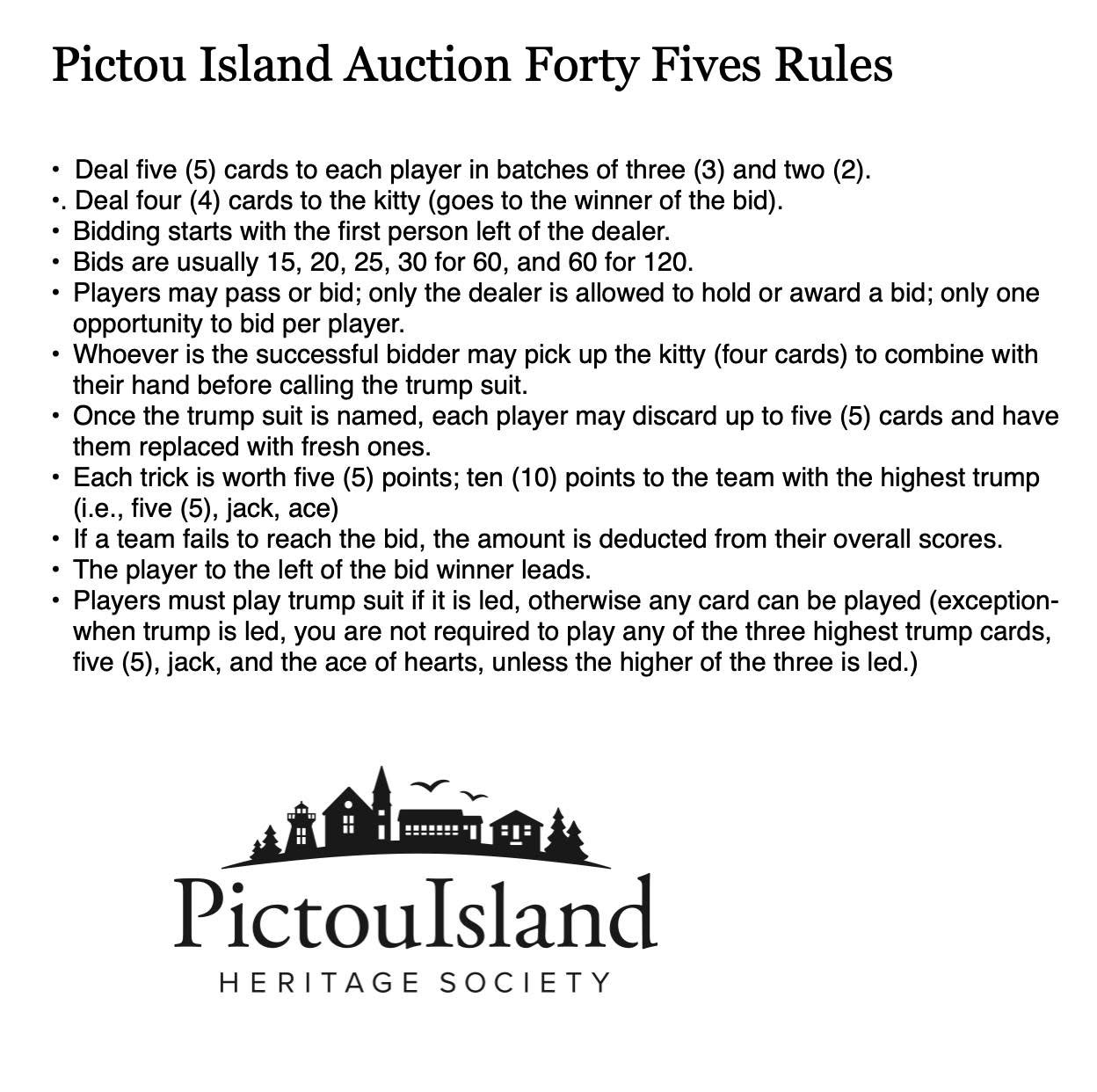
Card parties were an important part of Pictou Island’s social life. The earlier island folklore page describes gatherings held throughout the community and the traditional observance of Sunday as the Sabbath.
Against this background, island tradition preserved a cautionary tale about a Sunday card game. A quiet stranger joined a group playing cards. Visitors were not unusual in an isolated fishing community, so no one initially questioned his presence.
The game continued until one player dropped a card beneath the table. When someone bent down to retrieve it, the stranger’s feet were revealed to be cloven hooves rather than ordinary human feet.
The visitor was understood to be the Devil. The story warned that playing cards on the Sabbath could carry spiritual consequences, turning a familiar island pastime into a lesson about community rules, religious observance, and the dangers of disregarding tradition.
The tale belongs to a wider family of stories in which the Devil appears as a stranger at a card game and is recognized by a hoof beneath the table. Helen Creighton recorded a related Nova Scotian card-and-Devil story in Bluenose Ghosts, but there is currently no evidence that she collected the Pictou Island version. Her work is included here only as regional comparison.
Chapter 3
WHAT CEMETERY TALE IS COMPLETE WITHOUT A GOOD GHOST STORY!
A young mother, her newborn son, a winter funeral and unsettling signs form one of the Island’s longest supernatural narratives. This is community tradition, not documentary identification of a mother, child or unmarked burial.
Community tradition / folklore
This Island tradition tells of a young mother and child, a winter funeral, and unexplained signs. The surviving account does not identify its eyewitness sources. It is presented as a story, not a documentary reconstruction.
In this version, a young Island woman, still in her parents’ home and said to be 18, was due to give birth. Their house was generally considered to be haunted by ghosts who had followed from the old country (Scotland). The Island nurse, attending each evening as her time grew near, feared this was going to be a difficult birth, but the Strait was so full of February ice that even the man-powered iceboat was travelling only as conditions permitted. The difficult, hours-long trip to the mainland would be impossible for a young lady so late in her pregnancy, never mind in labour.
The story continues: one night, after her regular visit, as the nurse walked down the lane to the main road, the girl’s mother watched in fear as a ball of fire followed her. The very next day, labour began, and three difficult days later, a son was born. Tragically, he passed before the day was done. While women on the Island were experienced with labour and delivery, a C-section was out of the question and, due to complications of the difficult labour, the young mother also passed away two days later.
In the telling, the Island nurse prepared the mother and child for the funeral and laid them out in the casket that had been assembled. Tradition dictated that the remains be kept at home and, to guard the newly deceased from the Devil, that they should not be left alone. The nurse took the first shift and, as she sat reading her book, a black cat with no tail enter the room and scurried under the casket. For a superstitious Islander, there was nothing worse than a black cat, but try as she might, she was unable to locate the cat - it had simply disappeared.
The next night in the story, two gentlemen, described as respected members of the community, were to sit with the remains. The night was uneventful, but just before sunrise, the men heard the sound of chains scraping on the outside of the house, a certain sign of the Devil. They ran for the door, and it is said that they did not stop running until they reached their respective homes.
In this version, the funeral was set for that morning, which dawned a beautiful day, sunny and warm for February. The church was seldom used for services in the winter as it could not be easily heated, so the community gathered at the family’s home. With no minister during the winter months, the nurse and the teacher prepared to lead the service. As they began, the flue suddenly went on fire and balls of flame fell from the chimney and exploded from the fireplace. Though they landed on people, they were strangely cold and did not burn. As suddenly as it had begun, the fire went out, and the service was concluded.
The story describes the pallbearers moving the casket to the front door. Outside a young white mare, hitched to the Island’s hearse, pawed at the snow as she waited. Strangely, try as they might, no one could open the front door. After some struggle, they had no choice but to remove a window and pass the casket out. Once loaded, the hearse proceeded to the cemetery with the pall bearers walking along side. Women seldom made this journey because, given the distance and the winter conditions, it was a difficult trip. About halfway to the cemetery, a wind picked up and snow began to fall - the wind built to hurricane force and the mare struggled to haul the hearse along the frozen, rutted road to the cemetery where a gravesite had been prepared earlier. (With no refrigeration, waiting until spring was not an option, so the islanders would build a fire on the proposed site to thaw the frost and then dig the grave by hand). Upon arriving, they found the hole filled with snow that needed to be shovelled out before the casket was lowered. By the time the casket was in place, the men were all exhausted and, given the terrible conditions, it was agreed they would close the grave the next morning. When they got back to the house, the pall bearers found the front door, that had been strangely stuck, was wide open. Then, as quickly as the storm arose, it fell away.
The tale continues at dawn the next morning: with visions of spirits swirling about the open hole, a crew set out to close the grave. To their surprise, when they arrived at the cemetery, it had already been filled in. By whom? Nobody knows. Just a few days later, the young white mare unexpectedly fell over dead - the teller suggests that the effort of hauling the hearse may have caused it, but the cause is not established. Surely there is a natural explanation for what transpired around this tragic loss of a young mother and her son—but for the islanders, it remains a mystery.
The story says that no marker survives for the young mother and child. PIHS has not independently established their identities or burial locations.
Documentary cemetery history, memorial inscriptions and the surviving hearse can be explored through the related history links. They are separate from the supernatural details of this telling.
Chapter 4
The Island Hearse
A real horse-drawn hearse survives in the Island’s heritage collection. That object anchors many stories about funerals, weather, omens and procession routes.
Attributed interpretive history
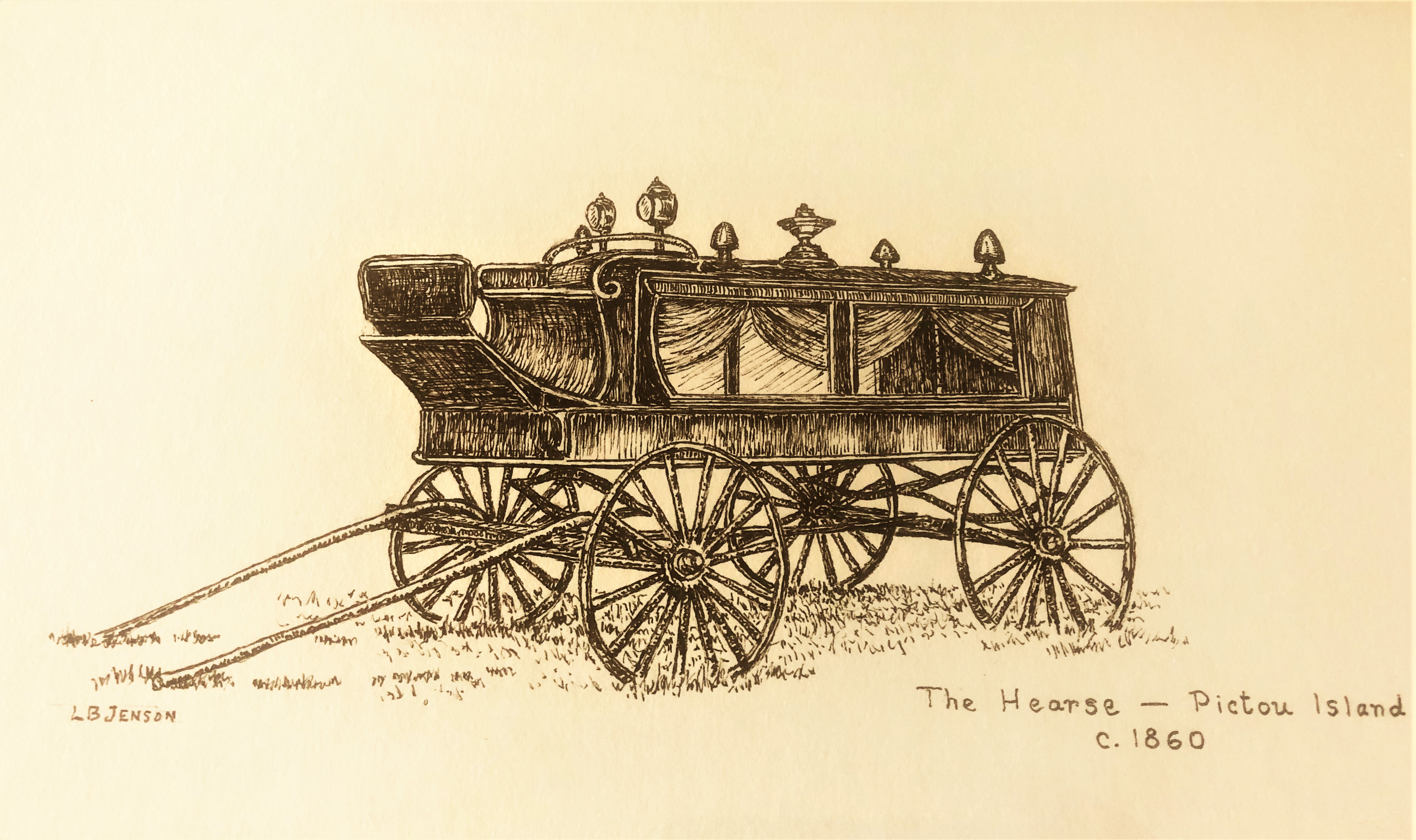
The surviving Island hearse provides a physical connection with funeral traditions and stories told about death and forewarning. PIHS-approved interpretive history and Ruth Munro’s later account place its acquisition from McLaren Funeral Home around 1910; a contemporary purchase record has not yet been recovered. The complete Hearse history distinguishes the vehicle’s documented record from remembered customs.
 Enlarge & zoom
A drawing of the historic Island hearse
Chapter 5
Forerunners
A forerunner was a sign interpreted as a warning that misfortune or death was approaching. Island accounts describe unusual sounds, troubled animals or doors behaving strangely.
Pictou Island tradition with regional Celtic context
A forerunner is a premonition, event, or sign believed to warn of tragedy or a death. Belief in forerunners is found throughout Nova Scotian folklore and reflects older Celtic traditions carried into island communities.
Pictou Island stories describe periods of uneasiness or distress before sad news reached the community. Horses that pulled the island hearse, livestock, and household animals were sometimes said to become upset or unusually difficult to manage.
Other accounts describe doors or windows moving unexpectedly while a family prepared to leave a home after a death. More dramatic versions include apparitions or unfamiliar sounds heard around the home of the person concerned.
Whether understood as experience, coincidence, or superstition, forerunners became part of the island's shared cultural memory. The Hearse House now protects the historic island hearse and preserves a physical connection with these stories.
 Enlarge & zoom
The Hearse House
Chapter 6
The Phantom Ship
Around Northumberland Strait, people told of a glowing sailing vessel that appeared in the distance and vanished before anyone could reach it. Accounts from the Island and communities along the opposite shore vary in setting and interpretation.
Northumberland Strait regional tradition
For generations, people living along the Northumberland Strait have reported seeing a ship in the distance with its sails and rigging glowing as though on fire. Pictou Island is one of the places associated with this enduring maritime legend.
In one island version, a barque left the Pictou area bound for overseas waters. Later, a three-masted vessel was seen near the eastern end of Pictou Island, apparently burning. Concerned observers, including Captain Adam Graham of Pictou, set out toward the glowing ship. Before they could reach it, the vessel disappeared.
In the telling, news that the vessel had passed through the Strait of Canso led witnesses to interpret what they had seen as the Phantom Ship. Other accounts, including reports from Cape John and communities facing Pictou Island, describe a large ship with three masts, fire in the rigging, and a red glow across the deck. In some tellings, an easterly storm followed several days later.
The apparition was not limited to the Island. Reports from Cape John, Little Harbour, Brule Point, and the area around Caribou Island place the story within a broader Northumberland Strait tradition. Some versions connect the ship with a vessel lost at sea; others treat it as an omen of approaching weather.
Whether the Phantom Ship was an optical effect, a distant vessel, atmospheric light, or something that cannot be explained, it remains part of the cultural geography of Pictou Island and the Northumberland Strait. It belongs to the same waters crossed by fishing boats, sailing vessels, ice, storms, and ships carrying people away from home.
Chapter 7
Rum on the Reefs
The tale of discarded kegs combines fishing, luck, secrecy and the unpredictable Strait. Roland Sherwood preserved a later story about a May 1930 incident; a separate 1934 account describes a rum-running vessel grounding and apparently being refloated after cargo was thrown overboard.
Pictou Island maritime tradition with regional comparison
Stories of hidden kegs, dangerous reefs and rum-running vessels connect Pictou Island to the illicit liquor trade of the Northumberland Strait.
Roland H. Sherwood’s 1975 article ‘Pictou Island’ records a local tradition of buried Demerara rum along the Island’s shore. Sherwood says that fishermen had recovered stray kegs and describes a much larger May 1930 incident as the greatest spree Pictou Island had known. In the account, a pursued rum-runner dumped illegal liquor into the Strait; fishermen from Pictou Island and the mainland salvaged the kegs, temporarily abandoning their lobster fishing. Some of the liquor was taken ashore and buried, and later retelling made the lost kegs part of the Island’s maritime folklore.
A separate account concerns an unnamed rum-runner that grounded on East End Reef in 1934. Some versions treated the vessel as wrecked, while Hilton McCully’s account says that it was later refloated after its cargo was thrown overboard. Until the vessel and official record are identified, the safer description is a grounding, not a wreck.
The wider regional setting is credible. Oral-history and community-history collections preserve memories of rum runners, bootleggers, fast boats, patrols and the risks of moving liquor by water. That regional history does not prove that Pictou Islanders operated an organized bootlegging business.
No independent record presently identifies the 1930 vessel, confirms the pursuit, names an Island bootlegger, establishes a precise recovery site or verifies the continuing existence of buried kegs. The story may preserve memories of actual events, later retelling, or both. It belongs to Pictou Island’s maritime folklore because it joins fishing, reefs, weather, salvage, secrecy and knowledge of the shoreline.
Evidence note: This record combines a published local tradition, regional oral-history leads and secondary accounts. The 1930 incident and buried-keg recoveries remain unverified as contemporary documentary events. The 1934 matter is treated as a rum-runner grounding; vessel identity, cargo, crew and official disposition remain unresolved.
Chapter 8
Sea Monsters: The Creature in the South Marsh
Bent cattails, a broad trail through a marsh and an unexplained presence give this tale its beginning. In the later published account, Island men investigate something large and serpent-like, retreat to a hunting camp and later burn reeds, but find no conclusive physical evidence.
Later published Island account
Pictou Island folklore includes a story about a strange creature believed to have come ashore from the sea. The account begins in the marshes along the south shore, where people noticed that the grasses and cattails had been pressed down in a broad trail.
In the later account, the marks suggested that something large had moved through the marsh. The teller says there were no hoofprints and no horses on the Island. Some Islanders concluded that the trail had been made by a creature from the sea that had travelled inland toward a pond.
A group went to investigate. According to the later account, they encountered something that appeared enormous and serpent-like. Uncertain what they had seen, they withdrew to a nearby hunting camp and spent the night listening to movement in the surrounding marsh.
By morning, the men had decided that the safest way to deal with the suspected visitor was to burn the reeds. Once the smoke cleared, however, there was no body, track, or other evidence proving that a large animal had been present.
The story survives in the uncertain space between observation and imagination. Bent vegetation may have had a natural explanation: an animal, weather, water movement, or some other disturbance. But to those who encountered the marsh, the possibility of a sea monster was real enough to inspire fear.
Rod C. Mackay’s Whistle Down the Wind preserves a later written version of the South Marsh account. The story’s first collector and date remain unresolved. Mackay’s citation to Eric Ross accompanies a separate healing-charm tradition and does not establish Ross as the source of this marsh story. Helen Creighton documented sea-serpent traditions elsewhere in the Maritimes, but the attribution of this particular Island account to her has not been confirmed from the original pages.
Sea serpents in the Northumberland Strait, 1844–1879
Reports of unusually large marine animals circulated along the Northumberland Strait during the nineteenth century. In October 1844, a Pictou millwright named Mr. Barry said that he watched a long, dark, hump-backed animal swim past the pier at Arisaig. He described the encounter to geologist J. William Dawson, who passed the account to Sir Charles Lyell. Lyell published it in 1849 with an illustration reconstructed from memory. This was reported testimony, not confirmation of an unknown animal.
In August 1845, witnesses near Merigomish reported another large, dark animal in calm water. Lyell discussed both accounts, considering known marine animals and errors of observation without identifying the alleged creatures conclusively.
Two American newspapers printed a report on 30 July 1879 about Captain Sampson and a schooner near Pictou Island. The Reading Daily Eagle carries the headline “A Terrible Monster”; Andrew J. Hebda’s 2015 Nova Scotia Museum chronology transcribes the account. The original Meriden Daily Republican, page 1, column 3, names the schooner “Louise Montgomery” and reports an alleged serpent about ten miles east of Pictou Island, roughly a hundred feet long and moving at seven knots. These are contemporary printed claims, not verified measurements or proof of an animal. The Meriden brief has no separate visible headline. The two newspaper versions do not establish two independent sightings; the captain’s given name remains unverified.
The schooner was a documented vessel. Transcriptions of an 1864 Prince Edward Island shipping return and a list of vessels registered in 1876 name Louisa Montgomery, preserving a spelling different from the Meriden report’s “Louise.” The earlier return lists 53 old tons and 27 new tons, while the later list gives 27 tons. Different tonnage systems explain much of the apparent discrepancy; the original shipping pages and exact ownership-transfer date remain unverified. A vessel’s existence does not establish the accuracy of a sea-serpent report.
These dated marine reports and the Island’s undated South Marsh legend belong to the history of storytelling around the Strait. No evidence establishes that they describe the same animal or incident.
Chapter 9
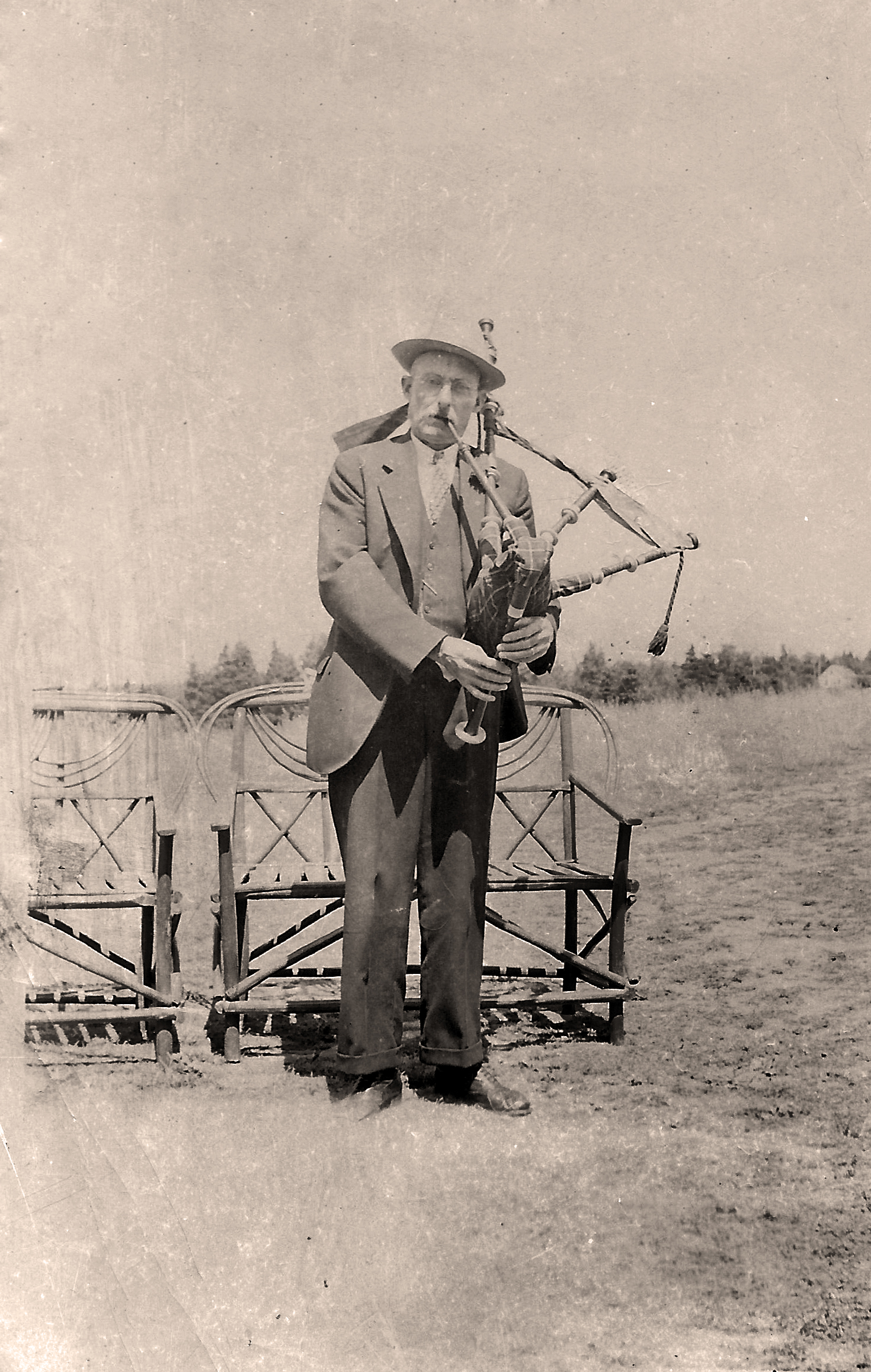
Music in homes and gathering places
Folklore was not all fear and omens. Ruth Munro remembered fiddle, pipes, accordion and organ music, as well as Islanders who taught and played for one another.
Island music belonged to homes, worship, lessons and social gatherings. Ruth Munro’s Pictou Island (1984) remembers fiddle, pipes, accordion and organ, as well as the people who taught others to play. Her account preserves a musical community rather than a list of formal concerts.
Munro remembers brothers Victor and Dannie MacCallum playing fiddle and pipes, and Robert MacFarlane and George Rankin playing accordion. She identifies Kate Rankin and Mrs. Hector MacCallum as organ teachers, and Catherine MacFarlane as a church organist. These musical roles come from her recollections; surviving family records help distinguish the people without independently documenting a performance.
Roland H. Sherwood’s 1975 account also describes household entertainment, frolics, reels and step-dancing. He reports locally composed songs about wrecks and rescues. The sources do not establish their words, melodies or language, so they cannot be reconstructed as a lost Gaelic repertoire.
Chapter 10
The people who carried the stories
Oral culture survives because someone remembered and retold it. Jack ‘Happy’ MacDonald, John Malcolm ‘Tug’ MacCallum and Lauchie ‘Punch’ Patterson are among the named Islanders whose recollections help illuminate life on the Island.
Stories travelled through families, fishing crews, shops and evening gatherings. Humour, nicknames, tall tales and memories of difficult crossings helped people describe both their neighbours and the place they shared. A story could preserve practical knowledge and a teller’s personality at the same time.
Ruth Munro names Jack ‘Happy’ MacDonald and John Malcolm MacCallum among the Islanders who recalled work, winter travel and community life. Sherwood preserves Lauchie ‘Punch’ Patterson’s tall-story tradition. A nickname or a memorable telling helps us follow a source; it does not make every detail a documented event.
The 1924 Trip of Mercy illustrates how different kinds of evidence can speak to one another. Jessie MacCallum’s diary supplies a near-contemporary account, while Jack ‘Happy’ MacDonald’s later recollection conveys the danger and decisions remembered by a participant. Keeping the diary and the oral account distinct preserves what each contributes.
The supernatural stories in this exhibit belong to that wider culture of telling. Their changing versions reveal how people remembered loss, danger, belief and place. Preserving a tradition includes remembering who told it—and leaving space for another version.
Final chapter · chronology
Timeline
Follow the history of recording and sharing Island traditions. These dates mark publications, remembered journeys and community gatherings; the undated ghost stories are not assigned event dates.
PIHS history places the Island hearse in service
PIHS-approved interpretive history and Ruth Munro’s later account place the hearse’s acquisition from McLaren Funeral Home around 1910. A contemporary purchase record has not yet been recovered.
The Trip of Mercy enters diary and memory
Jessie MacCallum’s diary and Jack ‘Happy’ MacDonald’s later recollection preserve different accounts of a difficult crossing.
Sherwood publishes Island traditions
Roland H. Sherwood’s published account preserves rum-running traditions, household entertainment and tall tales. The publication date does not establish when an undated story began.
Ruth Munro records a musical community
Munro’s Pictou Island remembers musicians, teachers, gatherings and the Islanders who shared their stories with her.
PIHS hosts an old-time card party
Photographs record a gathering at the community centre, continuing the Island’s tradition of cards and company.
Island Auction 45 rules are recorded
Ron MacDonald’s recollection of the traditional Island rules was published by PIHS on 8 August 2023.