
The Island Hearse: Funeral Journeys and Community Memory
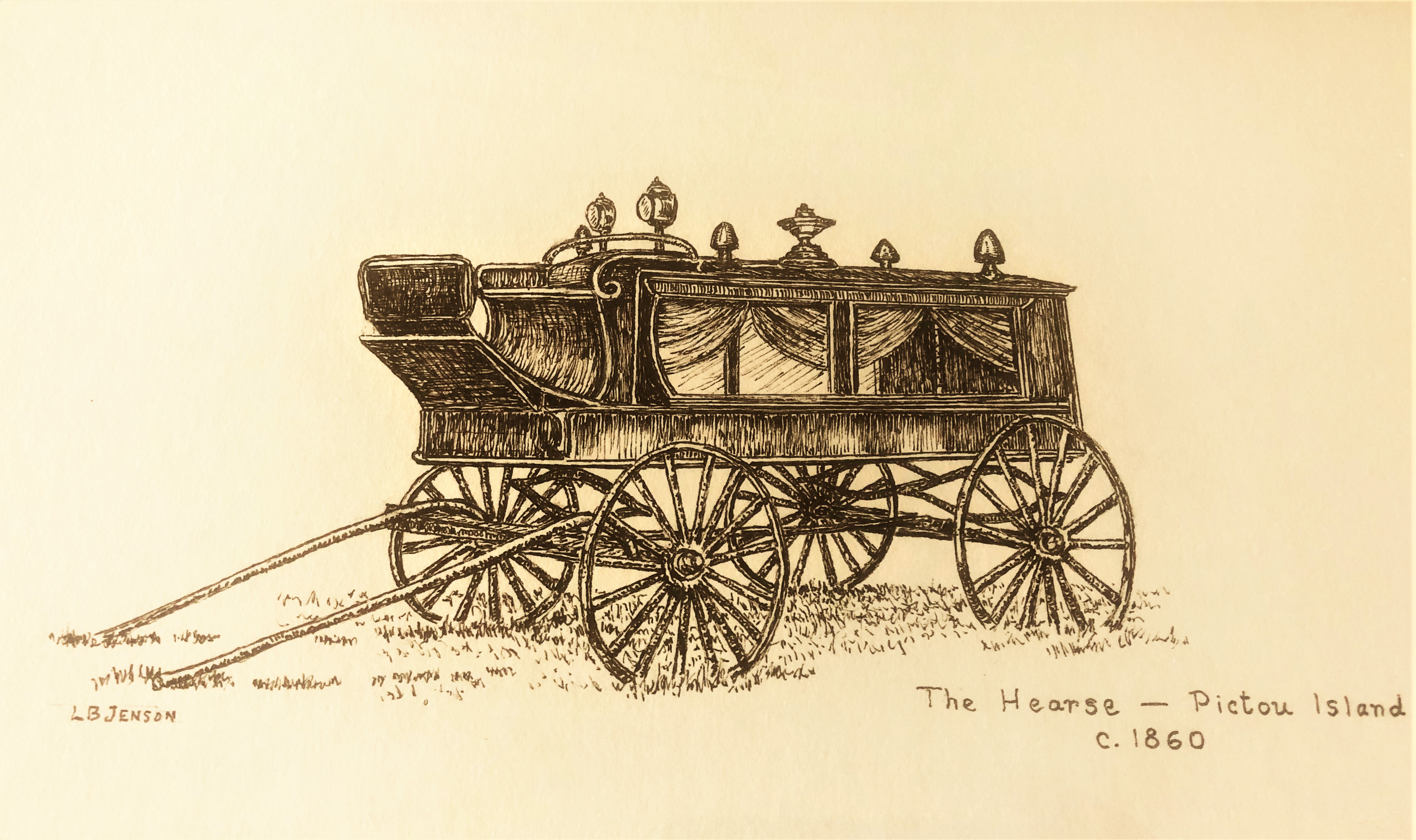
A community object
Pictou Island’s surviving horse-drawn hearse brings together several parts of the Island’s history: the care of people who died, the work of neighbours at a funeral, travel along Island roads, and the crossing home when a death occurred on the mainland. Preserved in its Hearse House, the vehicle gives these accounts a physical presence. It is an object around which practical history and remembered stories have gathered.
The hearse’s survival is better established than every detail of its early life. Later Island accounts place its acquisition from McLaren Funeral Home in Pictou around 1910. A contemporary purchase record has not yet been located in the PIHS research. The distinction matters: the acquisition story can be told with attribution, while the date of manufacture remains unresolved. [1, 2]
The journey to burial
The PIHS funeral-practice interpretive panel describes pallbearers walking beside each wheel, ready to help if the hearse became caught in a rut. It also recalls black horses and black palls for adults, and a white horse and white palls for children. These customs are preserved in the PIHS panel account. [1]
The same panel records a later adaptation: as horses disappeared from the Island, the hearse was modified to travel on a pickup truck. It describes the return by ferry of people who died on the mainland, including Billy MacMillan, with mourners and pallbearers accompanying the casket. The funeral journey could therefore begin across the Strait, before continuing toward an Island burial ground. [1]
The lamps and lanterns
Two mounted lamps appear above the driver’s position in the drawing signed L. B. Jenson. The community historic-sites account separately describes attendants carrying lanterns beside the wheels. Mounted lamps and hand-carried lanterns were different parts of the funeral journey. [2, 3]
The work behind a funeral
The hearse was only one part of death care. Island-specific research also identifies people who prepared the deceased, made coffins, and helped carry them. Margaret MacCallum, later Margaret MacDonald, was a trained nurse appointed Public Health nurse for Pictou Island by December 1925. Later Canadian Nurses Association memorial material credits her with preparing deceased people and conducting funeral services. That later account supports a death-care role, but does not establish that she was a licensed undertaker or embalmer. [4]
In his study of Gaelic Nova Scotian death and burial traditions, Shamus Y. MacDonald cites Ruth Munro’s history for a coffin made for Frank Munroe in 1974, described as the last built on Pictou Island. “Last” remains an attributed statement from Munro, rather than a conclusion reached by checking every later funeral. These individual examples show why the hearse belongs in a wider history of community work around death. [5]
Preservation and memory
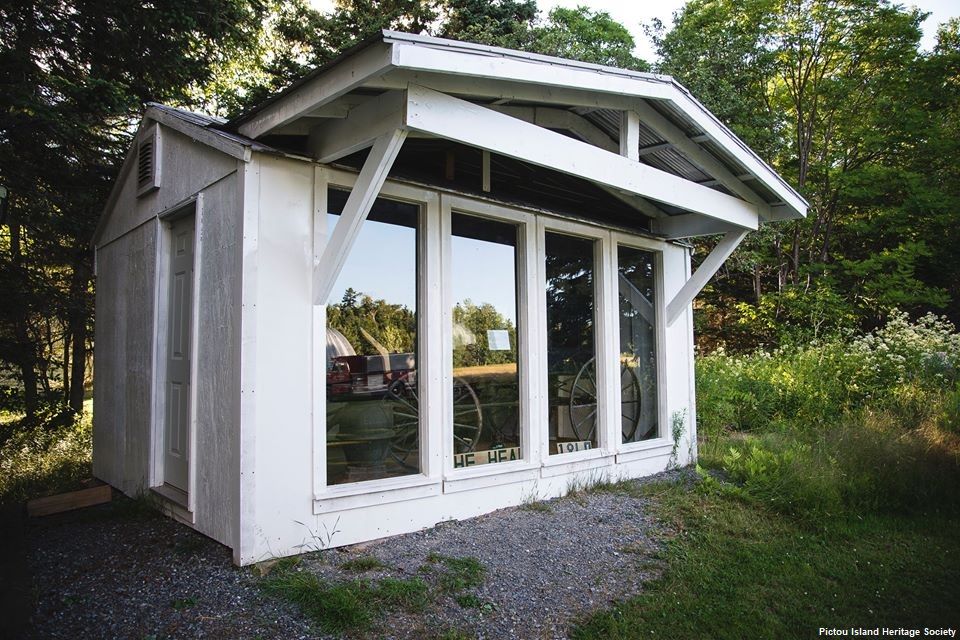
The Hearse House preserves the vehicle for visitors. The community historic-sites account dates the conversion of its earlier shed into a display building to 2012. It also records beliefs that removing the hearse from its dwelling, or a horse stopping during a funeral journey, could foretell another death. These are traditions associated with the hearse, not evidence that the events caused or predicted a death. [2]
The vehicle, the drawing, the panel and the surviving accounts each preserve a different part of this history. Read together, they help explain how Islanders remember funeral journeys while leaving room to investigate the object’s origins, its lamps and the details of its use.
Sources and further reading
- Pictou Island Heritage Society, Church Cemetery and funeral-practice interpretive panel; text credited to Lorne Matheson.
- Pictou Island, Historic Sites: The Hearse. Inspected 30 September 2026. A later community account, not independent confirmation of acquisition, construction date or operating customs. It mentions carried lanterns but supplies no lamp-colour code.
- Drawing signed L. B. Jenson in the PIHS collection. The inscription does not independently establish the vehicle’s manufacture date.
- The Canadian Nurse, December 1925, Royal Victoria Hospital alumni notice for Margaret MacCallum; Canadian Nurses Association memorial biography for Margaret (MacCallum) MacDonald, 1897–1977. The appointment notice and later memorial account support different parts of her history.
- Shamus Y. MacDonald, “With Respect to the Dead: Reconstructing a Historic View of Death in Gaelic Nova Scotia,” Genealogy 4(2), 66 (2020), citing Ruth Munro, Pictou Island (1984), p.56. The study cites Munro’s account of local coffin making.
Sources and evidence notes
Coloured hearse lamps remain an unresolved reading and research lead. The monochrome drawing cannot establish the glass colour or a colour code. No male/female/child mapping has been established, and the question is not confirmed personal recollection. The panel’s black-and-white horse and pall traditions are separate evidence.