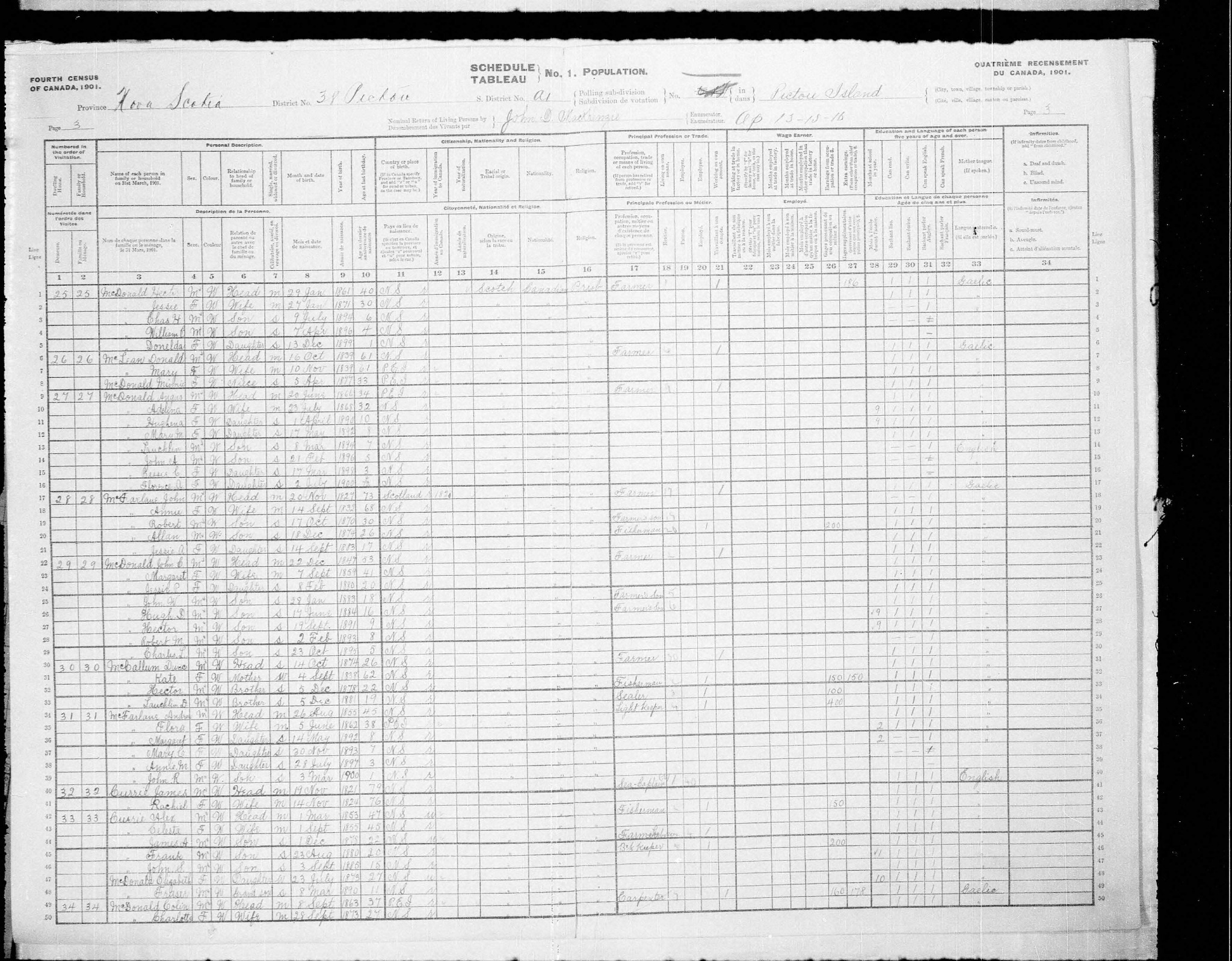
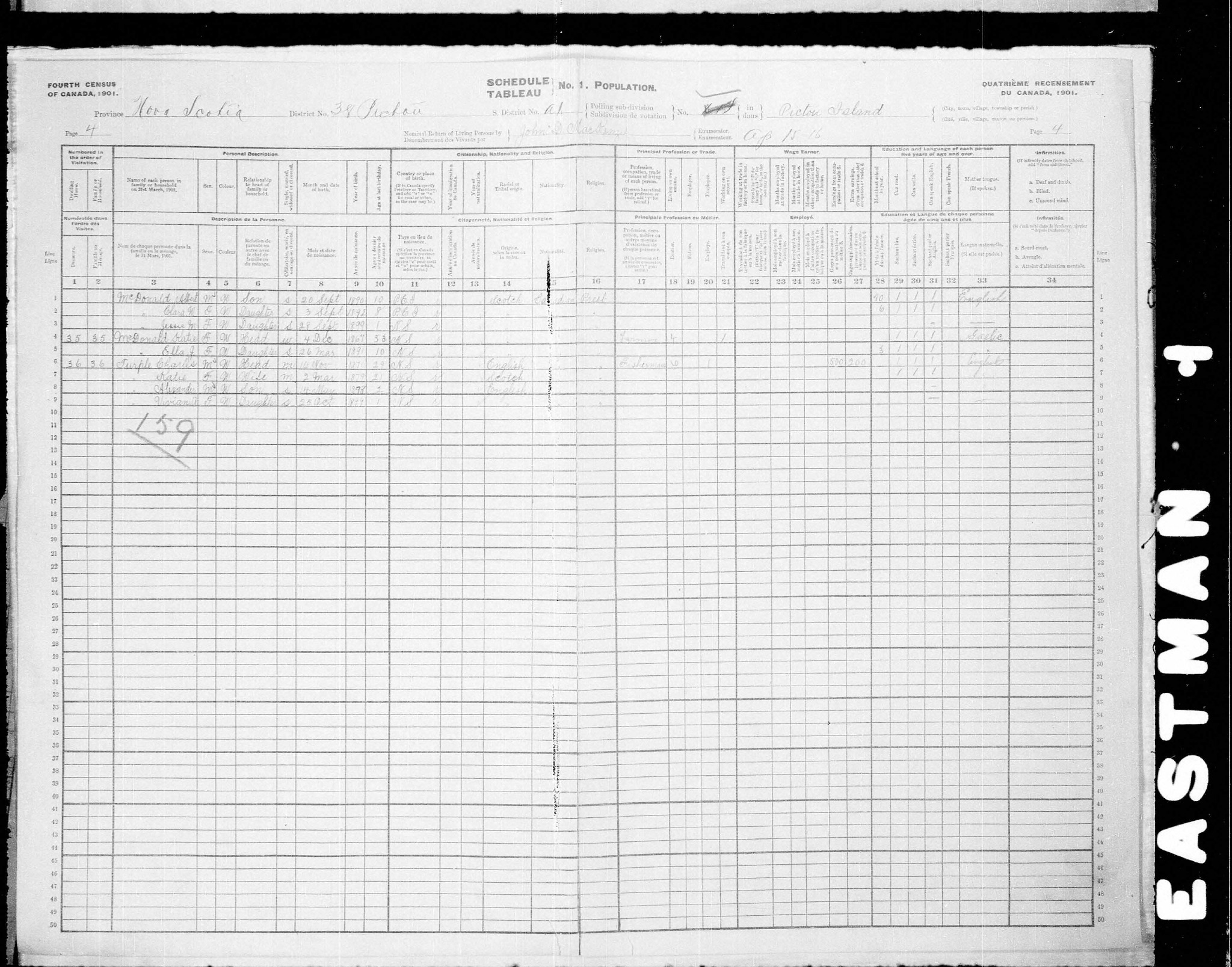
Remembering the tail end of a Gaelic community
In a 2018 interview, David Harding remembered older Islanders he knew and fished with.
“The old people that we knew and fished with had grown up with Gaelic—they understood it and a few could speak a few words of it.”
— David Harding, July 19, 2018
His recollection does not name the speakers or tell us when Gaelic was last spoken on the Island.
Letters, readers and a newspaper network
An unnamed Pictou Island subscriber’s letter appeared in Mac-Talla on 3 June 1893. In the editor’s published extract, the writer welcomed a Gaelic newspaper, thanked Dr Blair for historical accounts and sent money for another year. This is evidence of engagement with the paper, although the subscriber’s identity and household remain unknown.
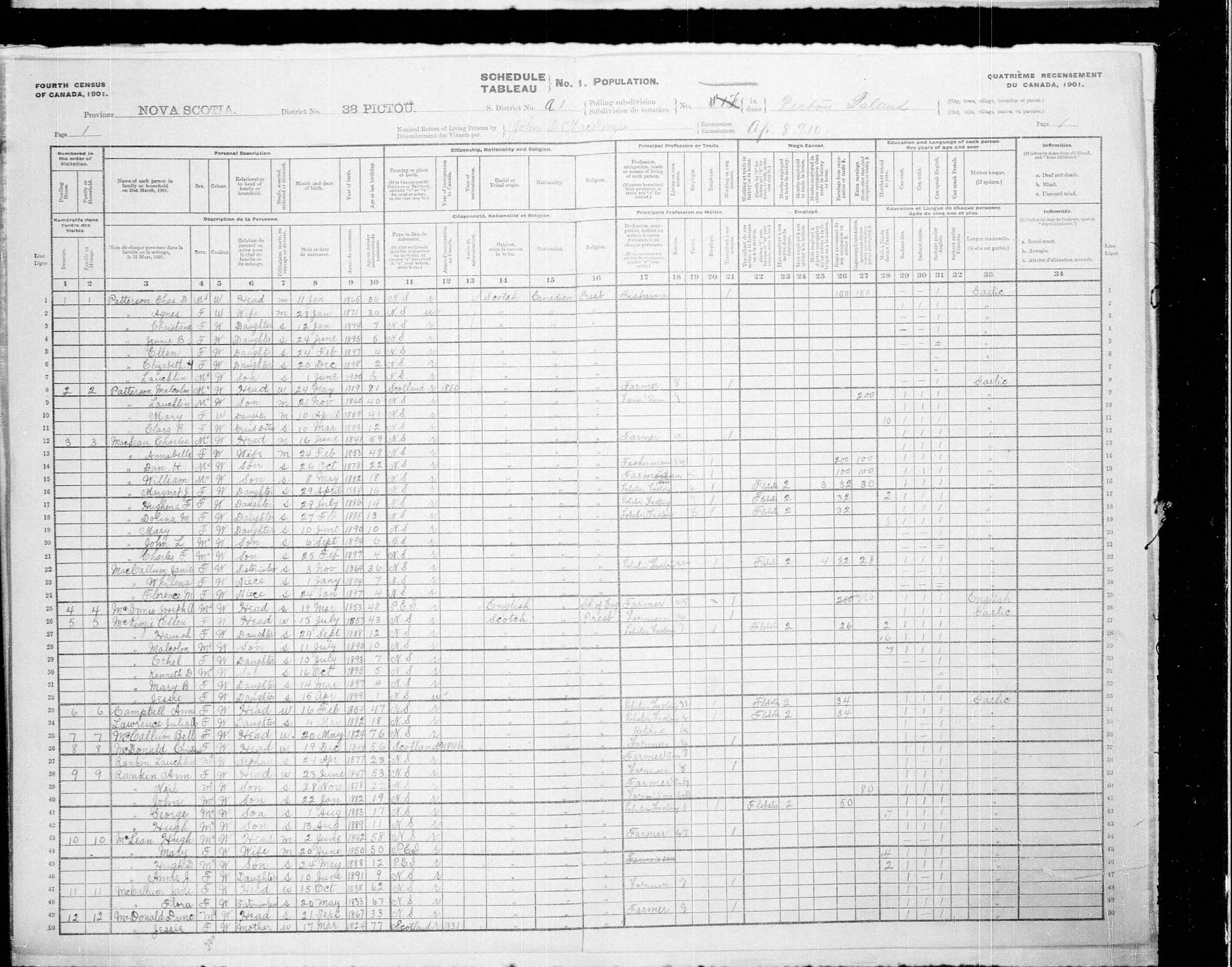
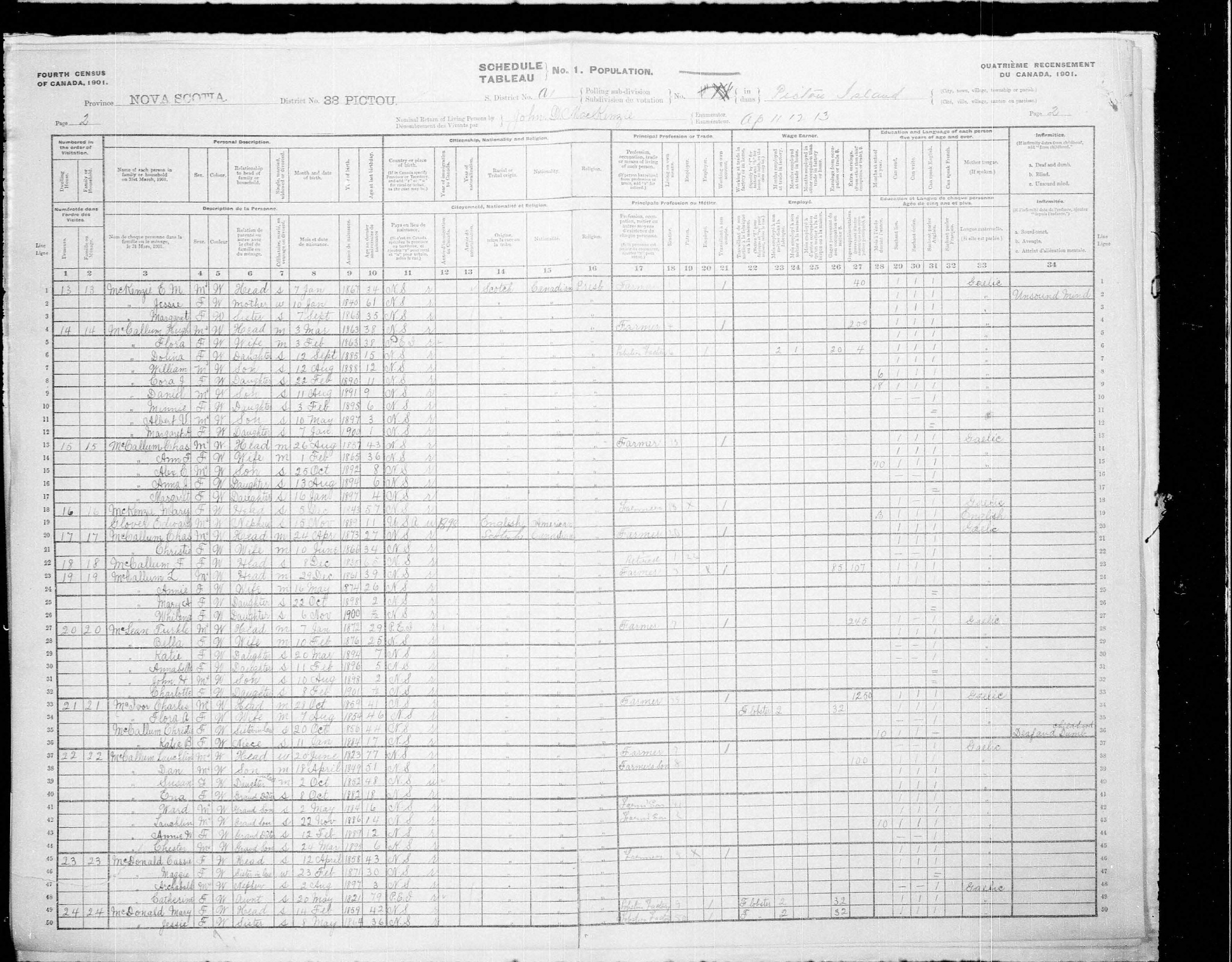
A visitor writing as Seumas A. Mac Ille-mhaoil described a short Island visit in the issue of 25 August 1894. He recalled hearing Gaelic and seeing women and men of different ages reading Mac-Talla. This paraphrase of the Gaelic account gives a contemporary observer’s view of speech and reading; it supplies no count or proof that everyone could read. His letters, a later scholarly crosswalk and the 1901 census strongly identify him as James A. MacMillan of Wood Islands, Prince Edward Island.
Payment acknowledgements also name a woman through the designation conventionally understood as Mrs John MacLean in 1893, 1894, 1896, 1898 and 1900. Her own name is not given, and the repeated designation does not establish that every entry concerns one woman. Further Island entries print Eoghan Mac Gilleain in 1901 and the variant Eobhan Mac Gilleain in 1902. None resolves the proposed identity with Big Evan or Hugh MacLean.
Gaelic and worship
Contemporary reporting of the church’s October 1910 opening weekend describes Gaelic and English services on Sunday, 16 October. Eric Ross later reported a Gaelic communion in 1927, but a contemporary record confirming that separate event remains unrecovered.
In Memories of Pictou Island: 1940’s, Hilton McCully recalled older congregation members enjoying a service conducted by an unnamed Gaelic speaker from Boularderie Island during his Island stay in the 1944–46 period. His wording identifies a Gaelic speaker; it does not specify the language of the entire service, its precise date or the visitor’s name.
Remembered speech and singing
McCully’s separate book Pictou Island: Bha E Cho Snog recalls Campbell MacCallum using a Gaelic expression about weather being unsuitable both for going and for staying. McCully did not know whether Campbell had coined it or heard it elsewhere. This is a remembered utterance, without an exact date or a measure of Campbell’s fluency.
In the book’s foreword, McCully also remembered Mac Patterson singing a short Gaelic song. Decades later he thought it was probably the song beginning Calum Crubach that he heard on a recording by Mary Jane Lamond. The comparison and Lamond’s reported agreement reach us through McCully’s memory; the exact recording and Patterson’s full identity remain unresolved. McCully’s English song-poem The Island Cannon Ball (Punch’s Boat), signed 1946, is a separate work.
An Island native speaking Gaelic in 1949
Writing in An Gaidheal / The Gael in December 1949, Neil Shaw recalled a Gaelic greeting from a ferry-steamer’s second engineer during his August journey from Caribou to Prince Edward Island. He described the unnamed engineer as a native of Pictou Island. A separate deckhand was the Prince Edward Island native of Skye ancestry; those details do not describe the engineer.
The encounter documents an Island native speaking Gaelic away from the Island. It does not identify his household, establish the vessel’s name, count resident speakers or identify the Island’s last Gaelic speaker.
Sources and manuscript evidence
Further documentary sources
Mac-Talla, 3 June 1893, Island subscriber’s letter
Mac-Talla, 25 August 1894, Island visit
Mac-Talla, 18 August 1894, Eoghan payment entry
Mac-Talla, 16 September 1898, Mrs John MacLean payment entry
Neil Shaw, An Gaidheal, December 1949, pages 171–172
Church opening weekend and source notes
Sharing Gaelic history
Beth (Munro) Knock presented the history of Gaelic at a PIHS general meeting in the Pictou Island Community Centre on 31 August 2024. The approved minutes record a talk about Gaelic; they do not establish that it was delivered in Gaelic or identify a last generation of speakers.
On 13 September 2025, Beth and Caitlyn Banks gave a joint presentation about school history and their experiences of Island education. The circulated AGM minutes preserve another example of community members sharing history across generations.
Sources: PIHS general meeting minutes, 31 August 2024, item 11 (approved 12 October 2024); PIHS AGM minutes, 13 September 2025, item 7 (circulated copy; approval not verified).