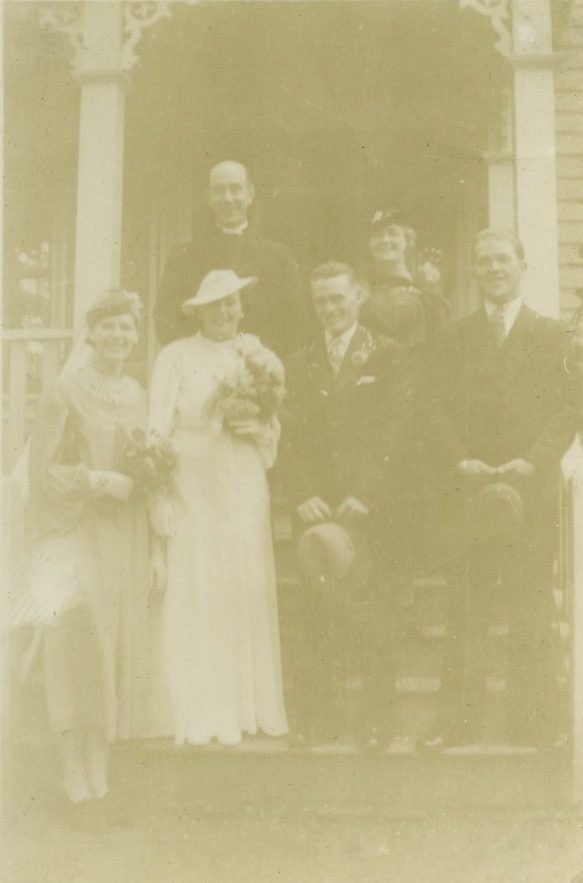
Annie Mae, Jean, Jim and Charlie - probable wedding group
Probably 24 September 1936; the wedding identification and date are inferred.
Contributed by Chris Stafford
View photograph, caption and connections → Virtual Museum
Article · Pictou Island history
The burial ground behind Sutherland Memorial Church and the families remembered there.
The burial ground behind Sutherland Memorial Church and the families remembered there.
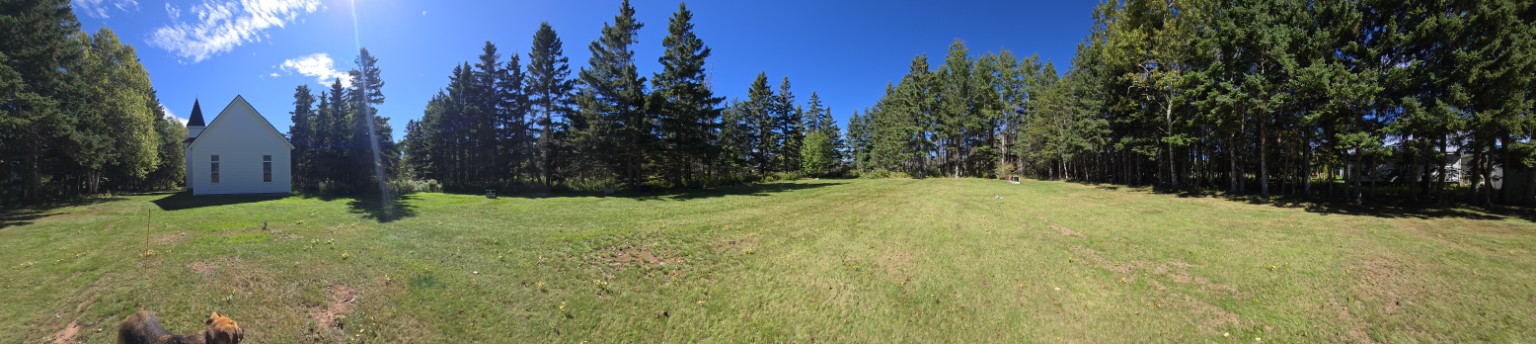
In this exhibit ↑Behind Sutherland Memorial Church is a burial ground that tells a different chapter of Pictou Island’s history from Pioneer Cemetery. Its headstones remember Islanders from the second half of the twentieth century onward, and its surviving memorials help connect families, neighbours and the community institutions that shaped their lives.
The Church Cemetery is a separate burial ground behind Sutherland Memorial Church. Ruth Munro’s 1984 history records the purchase of land from Gordon MacCallum in 1959 for $100 and describes twenty-four double lots, each twenty by twenty feet.
The PIHS interpretive panel identifies James MacDonald and Lavinia Glover as the first people buried in the Church Cemetery, in December 1959.
Their shared marker reads James D. MacDonald (1906–1959) and Lavina M. Glover (1917–1959). Its 1959 death years are the earliest in the twenty-two available memorial records, consistent with the panel history. The month and first-burial priority come from the panel; Lavinia is its spelling, while Lavina appears on the stone.
The original Nova Scotia death registrations name James Duncan MacDonald and Lavinia Margaret MacDonald and record that both died on 10 December 1959. They record asphyxia associated with a bedroom fire and burial or removal to Pictou Island on 15 December 1959. PIHS and Island community history preserve the Aladdin-lamp and carbon-monoxide account, and identify the couple as the first Church Cemetery interments in December 1959. Those community recollections remain attributed: the civil registrations do not identify the cemetery or lamp, establish burial order, confirm carbon monoxide by laboratory testing, or record the time of discovery.
Original death registrations: James Duncan MacDonald; Lavinia Margaret MacDonald.
The PIHS panel tells how William “Billy” MacMillan came from Wood Islands, Prince Edward Island, to work in a lobster cannery and married Islander Annie Jane MacLean. It recounts that the family, with nine children and no Pioneer Cemetery lot, acquired a large plot in the northwest corner of the Church Cemetery. This family account gives the later burial ground a place within the Island’s working and household history.
PIHS’s September 2026 survey records twenty-two memorial groups in twenty-nine original photographs, including additional views and context. Later memorials carry the names of other Island families across the decades. Shared markers record family relationships; one wooden cross in the current record is undated.
Together with Pioneer Cemetery, this burial ground preserves different chapters of the Island’s family and community history. The photographed memorials offer a way to read those connections, although they are not a complete interment register.
Read the Pioneer Cemetery article
Source note: the PIHS panel, vetted by several people, supplies December 1959 and the first-burial account. The shared marker supplies the names as inscribed and death years, rather than a burial month or order of interment. Absence of a recovered original register does not invalidate the attributed, vetted panel account.
Land and chronology note: Munro’s purchase, price and lot dimensions are attributed local-history details; the underlying deed or plan has not been inspected. The timing and extent of overlapping use of Church and Pioneer family plots have not been established from burial records. Death years alone cannot settle that question.
The William “Billy” MacMillan family account comes from the PIHS panel. It concerns the historical family described there and is not an identification of a present-day resident with the same name. The panel’s story is retained with attribution; plot dimensions and individual interment dates are not inferred.
These family photographs connect with people commemorated in the cemetery. They are not photographs of a burial or funeral.
Probably 24 September 1936; the wedding identification and date are inferred.
Contributed by Chris Stafford
View photograph, caption and connections →