The Fairy Queen was doing something ordinary when disaster struck. In the autumn of 1853, steamship travel connected Charlottetown and Pictou, carrying passengers and news across Northumberland Strait. A summer advertisement had scheduled the mail and passenger steamer for Pictou twice weekly. On Friday, 7 October, she left Prince Edward Island in worsening weather and did not finish the crossing.
An ordinary crossing becomes a disaster
The Fairy Queen belonged to a regular mail and passenger network. Its loss near Pictou Island shows how quickly a familiar Strait crossing could become an emergency—and how quickly early reports could misidentify the dead.
7 October 1853. The steamer left Charlottetown for Pictou in poor weather.
10 October — conflicting dispatches. The printed first and second reports contradicted each other about who was lost and who survived.
Later accounts. Campbell’s account implies seven deaths; Smith’s later roster totals ten. The total remains unresolved.
The story and its sources: The wreck and the stories later told about it are connected, but they are different kinds of history. Folklore does not establish what happened aboard the vessel.
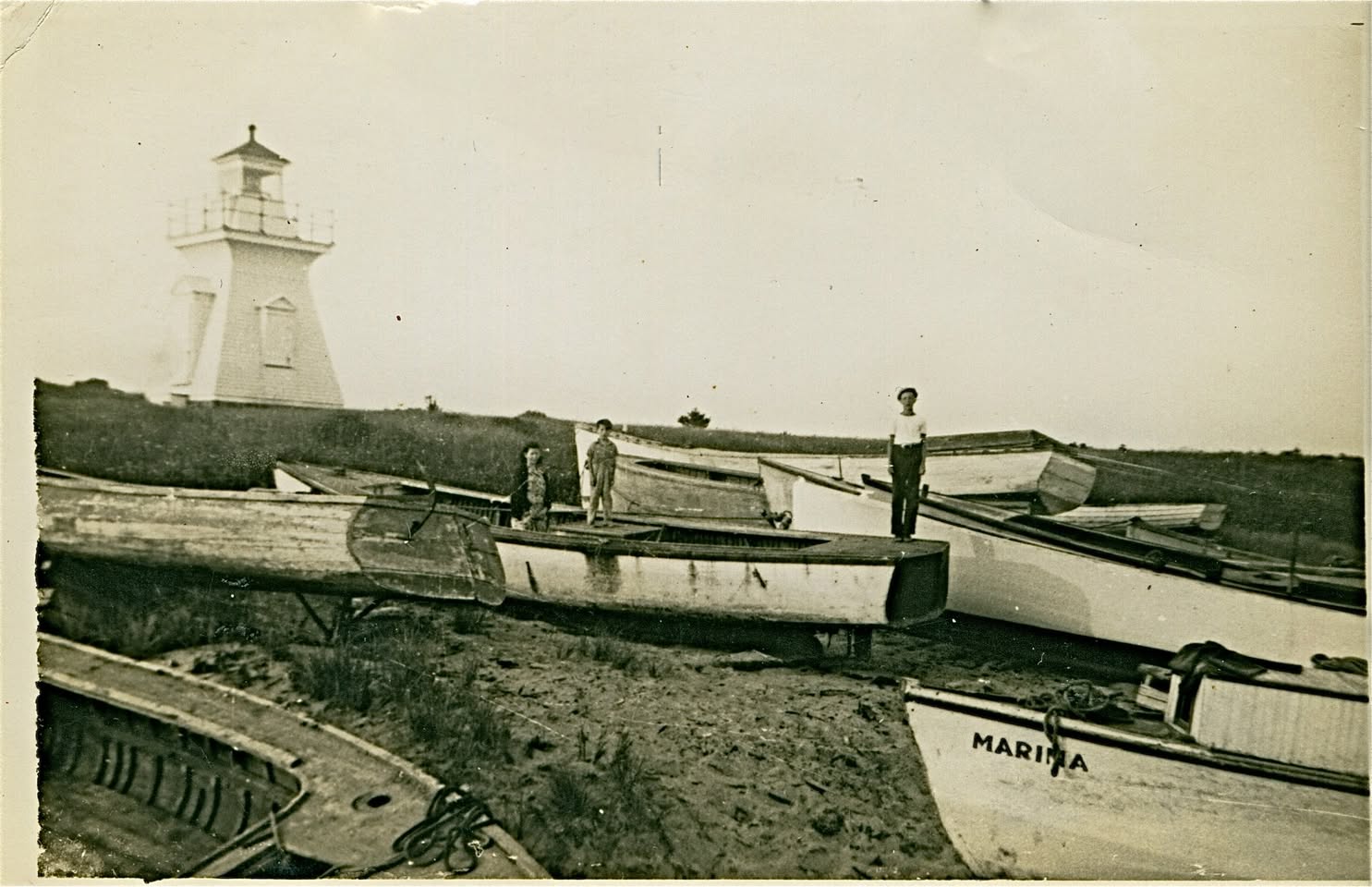
Island maritime context; not a photograph of Fairy Queen. Hugh MacLean / PIHS collection
A regular route into bad weather
The Fairy Queen was a mail and passenger steamer serving routes that included Charlottetown and Pictou. An advertisement published in the summer of 1853 shows the vessel scheduled for Pictou twice a week, showing that the crossing was part of a regular route.
On Friday, October 7, 1853, the steamer left Charlottetown for Pictou in poor weather. Duncan Campbell’s 1875 History of Prince Edward Island records that, after the vessel passed Point Prim, heavy seas damaged the gangways. Near Pictou Island the tiller rope broke, leaving the vessel difficult to control.
Passengers help — then the ship breaks apart
Passengers helped splice the tiller rope, but the steamer continued to make little progress. Campbell records that the captain and some crew left in a boat. After repeated heavy seas, part of the upper deck separated from the vessel and became an improvised raft for a group of survivors.
Among those who survived on the detached deck were Martin I. Wilkins of Pictou, Edward Lydiard and Mr. Pineo. Campbell says they eventually reached the north side of Merigomish Island after hours exposed to the storm and cold. His account describes Dr. McKenzie, two other males and four females as having perished—seven deaths in that account.
Conflicting first reports
The immediate newspaper record shows how quickly disaster reporting can go wrong. A Royal Gazette telegraphic dispatch printed on October 10 initially named Wilkins, Pineo and Lydiard among the lost. A second dispatch printed immediately afterward listed all three among those saved. The report acknowledged uncertainty and indicated that a formal inquiry would follow.
The follow-up corrected some names, but reports still disagree about how many people died.
The inquiry and conflicting casualty records
James F. Smith’s 1973 reconstruction, based on October 1853 newspaper accounts, describes a Pictou magistrate’s inquiry and a grand-jury manslaughter charge on 28 October. He could not establish the final court outcome. His roster lists six passengers and four crew as drowned, conflicting with Campbell’s seven. The final court outcome remains unknown.
Why this belongs in Pictou Island history
The Fairy Queen was not an island-owned vessel, but the disaster occurred in the waters that defined Pictou Island’s connections with Prince Edward Island and the mainland. It belongs beside lighthouse and navigation history because it illustrates the vulnerability of nineteenth-century steam communication in the same Strait that island keepers, fishermen and later iceboat crews learned to read closely.
The disaster also acquired a life in Maritime folklore. Supernatural-warning and phantom-vessel traditions belong in the Folklore collection—linked to this documented wreck, but not presented as evidence of what happened aboard the steamer.
Library and Archives Canada, History and Folklore of West Prince — The Phantom Ship Folklore context only.
Sources and evidence notes
Smith, “Crossing to Catastrophe,” Nova Scotia Historical Quarterly 3(4), December 1973, pp.309–322, reconstructs October newspaper testimony. Printed pp.321–322 were visually checked: the roster yields ten deaths. His proposed technicality explanation is conjectural; original testimony and final court disposition remain unrecovered.
A contemporary comparison is now available: the Public Ledger of 21 October 1853, p.2, reprints the Halifax Colonist of 11 October. Its headline reports eleven presumed drowned, while its list names seven people still missing; the adjoining editorial says nine deaths. These are provisional, conflicting reports, not three independently established totals. The reprint reports the captain and crew arrested after survivors reached Pictou; it does not establish a verdict.