
Article · Pictou Island history
Frozen in the Strait — Minto & Stanley — 1903
The Minto and Stanley ice emergency and the passengers who reached Pictou Island.
Frozen in the Strait — Minto & Stanley — 1903
Winter could turn the route between Prince Edward Island and Nova Scotia into a maze of moving ice. In February 1903, that danger became a public emergency when the government steamer Minto was caught in Northumberland Strait. Pictou Island, often dependent on vessels for its own supplies, became part of the effort to get passengers to safety.
When passengers depended on the Island
The Minto and Stanley were powerful steam vessels, but moving ice could immobilize both. For passengers, Pictou Island became a practical route out of the emergency, using shore knowledge, walking and small craft.
- January–February 1903. The Stanley became trapped; the Minto’s assistance also ended in immobilization.
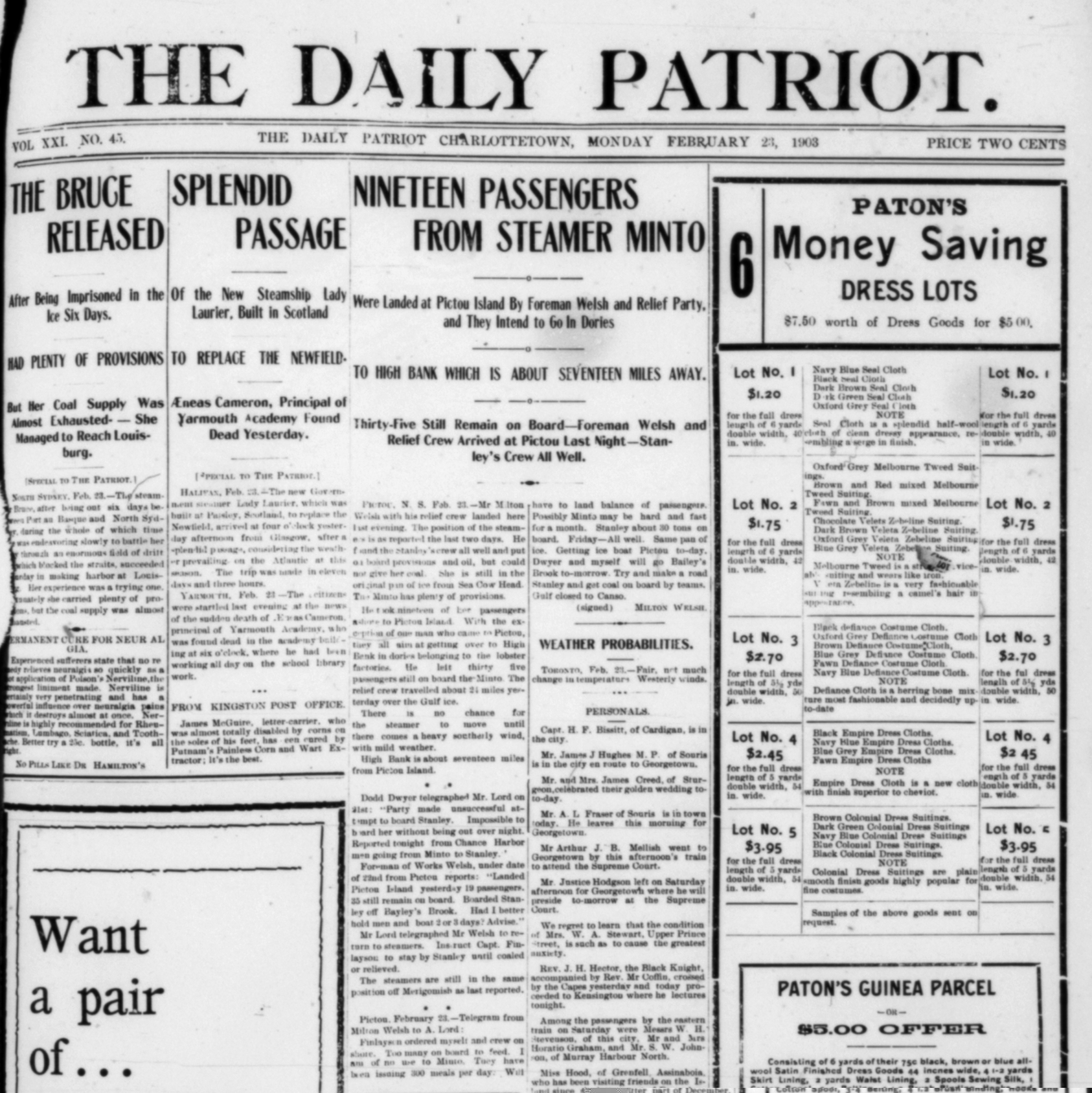
- 23 February — passengers reach Pictou Island. The Daily Patriot records 19 Minto passengers landed and 35 still aboard. Intended onward travel in factory dories is not proof that it occurred.
- March — rescue work continues. The vessels drifted around the Island; dynamite-assisted work and eventual towing formed later phases of the emergency.
Evidence to read carefully: Different passenger totals remain qualified. The surviving iceboat illustrates continuing winter travel; it was not the boat used in 1903. The twenty men “from the shore” are not identified as Islanders.
The Stanley trapped in the Strait
The Stanley became trapped in Northumberland Strait ice in January 1903 and was carried back and forth by a large field of moving ice. Contemporary newspapers followed its drift for weeks. By mid-February, it was reported embedded in ice between Wood Islands and Pictou Island.
The Minto was sent to assist, carrying coal and supplies. It too became trapped. By February 23, reports placed the Stanley east of Pictou Island after about forty days in the ice, while the Minto had been immobilized for roughly ten days.
Passengers leave the Minto for Pictou Island
For passengers aboard the Minto, escape ultimately depended on a much older form of winter travel: crossing the ice by foot and small craft.
The 23 February Daily Patriot report says foreman Milton Welsh landed 19 Minto passengers on Pictou Island while 35 remained aboard. Most of those landed intended to continue toward High Bank, about 17 miles away, in dories belonging to the lobster factories. The report records that intended journey; it does not establish that it was completed.
The following day’s reporting said the group walked approximately six miles over the ice to Pictou Island and then continued toward Caribou and Pictou. Reports vary on the exact total number aboard, but consistently establish that passengers were removed over the ice. The first documented group of 19 came from the Minto; later reporting indicates the remaining passengers were also landed.
Coal, ice and another breakdown
By February 26, shifting ice allowed the Minto to reach the Stanley off Arisaig and transfer about 40 tons of bunker coal before escaping to Georgetown.
The Minto went out again carrying approximately 100 tons of coal. Contemporary reporting said that, while attempting to break through ice reported to be about four feet thick, the vessel stripped the blades from its propeller. Both government icebreakers were again described as helpless, with coal and provisions transferred between them.
Pictou Island again entered the rescue plan. On March 13, officials arranged to obtain explosives from Halifax. The intended party was to proceed to the east end of Pictou Island, take a lifeboat from there and try to reach the trapped vessels.
Around Pictou Island in the ice
By March 16 the vessels had again been driven toward Pictou Island and were reported about three miles northeast of it. The 17 March Daily Patriot report says changing winds, currents and moving ice had caused the ships to make a complete circuit of Pictou Island. It also mentions twenty men “from the shore” assisting with dynamite-assisted work; the report does not identify them or establish that they were Pictou Islanders.
The Stanley finally broke free after more than two months and reached the disabled Minto, towing it toward Pictou. Even at the harbour entrance, approximately two and a half miles of heavy ice still blocked the way.
Steam power meets the Pictou Island iceboat
The Minto and Stanley brought steam power to winter navigation, yet moving ice could stop both vessels. Passengers escaped over the ice to Pictou Island, and the reporting describes plans to use small craft for further travel. The emergency shows how powerful vessels and older crossing methods existed alongside one another.
The iceboat now preserved at the Heritage Centre belongs to a later chapter of that history. It gives visitors a tangible connection to the winter mail and emergency crossings that remained part of Island life after steamers entered Strait service.
Sources and further reading
- Marine Atlantic: SS Stanley. Institutional vessel history.
- Marine Atlantic: SS Minto. Institutional route and service history.
- Gulf Ice Charts 1903, New Ice Data. Chronology transcribing contemporary Daily Patriot and Halifax Herald reporting.
- UPEI Robertson Library, University Archives and Special Collections: Daily Patriot, 23 February and 17 March 1903, page 1 scans.
Read the surviving Pictou Island iceboat’s history
Sources and evidence notes
The 23 February 1903 report distinguishes passengers already landed from those still aboard and records intended onward dory travel. A plan does not establish a completed crossing, actual availability of a particular boat or its factory ownership. Later reporting describes travel over ice toward Caribou and Pictou; it should not be merged into a single confirmed High Bank itinerary. The twenty men “from the shore” in the 17 March report are not identified as Pictou Islanders. This article does not establish use of the surviving iceboat, built decades later, or identify another iceboat used for these passenger movements.