
Article · Pictou Island history
The Pictou Island Schoolhouse
Successive schools, generations of children and the present community-centre building.
The Pictou Island Schoolhouse
For many Pictou Island families, the schoolhouse was one of the places where a small community became a shared world. Children of fishing and farming households learned together. The story follows successive Island schools, generations of teachers and pupils, and the building now used as a community centre.
Successive Island schools, generations of children and the present community-centre building.
The early schoolhouses
The Assembly Journal for 11 February 1845 records a petition from Pictou Island settlers seeking aid for a school, breakwater and road. The House ordered it to lie on the table. This procedural entry proves the request, rather than funding, completed works or the names of individual petitioners.
Munro and MacCallum report an earlier schoolhouse fire in 1874 and a replacement on Charles MacCallum’s land. That retrospective sequence does not settle the replacement year. Original education reports record no operating school during the year ended 31 October 1882, then a comfortable schoolhouse erected in summer 1884 and a school operating “this winter.” The winter of 1884–85 is inferred from the report’s context, rather than an exact opening date. The relationship between these building accounts remains unresolved; neither describes the present community-centre building.
Munro reports that a 1937 register recorded 60 pupils and that additional teaching help was required. Her prose identifies Lorina MacKay as substitute or additional teaching help. The number gives a glimpse of a busy one-room school; the teacher chronology is preserved below.
The present building
Later Island history says the older school was replaced in 1958 by the present school/community-centre building and attributes its design to William West of Hopewell. MacCallum’s Chapter 10 also dates the building to 1958 and names a construction crew.
Regular classes and later education
Munro identifies 1970–71 as the final year of regular public-school operation and William MacMillan as the last regular teacher. Regular classes ended in 1971; some later PIHS accounts use 1972 for the broader closure transition. This did not end education on the Island: mainland schooling, home schooling, correspondence education, later hybrid and part-time arrangements, and the 1999 SchoolNet-connected school continued the education story.
MacCallum reports home instruction beginning in 1985. Industry Canada’s 2003 account dates Pictou Island’s SchoolNet connection to 30 March 1999 and describes one room, one teacher and three pupils. It identifies the Island school as the final connection in the national schools-and-libraries initiative. In the House of Commons on 3 November 1999, Industry Minister John Manley also recalled the connection of the three-pupil school that March.
Children, teachers and a digital connection
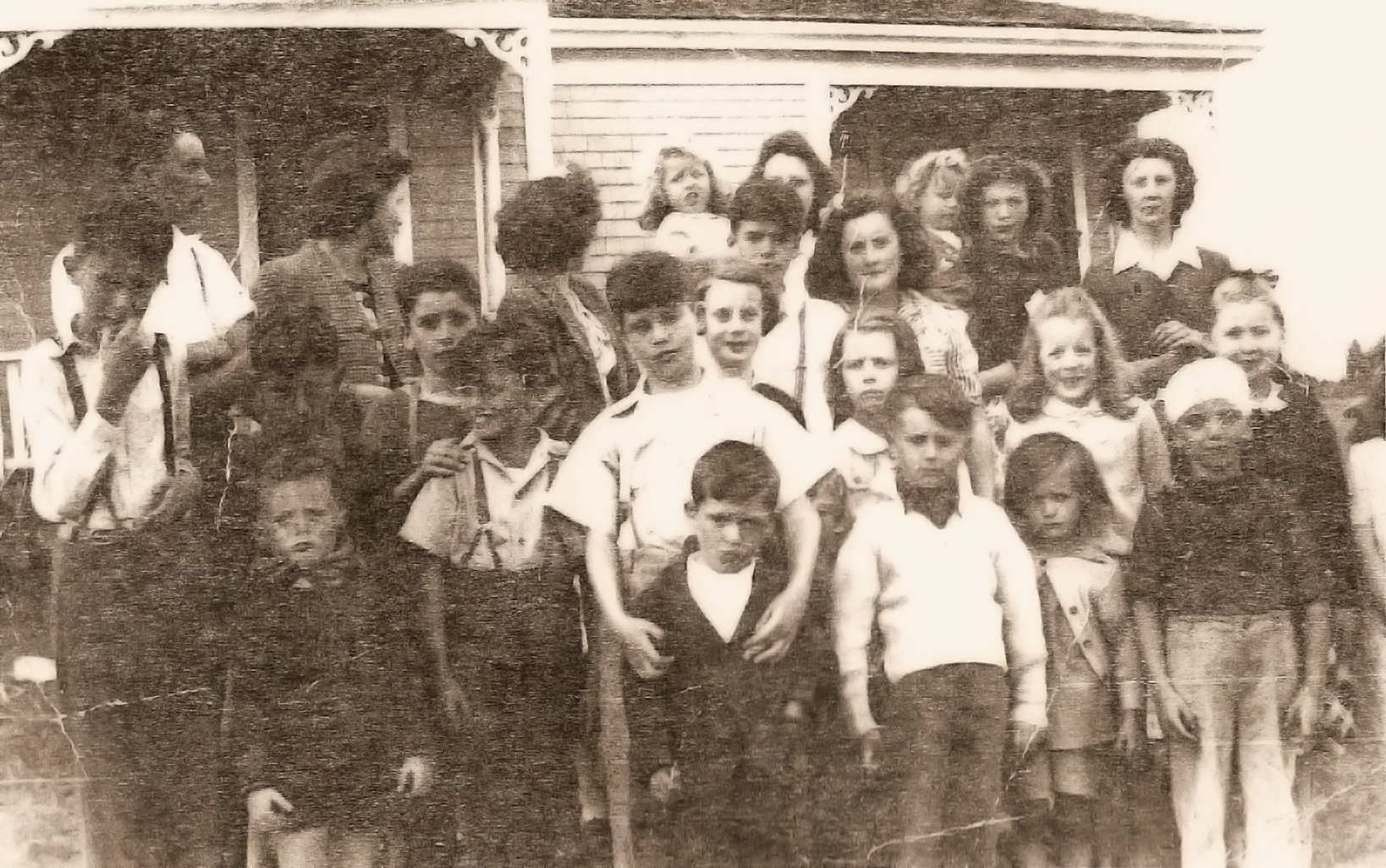
A photograph captioned 29 May 1911 identifies James Jeremiah Turple as teacher. This agrees with the 1910–11 teacher chronology. The caption supplies a group list of sixteen pupils without a left-to-right identification.
A preserved school-web index records the March 30–31, 1999 feature ‘Connecting Pictou Island School to the Internet’ at a former K-Net address. The complete underlying feature has not yet been recovered.
A community centre
PICA’s own history records its incorporation in 1987 and says that renovations of the old schoolhouse began at that time to create a community centre. Later educational use, including the 1999 SchoolNet connection, forms another chapter in the building’s history. Its successive uses connect education with the wider life of the Island.
Teacher register — Munro chronology, spellings preserved
Ruth Munro’s list was compiled from records by Roy MacCallum, with additions from Doreen Bower, Miriam Patterson and others. Munro cautions that some dates may be inaccurate. The 1936–38 conflict remains visible: her prose names Charles Daniel and Lorina MacKay, while her chronology names Charles Dan Taper and Doris MacKeil.
| School year(s) | Teacher(s) recorded by Munro |
|---|---|
| 1878–79 | William Grant |
| 1885–87 | Cassie G. MacDonald |
| 1896–97 | Mary M. Kennedy |
| 1900–01 | John D. MacKenzie |
| 1902–03 | Marion Park |
| 1906–07 | Olive Carmichael |
| 1907–08 | Marion Reid |
| 1908–09 | Edna Reid |
| 1909–10 | Christena Gilchrist |
| 1910–11 | James Turple |
| 1911–12 | Annie Harris |
| 1912–13 | Helena Crooks |
| 1913–14 | Miss MacEwan |
| 1914–15 | Rena Carter |
| 1915–16 | Donelda MacDonald |
| 1916–17 | Florence MacDonald |
| 1917–19 | Rena Carter |
| 1919–21 | Hazel Sutherland |
| 1921–22 | Isabel Kirkwood |
| 1922–23 | John Skinner |
| 1923–24 | Barbara Rundle |
| 1924–25 | Greta Langille |
| 1925–26 | Jessie Douglas |
| 1926–27 | Jessie Sutherland |
| 1927–28 | Florence Ross |
| 1928–29 | Margaret Ross |
| 1929–30 | Annie Hannah Fitzgerald |
| 1930–31 | Kathleen MacBeth |
| 1931–32 | Lillian Beck |
| 1932–34 | David Dickson |
| 1934–35 | Dorothy Belyea |
| 1935–36 | Ethel Ward |
| 1936–37 | Charles Dan Taper — disputed entry |
| 1937–38 | Doris MacKeil — disputed entry |
| 1938–39 | John Harris MacDonald |
| 1939–40 | Claudena Matheson |
| 1940–41 | Byron Yuill |
| 1941–42 | Marguerite Tibbel |
| 1942–43 | Delta Thurbur |
| 1943–44 | Jennie Mildred Fraser |
| 1944–45 | Hilton MacCully / McCully |
| 1945–46 | Vernon Smith |
| 1946–47 | Betty MacLean; Florence MacDonald |
| 1947–48 | May MacCallum |
| 1948–49 | May MacCallum; John Harris MacDonald |
| 1949–53 | John Harris MacDonald |
| 1953–54 | May MacCallum; Miriam Wong |
| 1954–55 | Miriam Wong / later Miriam (Wong) Patterson |
| 1955–57 | Helmut Brauaer |
| 1957–60 | David MacKay |
| 1960–61 | Edward MacMaster |
| 1961–65 | Edith MacAloney |
| 1965–66 | Alfred MacLean |
| 1966–67 | Heather MacPhail; Linda Hemphill |
| 1967–68 | Linda Hemphill |
| 1968–69 | Viyi Sailens |
| 1969–70 | Sandy Munroe |
| 1970–71 | William MacMillan — last regular teacher |
Heartz’s 1907 Island visit — Comedy on the Rocks
Sources and evidence notes
Building and register notes: the original fire record remains unrecovered. The inspected 1882 education report, p.44, and 1884 report, p.50, document absence of a school in the earlier reporting year and summer 1884 construction followed by winter operation. The 1958 date and William West design attribution are later local-history accounts, not newly confirmed from the 1957–59 education records or 1988 heritage inventory. Munro’s 1936–38 prose and teacher chronology disagree; disputed entries remain in the register. The Trustees of School Section No.57 fonds is identified, but detailed contents and dissolution date remain unresolved. The 1999 SchoolNet index survives; the complete underlying feature has not been recovered.
The SchoolNet date and school size are now supported by inspected federal sources, beyond the surviving web-feature index. Industry Canada’s 2003 publication, printed p.21 (PDF p.20), records 30 March 1999 and one teacher/three pupils; Manley’s 3 November 1999 Hansard statement independently documents the federal announcement. These sources do not identify the pupils or recover the missing K-Net feature. PICA’s institutional history supplies the 1987 renovation account; it does not settle the original building’s construction date.
Industry Canada, Canada and the Information Society (2003), p.21
House of Commons, 3 November 1999 — John Manley on SchoolNet
Pictou Island Community Association — institutional history
Nova Scotia Archives delayed-registration evidence shows that a Pictou Island teacher consulted school registers and found a 1924–25 entry. This supports consultation of a register, not a complete census of Island children and not the full building chronology. The Trustees of School Section No. 57 fonds is a confirmed archival collection, but its detailed contents and the school section’s dissolution date remain unresolved.
The 60 pupils reported for 1937 are not established as an all-time enrolment peak. Home instruction beginning in 1985 does not by itself prove a regular public-school reopening. Heartz’s 16 April 1907 account confirms a school operating on the Island, without identifying its building generation or footprint.