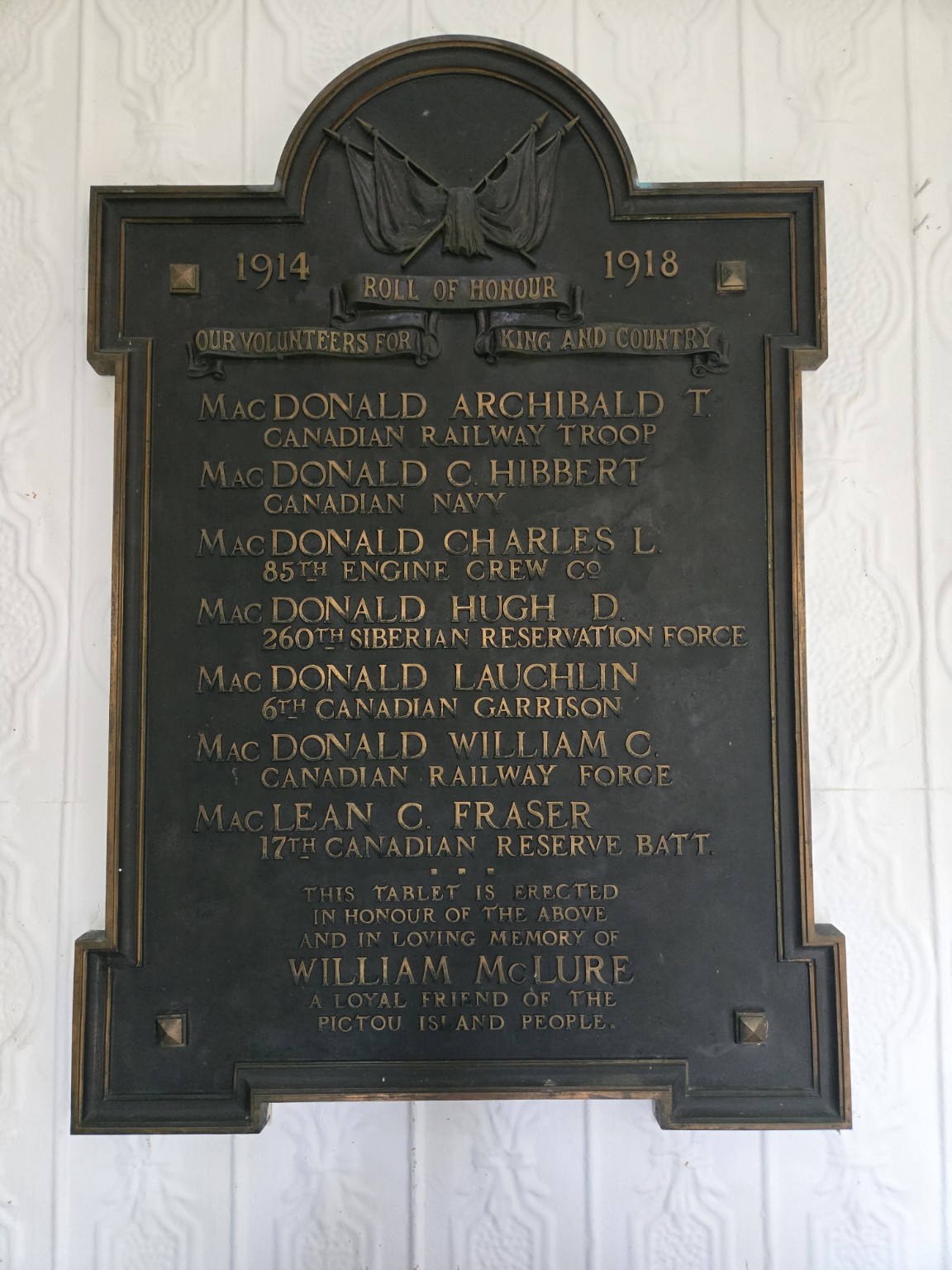
Pictou Island did not disappear when fewer people lived here year-round. Its farms became smaller in number, the school faced fewer pupils, families found opportunities across the Strait, and some homes shifted from permanent to seasonal use. But fishing continued. Descendants returned. New residents arrived. Volunteers cared for buildings and remembered those who had left.
To understand the change, start with the island at its busiest—not with a story of inevitable decline. Then follow several generations of decisions shaped by schooling, work, transport, household circumstances and attachment to place. There was no single turning point that explains every family. There was a community that changed how it lived.
Chapter 1
A Working Island at the Start of the Century
At the beginning of the twentieth century, the Island still supported fishing and farming families, a school, worship, gathering places and busy wharves. Population increased into the 1920s.
The Island entered the twentieth century as an established, expanding working community.
The Island was not already in steady decline at the start of the twentieth century. Population growth, mixed farming and fishing, schools, churches, processing and shore infrastructure supported intergenerational residence.
Pictou Island did not experience one simple event called depopulation. Permanent residence contracted through overlapping changes in work, education, farming, fishing, institutions, transport, household formation and aging, while Island identity continued through seasonal residence, return migration, retained property, newcomers, fishing and diaspora relationships.
Chapter 2
Families and Livelihoods
A family did not always rely on one income or one workplace. Fishing, farming, household work, wage employment elsewhere and seasonal movement could overlap.
Farming, fishing, processing, schools and family networks supported intergenerational residence.
Direct cases show mainland industrial, professional and seasonal work, but not a universal ‘no jobs’ explanation.
Agricultural contraction, mixed household production and later regrowth interacted with population change. Individual farm-to-seasonal motives remain open.
 Enlarge & zoom
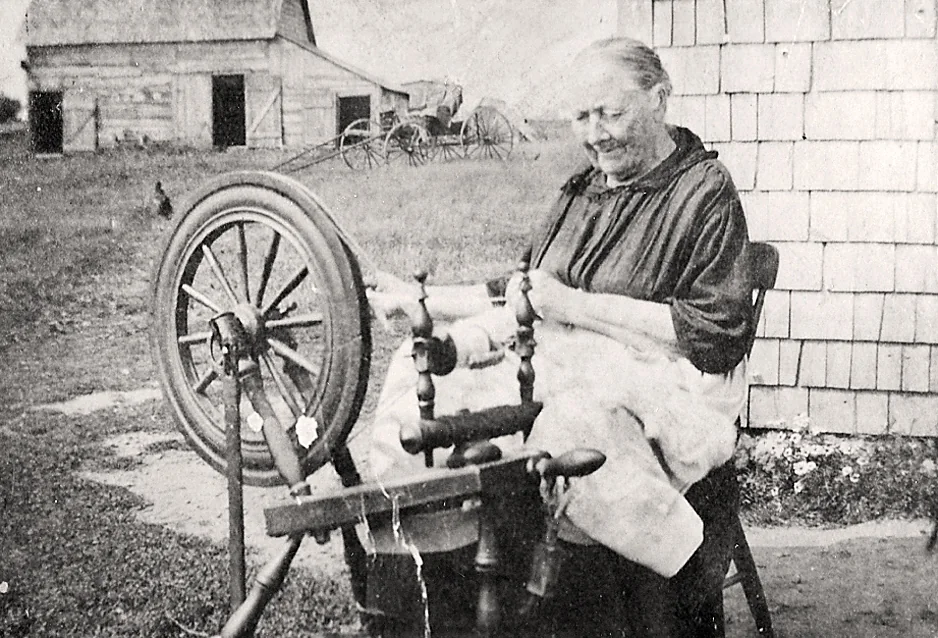
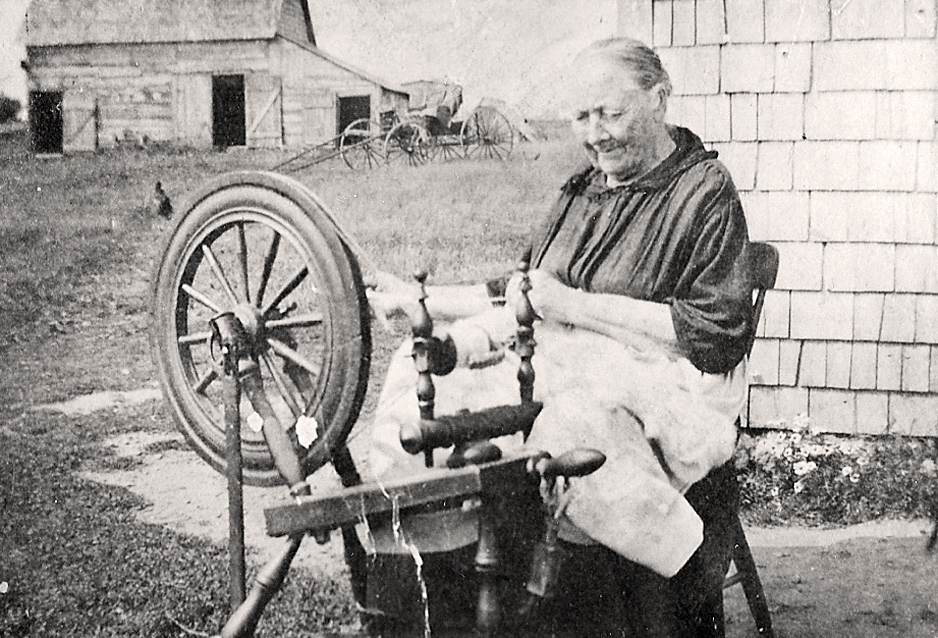
Annabel “Bella” McCallum at a spinning wheel
Chapter 3
The Population Begins to Change
In 1921 the census recorded 228 Islanders, and 224 in 1931. By 1941 the figure was 206; by 1951 it had fallen to 140.
Population changed unevenly: a near plateau in the 1920s was followed by a major postwar contraction.
The recorded population fell from 228 in 1921 to 224 in 1931 and 206 in 1941. Fisheries and farming changed, but fishing continued and no single industrial closure explains this pattern.
The published comparison falls from 206 residents in 1941 to 140 in 1951. A household-by-household explanation remains open; voters lists, property evidence and later records are needed before assigning universal motives.
A dated historical account records about 150 residents in 1956. PIHS historical figures give 145 in 1961; the original census table has not yet been located. These are different source classes, not a continuous census series.
Chapter 4
Leaving for Education and Work
Schooling and employment connected Island families to the mainland long before the last regular classroom closed. Some young people continued education elsewhere; others took jobs in fisheries, industry, trades or professions beyond the shore.
Education and mainland employment created different pathways for different households.
Education-driven mobility predates final school closure. Loss of regular Island classes reinforced departure for some families; it did not begin the whole decline or end all later education.
Direct cases show mainland industrial, professional and seasonal work, but not a universal ‘no jobs’ explanation.
Kevin “Dougal” MacDonald’s account connects his departure in the early 1970s with the end of regular Island schooling. He returned each summer and later fished lobster and herring. His experience shows how education and continuing Island work could shape the same life; it does not establish every family’s reason for leaving.
Chapter 5
Farms, Fishing and a Wider Economy
The once-open farming landscape changed gradually. Census figures document contraction in agricultural activity, and later photographs show fields and pastures beginning to return to trees.
Farming contracted while fishing and work beyond the Island continued.
Agricultural contraction, mixed household production and later regrowth interacted with population change. Individual farm-to-seasonal motives remain open.
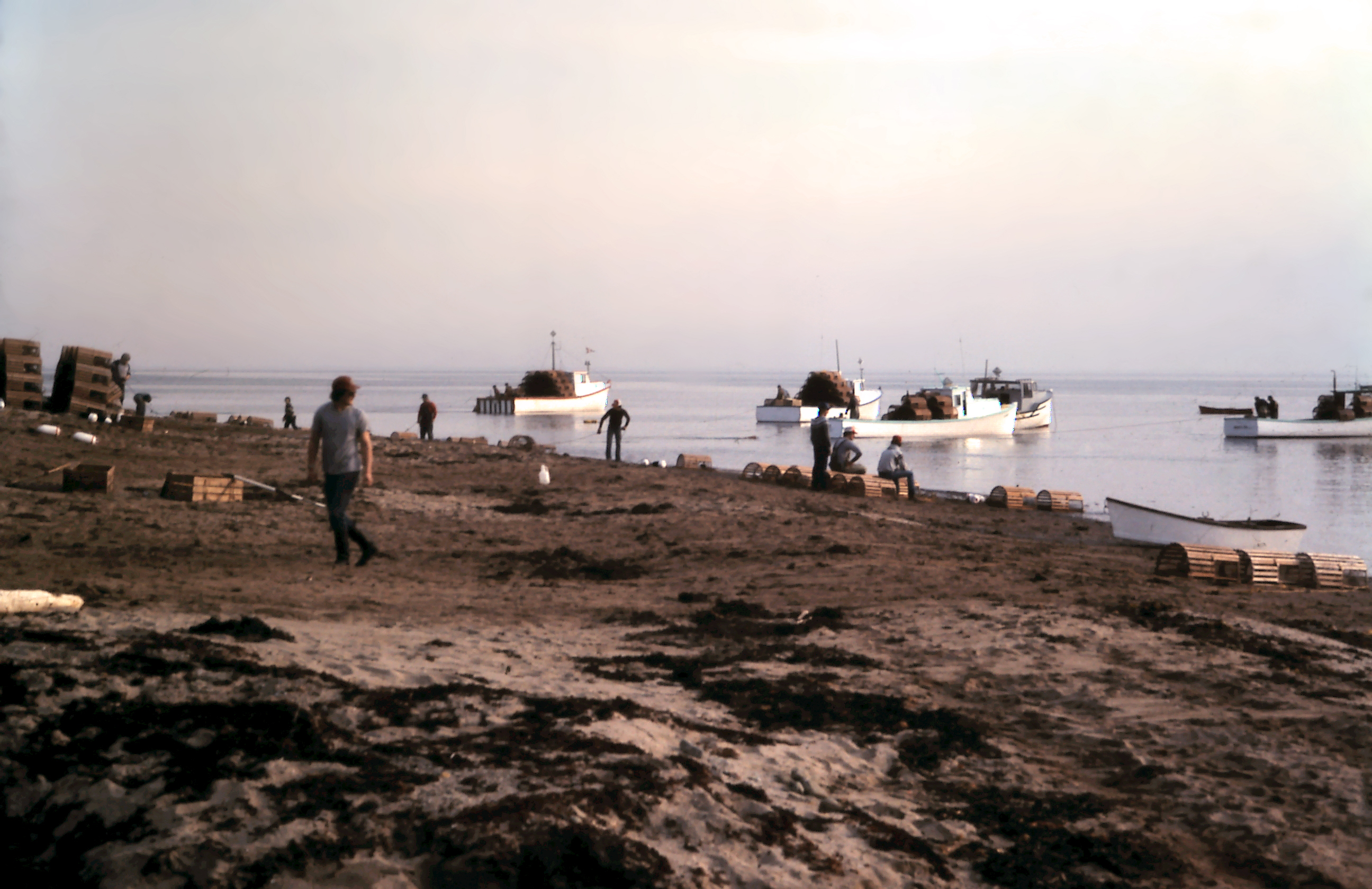
Fishing persisted through demographic contraction and sometimes supported seasonal or split residence after households moved to the mainland.
 Enlarge & zoom
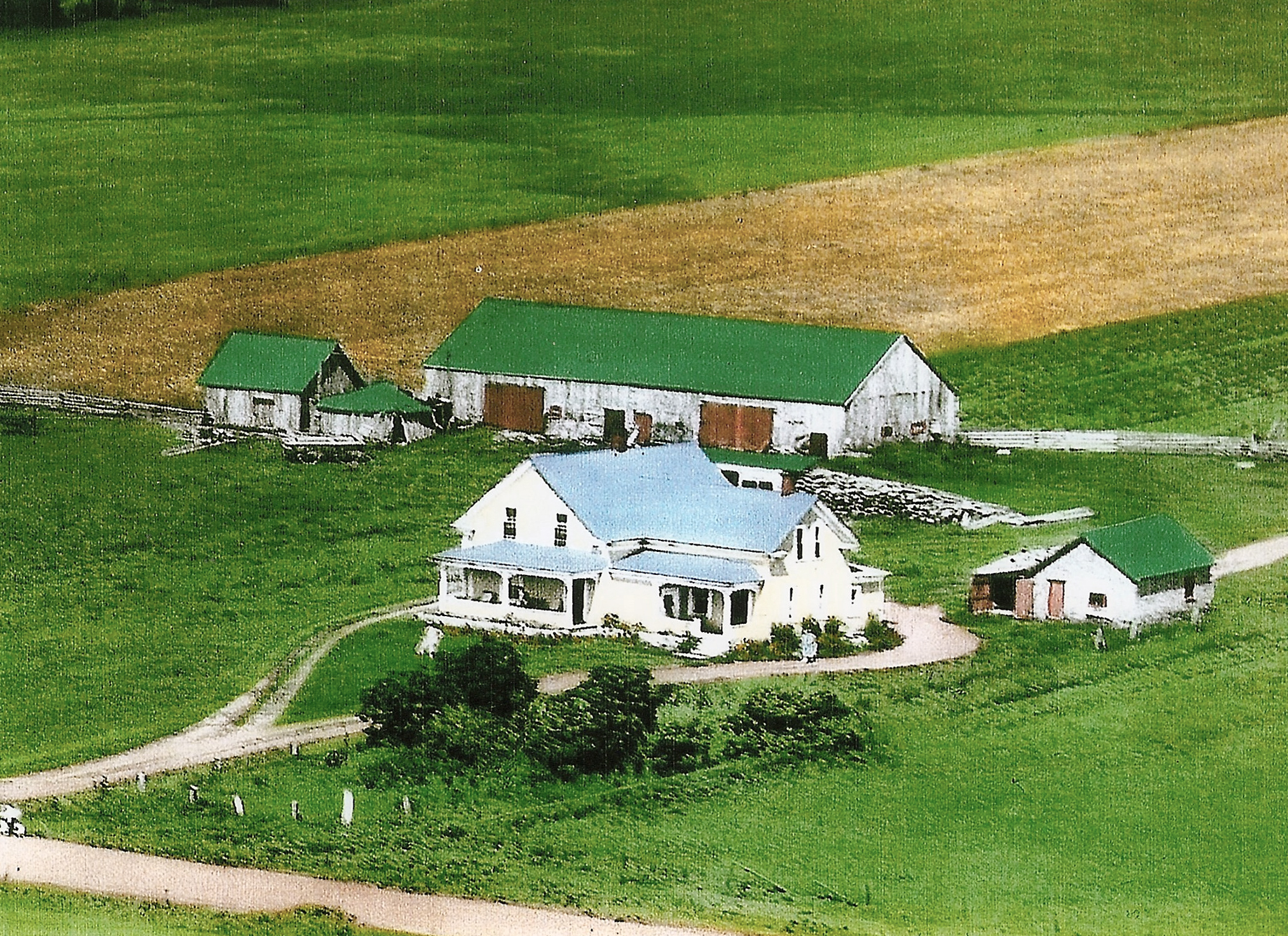
The Jack and Mary Rankin farm and surrounding landscape
Chapter 6
Fewer Children, Fewer Services
Small population changes can have large consequences for a school or community service. Island accounts place regular classes ending in 1971, with the broader closure transition extending into 1972.
Fewer children and households changed the institutions they could sustain.
PIHS historical accounts record a decline from about 145 residents in 1961 to 69 in 1971 and 37 in 1976. Schooling, services, household formation and work changed together. Regular Island classes ended in 1971, with the broader transition extending into 1972.
Fewer children and households weakened schools, churches and other services, creating reinforcing feedback rather than one initiating cause.
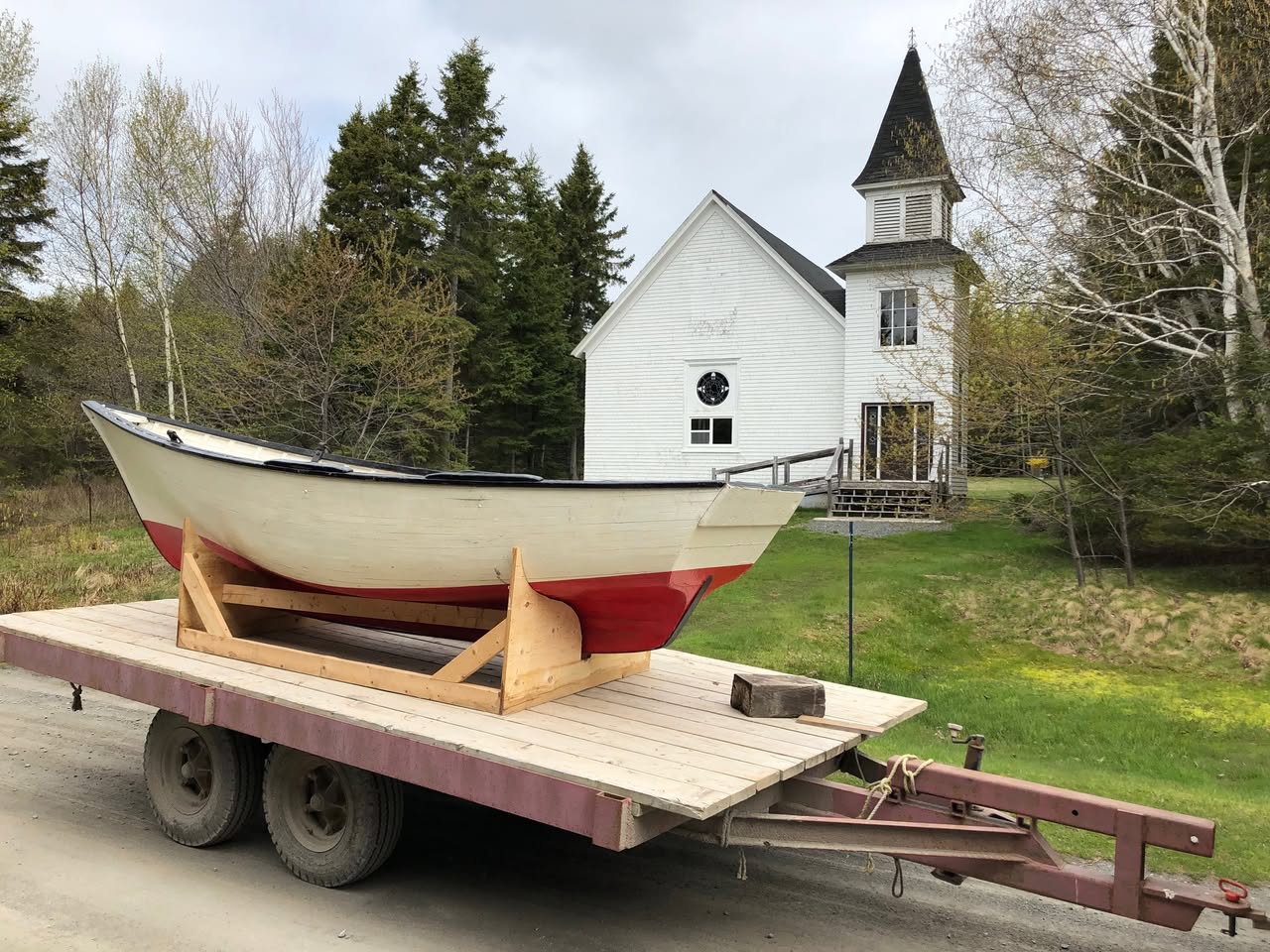 Enlarge & zoom
Sutherland Memorial Church and Island landscape
Chapter 7
The Mainland Becomes Closer
Ferries, aircraft, telephones and changing roads shortened the practical distance to the mainland even though the geography never changed. Better connections could make living on Pictou Island easier, or make mainland work and education more reachable.
Transport and communications made mainland work and services more reachable while supporting Island residence.
Improved transport and communications enabled mainland integration while also making Island residence more sustainable.
Connection to the mainland could support Island residence and make work, school and services elsewhere more reachable. The evidence does not support treating improved transport as a single cause of population change.
Chapter 8
Homes Become Seasonal
A family home could change its use without disappearing. Descendants might return for summers; fishers might stay during a season; newcomers might buy or care for a property.
Retained family homes, summer return and seasonal ownership reshaped the community.
Retained family homes, fishing-season return, ancestral summering, new seasonal ownership, newcomers and permanent return overlapped. The Island community became smaller and differently structured rather than disappearing.
Retained homes, ancestral return, seasonal purchases and newcomer settlement changed how Island attachment was expressed.
Chapter 9
Islanders Away
The family history of an island also exists in places beyond its shores. Descendants lived across Nova Scotia, Prince Edward Island, New England and farther away, with some keeping photographs, family stories, property or annual visits.
Work, marriage and schooling took Islanders elsewhere; some maintained strong Island ties.
Doris Anne MacLean MacDonald left for mainland factory work and returned to the Island after her 1959 marriage. Elroy “Red Dunn” MacCallum worked in Pictou, Prince Edward Island and New Brunswick while retaining Island life and later fishing connections. These documented pathways show why work away cannot always be counted as permanent departure.
These cases establish individual pathways. They do not justify assigning the same motive to other people or treating work away as permanent departure.
Chapter 10
Returning and Newcomers
Island stories did not end when families left for work and schooling. Some descendants returned, including Mary Josephine Rankin, who settled on the Island after earlier family summers and later spent her final twenty years in Central Caribou. Newcomers followed different routes: PIHS records an unnamed group arriving in 1974, while Maureen Hull’s move is independently dated to 1976. The Pictou–Antigonish Regional Library describes her fishing work, seven years of home schooling and the beginning of her writing in 1992. Sources differ on her fishing years: the library gives 1976–1998, while her first-person account in Contemporary Authors gives 1977–2000. These accounts illustrate the overlap of Island livelihoods, education and cultural life without establishing one exact fishing-career range. Ruth Munro separately records Gus and Nancy Carlson buying the former Charlie Turple farm in 1979 and building a modest semi-solar house without power tools. Returning descendants, working newcomers, shorter stays and seasonal homes are distinct forms of belonging.
Returning descendants and newcomers formed part of the smaller permanent community.
Mary Josephine Rankin: Settled on Pictou Island after earlier family summers, then spent her final twenty years in Central Caribou. Her obituary describes return followed by later relocation, rather than lifelong permanent Island residence.
Maureen Hull household: Moved onto the Island in 1976. The Pictou–Antigonish Regional Library describes her fishing work, seven years of home schooling and the beginning of her writing in 1992. Its fishing dates, 1976–1998, differ from the 1977–2000 range in her first-person account in Contemporary Authors; the sources are retained separately.
Chapter 11
A Community Changed, Not Gone
Pictou Island today includes year-round residents, seasonal families, descendants, fishers, community volunteers and visitors. Those groups overlap but are not interchangeable in census or membership statistics.
A smaller permanent population did not erase Island identity, stewardship, participation or diaspora relationships.
Modern census geography no longer isolates Pictou Island cleanly. Community membership therefore includes year-round residents, descendants, property stewards, seasonal participants, fishers, organizations and heritage work, without collapsing those categories into one population count.
Pictou Island did not experience one simple event called depopulation. Permanent residence contracted through overlapping changes in work, education, farming, fishing, institutions, transport, household formation and aging, while Island identity continued through seasonal residence, return migration, retained property, newcomers, fishing and diaspora relationships.
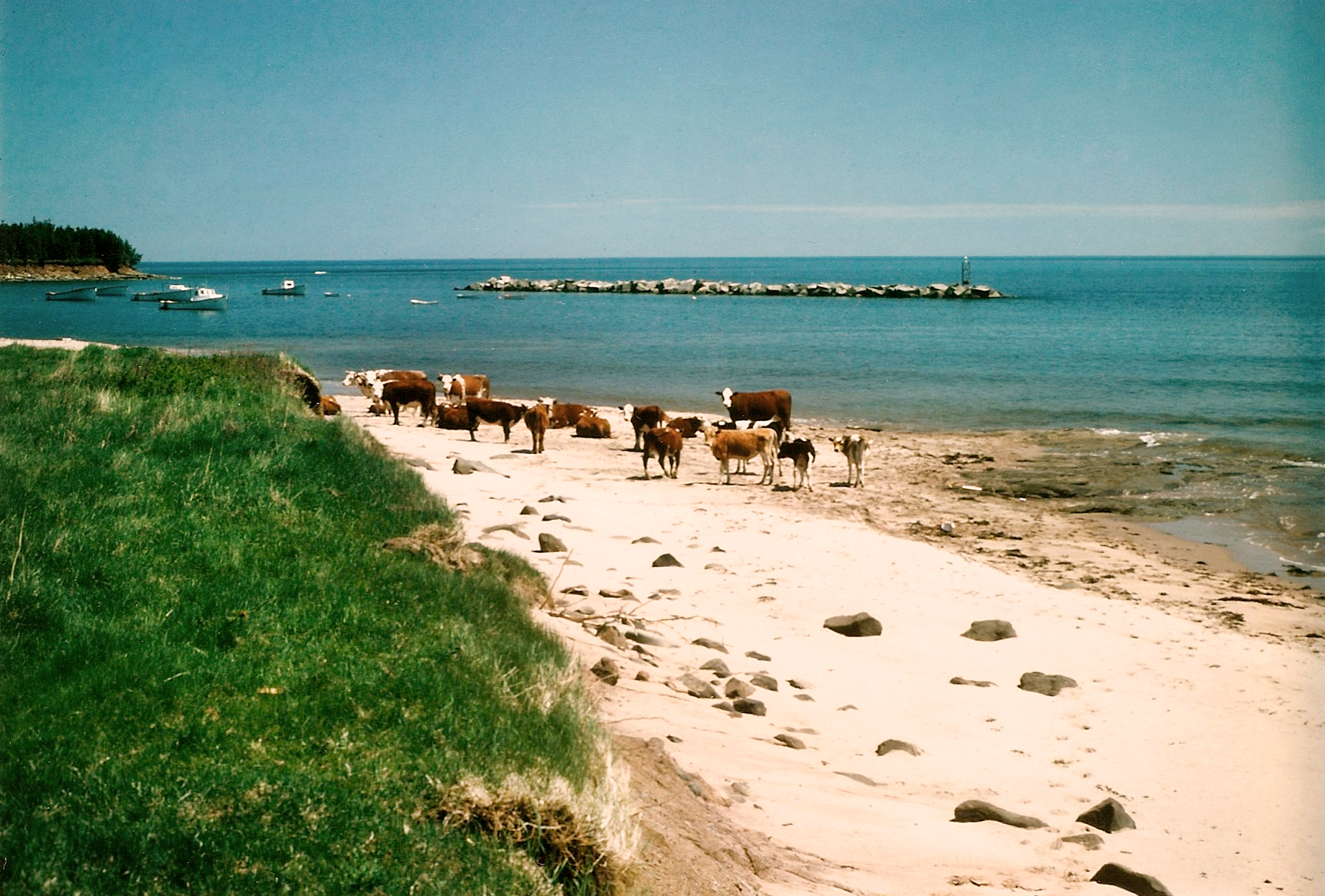 Enlarge & zoom
The East End shoreline
Final chapter · chronology
Timeline
Explore key dates in this story and follow the links to read more. Approximate dates and uncertain identifications are noted.
The Island population reaches 228
This is the largest verified population point currently displayed, without claiming an absolute all-time peak.
The official count declines from 224 to 206
The change is presented as part of a longer restructuring rather than attributed to a single cause.
Postwar change affects work, households and services
The recorded population reaches 140 in 1951 and is estimated around 145 in 1961, with institutions changing alongside livelihoods.
Schooling and population contract sharply
Regular classes end in 1971, the transition extends into 1972, and the recorded population reaches 37 in 1976.
Seasonal connection and continuity coexist
Family homes, return visits, fishing ties and stewardship remain part of the Island’s continuing story.
Remembering Cathy Chesnutt’s community service
Her obituary records more than twenty years of Island ties and service on the Community Association as a committee member, director and secretary.